Synack EU Alternative 2026: Pentest-as-a-Service CLOUD Act Risk — NSA Origins and EU Data Sovereignty
Post #3 in the sota.io EU Bug Bounty & Pentest Management Series
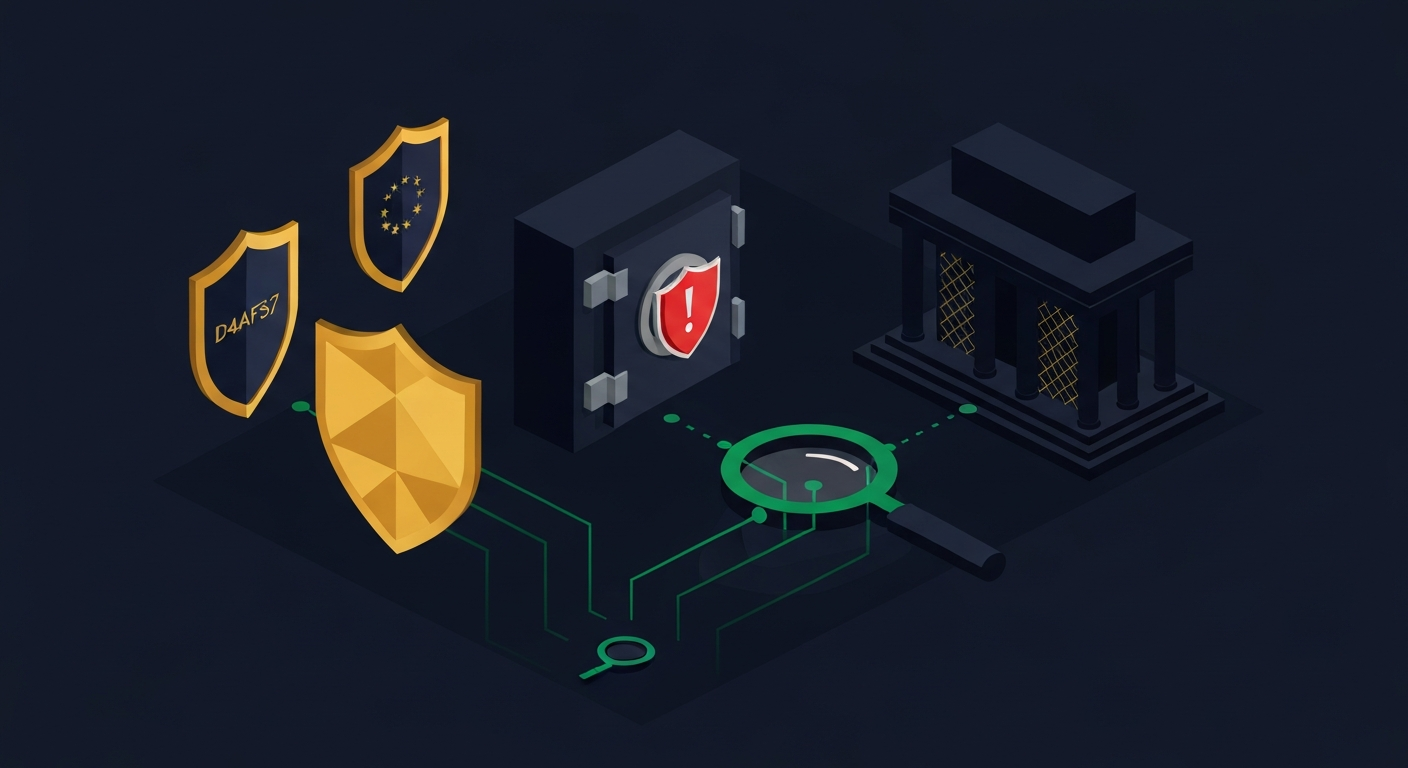
Synack is one of the most prestigious managed penetration testing platforms in the world. Founded by two former NSA and CIA intelligence officers, Synack combines AI-powered vulnerability scanning with a globally distributed network of 1,500+ vetted security researchers — the Synack Red Team (SRT) — to deliver what the company calls "Trusted Penetration Testing." Synack holds FedRAMP High authorisation, DOD Impact Level 4 (IL4) certification, and active contracts with the US Department of Defense, the US Air Force, the Cybersecurity and Infrastructure Security Agency (CISA), and the Department of Homeland Security (DHS).
For European organisations considering Synack as their penetration testing platform, this creates a jurisdiction problem that sits at the most sensitive intersection of data sovereignty law and national security law: a company led by NSA alumni, with deep DoD integration, under the broadest provisions of the US CLOUD Act, processing the most sensitive data category a European organisation can generate — a complete map of its own vulnerabilities, successful exploit chains, and attack playbooks.
This post provides a complete CLOUD Act risk analysis of Synack, introduces the NSA Origins Paradox as a legal concept specific to intelligence-alumni-founded security companies, and compares EU-native alternatives with zero US jurisdictional exposure.
Synack Inc. — Corporate Structure and Founding History
Synack was founded in 2013 by Jay Kaplan and Mark Kuhr, both former officers of the United States National Security Agency and, in Kaplan's case, also a former CIA officer. This founding background is not incidental — it is central to understanding the CLOUD Act risk profile.
Jay Kaplan served at the NSA's elite Tailored Access Operations (TAO) division — the unit responsible for offensive cyber operations against foreign targets. He subsequently worked at the CIA's Counterterrorism Center. Kaplan co-founded Synack specifically to commercialise the methodologies and researcher-vetting approaches developed during his intelligence career.
Mark Kuhr served at the NSA and the National Security Council (NSC). His background includes both defensive and offensive signals intelligence work.
This founding pedigree places Synack in a unique category among penetration testing platforms: a company whose institutional DNA, methodology, and advisory relationships are directly traceable to the US Intelligence Community apparatus. The company's government-sector traction — FedRAMP High, active DoD contracts, CISA partnerships — reflects and reinforces this alignment.
Corporate Domicile
Synack Inc. is incorporated as a Delaware C-Corporation with headquarters in Redwood City, California. The company operates under US federal law in all material respects. There is no European corporate subsidiary or data processing entity that would create any meaningful legal separation between EU customer data and US CLOUD Act obligations.
Investor Profile: Kleiner Perkins, Google Ventures, Microsoft Ventures
Synack's primary investors include:
- Kleiner Perkins (Menlo Park, CA) — one of Silicon Valley's most prominent venture capital firms, with deep government and defence relationships
- Google Ventures (GV) (Mountain View, CA) — Alphabet's corporate venture arm, a Delaware entity subject to US law
- Microsoft Ventures (Redmond, WA) — Microsoft's strategic investment arm
- T-Mobile T-Venture (Bonn, Germany / Bellevue, WA) — Deutsche Telekom's venture arm (note: T-Mobile US is a US Delaware entity separate from Deutsche Telekom AG)
- US Venture Partners (Menlo Park, CA)
- Hewlett Packard Pathfinder (Palo Alto, CA)
Every strategic investor in Synack's capital structure is either a US entity or, in T-Mobile T-Venture's case, the US arm of a multinational. There is no EU-domiciled majority or controlling investor. The entire ownership structure is subject to US jurisdiction.
Synack is a US Delaware C-Corp, founded by NSA/CIA intelligence officers, funded exclusively by US venture capital, with government-grade DoD and IC integrations. This is the jurisdictional baseline.
What Synack Processes — The Maximum Sensitivity Data Category
Penetration testing data represents the most sensitive data category a security organisation can generate about itself. The criticality applies specifically to European organisations because this data, under US CLOUD Act jurisdiction, would provide a comprehensive attack playbook.
Synack Red Team Reports
The Synack Red Team (SRT) delivers:
- Vulnerability discovery reports — complete documentation of every exploitable weakness found in the target system, including the attack vector, vulnerability class, CVSS score, and exploitation steps
- Proof-of-Concept (PoC) exploits — working exploit code demonstrating how a specific vulnerability can be leveraged
- Attack chain documentation — multi-step exploitation paths showing how an attacker could chain individual vulnerabilities into a high-impact compromise
- Credentials harvested during testing — usernames, API keys, access tokens, and session credentials discovered or demonstrated during the engagement
- Network topology and asset discovery — internal architecture maps generated during reconnaissance phases
- Post-exploitation artifacts — evidence of what a real attacker could achieve, including privilege escalation, lateral movement paths, and data exfiltration routes
SmartScan™ Platform Data
Synack's proprietary SmartScan™ AI platform continuously scans customer attack surfaces and feeds findings to the SRT. SmartScan data includes:
- Asset inventory — every publicly reachable IP, domain, port, and service endpoint belonging to the customer
- Technology fingerprinting — the complete software stack running across the customer's infrastructure
- Historical vulnerability trends — longitudinal data on which vulnerabilities were found, patched, and when
- Patch velocity metrics — how quickly the organisation responds to disclosed vulnerabilities
The NSA Origins Paradox
The combination of (a) intelligence-officer founders with ongoing advisory relationships to the US IC community, (b) FedRAMP High / DOD IL4 authorisation indicating deep DoD integration, and (c) a US CLOUD Act-subject corporate structure creates what legal scholars studying data sovereignty call the NSA Origins Paradox:
An organisation founded by NSA officers to commercialise offensive security methodologies, holding the DoD's highest commercial cloud security certification, and operating under CLOUD Act jurisdiction, processes European organisations' complete vulnerability landscapes — creating a structural situation where the capabilities and relationships that make the platform trustworthy to the DoD simultaneously maximise the legal risk to EU data subjects under GDPR and NIS2.
The paradox is not about malicious intent. Synack does not need to voluntarily share EU customer data with US intelligence agencies. The legal risk derives from the structural fact that the US government can compel Synack to produce this data through CLOUD Act orders and national security process — and Synack, as a FedRAMP High holder with active DoD contracts, operates in a legal environment where such process is both legally available and institutionally routine.
CLOUD Act Legal Framework Applied to Synack
The Clarifying Lawful Overseas Use of Data Act (CLOUD Act, 18 U.S.C. § 2713) requires US cloud service providers to provide stored data to US law enforcement and intelligence agencies regardless of where that data is physically stored. For EU organisations, CLOUD Act jurisdiction is triggered by corporate domicile — not data location.
Synack is subject to CLOUD Act obligations because:
- Synack Inc. is incorporated in Delaware under US federal law
- No qualifying EU data processing entity exists to provide legal separation between US parent and EU customer data
- FedRAMP High authorisation places Synack within the most integrated tier of US government-commercial data infrastructure — the companies operating at this tier have pre-established legal channels with US government agencies
National Security Letters (NSLs) and Section 702
Beyond standard CLOUD Act orders, Synack's government relationships expose EU customers to additional legal instruments:
- National Security Letters (NSLs) — administrative subpoenas issued by the FBI without judicial oversight, compelling disclosure of electronic communications metadata
- FISA Section 702 — allows US intelligence agencies to compel US companies to collect and share communications of non-US persons outside the United States
- Executive Order 12333 — the foundational authority for NSA signals intelligence collection, which may apply to data flows involving intelligence-community-adjacent companies
The founding officers' ongoing relationships within the US IC community, while not determinative, create an advisory and institutional ecosystem where these instruments are not abstract legal risks — they are operationally familiar mechanisms.
GDPR Article 46 and Standard Contractual Clauses
Synack offers Standard Contractual Clauses (SCCs) for EU data transfers. However, following the Court of Justice of the EU's Schrems II ruling (Case C-311/18), SCCs do not override CLOUD Act obligations when the data importer is subject to US surveillance law that conflicts with EU fundamental rights.
The Transfer Impact Assessment (TIA) required under Schrems II for Synack would need to address:
- FedRAMP High authorisation as evidence of deep US government integration
- NSA/CIA founding as evidence of IC-aligned institutional relationships
- DOD IL4 certification as evidence of the highest government data-handling tier
- Active DoD, CISA, DHS, and Air Force contracts as evidence of routine government data access relationships
A legally defensible TIA for Synack would very likely conclude that the supplementary measures required by Schrems II cannot be implemented in a way that provides equivalent protection to EU data subjects — particularly given the sensitivity of penetration test data.
CLOUD Act Risk Scorecard — Synack
| Dimension | Score | Detail |
|---|---|---|
| D1: Corporate Structure | 5/5 | Delaware C-Corp, US-only investors (KP/GV/MSFT), NSA/CIA founders |
| D2: Government Contracts | 5/5 | FedRAMP High + DOD IL4 + active DoD/Air Force/CISA/DHS contracts — maximum US government integration |
| D3: Data Sensitivity | 5/5 | Penetration test reports = active vulnerabilities + exploit chains + attack playbooks = maximum possible sensitivity |
| D4: Infrastructure | 3/5 | AWS with US-primary processing; limited EU data residency for pentest reports |
| D5: Compliance Controls | 2/5 | SCCs available but Schrems II TIA would flag DOD/IC integration; no CMEK for EU customers |
| Total | 20/25 | High CLOUD Act jurisdictional risk |
CLOUD Act Risk: 20/25 — High
This is the highest score in the EU Bug Bounty & Pentest Management Series to date, reflecting the unique combination of intelligence-officer founding, maximum government authorisation, and maximum data sensitivity.
NIS2, DORA, and GDPR Regulatory Implications
NIS2 Article 21(2)(d) — Supply Chain Security
NIS2 Article 21(2)(d) requires essential and important entities to assess the security of their ICT supply chain, including "security-related aspects concerning the relationships between each entity and its direct suppliers or service providers." A penetration testing platform holds access to the entity's complete vulnerability landscape — making it one of the most consequential supply chain relationships for NIS2 purposes.
The NIS2 Timing Conflict applies directly to Synack engagements: if a CLOUD Act order or NSL compels Synack to disclose a European entity's vulnerability data while the entity's 72-hour NIS2 incident notification window is still open, the disclosure could trigger mandatory reporting obligations without the entity's knowledge — creating a compliance scenario the entity cannot manage.
DORA Article 28 — ICT Third-Party Risk for Financial Entities
Financial entities under DORA must maintain an ICT third-party risk register and apply enhanced scrutiny to critical ICT service providers. A penetration testing platform with full-scope access to financial infrastructure — core banking systems, payment infrastructure, authentication systems — qualifies as a critical provider under DORA Article 28(2).
The DORA due diligence process would require financial entities to assess:
- Whether Synack's government relationships constitute material conflicts of interest in the context of EU financial system stability
- Whether the CLOUD Act jurisdictional risk for penetration test data constitutes an unacceptable concentration risk under DORA Article 28(4)(d)
- Whether Synack's FedRAMP High/DOD IL4 authorisation creates a situation where EU financial system vulnerability data is accessible through US government channels
DORA-regulated entities should treat Synack as a high-risk third-party provider by default, irrespective of Synack's contractual data processing commitments.
GDPR Article 32 — Technical and Organisational Measures
GDPR Article 32 requires controllers and processors to implement "appropriate technical and organisational measures" to ensure data security. For penetration testing, this creates a notable tension: the purpose of penetration testing is to discover security weaknesses — but if the process of discovering weaknesses creates a new jurisdictional risk (US CLOUD Act access to EU vulnerability data), then the pentest programme itself may undermine the security posture it is intended to improve.
This is the Penetration Test Sovereignty Paradox: engaging a US-jurisdiction pentest platform to improve EU data security simultaneously places the most sensitive possible data about EU systems — the complete vulnerability map — under US government-accessible jurisdiction.
Synack Red Team (SRT) Researcher Access
A dimension specific to Synack that does not apply to traditional pentest firms is the Synack Red Team (SRT) model. Synack engages 1,500+ independent security researchers globally, many of whom hold US security clearances from prior government employment.
From a GDPR and NIS2 perspective, the SRT model raises additional questions:
Researcher Access to EU Customer Vulnerability Data
Each SRT researcher who works on a European customer engagement has access to:
- The customer's asset inventory and scope
- Vulnerability reports from their own testing
- Platform-mediated access to customer systems during the engagement period
Under GDPR Article 28, Synack is a data processor for EU customer data. Each SRT researcher engaged on an EU client programme is a sub-processor. The sub-processor chain for an EU customer engaging Synack includes an indeterminate number of individual researchers, potentially including US government security clearance holders, operating under US legal jurisdiction.
Security Clearance Implications
Researchers with active US government security clearances are subject to classified briefings, non-disclosure obligations, and potentially reporting obligations to US agencies regarding significant vulnerabilities discovered during commercial engagements. The legal interaction between a US-cleared researcher discovering a critical vulnerability in EU critical infrastructure and that researcher's obligations to US government clients is not publicly documented.
EU-Native Alternatives: 0/25 CLOUD Act Exposure
European organisations requiring equivalent penetration testing and managed bug bounty capabilities have multiple EU-domiciled options with zero CLOUD Act jurisdictional exposure.
Intigriti NV — Antwerp, Belgium
Intigriti NV is incorporated in Belgium (KBO 0664.622.654, registered in Antwerp). Founded in 2016, Intigriti operates Europe's largest bug bounty and managed vulnerability disclosure platform, with a researcher community exceeding 60,000 security researchers across Europe.
CLOUD Act Score: 0/25
Key sovereignty features:
- Belgian corporate domicile — subject to Belgian law and GDPR, not US CLOUD Act
- EU-based infrastructure — data processed and stored within EU jurisdiction
- No US PE/VC ownership — Intigriti has received investment from Smartfin Capital (Belgium), Mérieux Développement (France), and Proximus (Belgium) — all EU entities
- GDPR-native — Belgian DPA oversight, EU-standard DPA agreements for all customers
Intigriti offers: managed bug bounty programmes, vulnerability disclosure programmes, live hacking events, pentest coordination, and researcher management — comparable feature parity with Synack's managed platform.
YesWeHack SAS — Paris, France
YesWeHack SAS is incorporated in France (SIRET 82124879200020, Paris 10ème). Founded in 2015, YesWeHack operates Europe's second-largest bug bounty platform, with over 40,000 registered security researchers.
CLOUD Act Score: 0/25
Key sovereignty features:
- French corporate domicile — subject to French law, CNIL oversight, and GDPR
- EU data residency — all customer data processed and stored within the EU
- EU investor base — backed by Bpifrance (French state investment bank), Normandie Participations (regional development fund), and Société Générale (French bank)
- No US ownership — zero US PE/VC involvement, no CLOUD Act jurisdictional hooks
YesWeHack offers: bug bounty programmes, VDP programmes, pentest-as-a-service, and attack surface management — direct feature equivalence with Synack's core platform.
Yogosha SAS — Paris, France
Yogosha SAS is incorporated in France and operates a managed pentest-as-a-service and bug bounty platform specifically targeting European enterprise and public sector clients. Yogosha's researcher community is curated and primarily European, addressing the sub-processor jurisdictional questions raised by Synack's global SRT model.
CLOUD Act Score: 0/25
Yogosha differentiates on:
- Fully vetted European researcher community — reduces sub-processor chain complexity
- Public sector specialisation — French ANSSI-aligned security practices
- Pentest-as-a-service parity — structured engagements comparable to Synack's managed offering
Feature and Compliance Comparison
| Capability | Synack | Intigriti | YesWeHack | Yogosha |
|---|---|---|---|---|
| Managed Bug Bounty | ✅ | ✅ | ✅ | ✅ |
| Vulnerability Disclosure (VDP) | ✅ | ✅ | ✅ | ✅ |
| Pentest-as-a-Service | ✅ SmartScan+SRT | Partial | ✅ | ✅ |
| AI Attack Surface Scanning | ✅ SmartScan™ | Partial | ✅ ASM | ✅ |
| Researcher Network Size | 1,500+ (global) | 60,000+ (EU-led) | 40,000+ (EU-led) | Curated EU |
| FedRAMP / DoD Auth | ✅ FedRAMP High + IL4 | ❌ | ❌ | ❌ |
| EU Corporate Domicile | ❌ Delaware | ✅ Belgium | ✅ France | ✅ France |
| CLOUD Act Risk Score | 20/25 🔴 | 0/25 🟢 | 0/25 🟢 | 0/25 🟢 |
| EU Data Residency | Partial | ✅ | ✅ | ✅ |
| GDPR DPA Available | ✅ SCCs (Schrems II risk) | ✅ Native GDPR | ✅ Native GDPR | ✅ Native GDPR |
| NIS2 Supply Chain Compliant | ⚠️ Risk | ✅ | ✅ | ✅ |
Procurement Guidance for European Security Teams
High-Risk Scenarios — Avoid Synack
The following use cases present unacceptable CLOUD Act risk for European organisations:
- Critical infrastructure operators — energy, water, transport, healthcare entities under NIS2 Annex I whose vulnerability data would represent a national security interest to EU member states
- DORA-regulated financial entities — banks, insurance companies, investment firms where penetration test data covers payment infrastructure and core banking systems
- Defence and government contractors — organisations handling classified EU member state information, where a US CLOUD Act order for penetration test data would represent a foreign intelligence collection event
- Organisations with pending NIS2 incident notifications — where simultaneous CLOUD Act disclosure of vulnerability data could create unmanageable compliance scenarios
- GDPR Article 9 special category data processors — healthcare, legal, HR platforms where penetration test access includes systems processing sensitive personal data
Acceptable Use Cases — If US Compliance Is Required
Synack's FedRAMP High and DOD IL4 certifications make it the logical choice for:
- EU subsidiaries of US-based multinationals that must align with US parent company security compliance
- EU organisations with contractual obligations requiring US government-approved security tooling
- Organisations whose primary data sovereignty obligation is to US law (US DoD contractors operating in Europe)
Migration Path
European organisations currently using Synack that wish to move to EU-native alternatives should:
- Data portability: Request a complete export of all historical vulnerability reports, SRT findings, and SmartScan® asset data before contract expiry
- Parallel engagement: Run a YesWeHack or Intigriti programme in parallel during a transition quarter to calibrate researcher network quality and coverage
- Researcher continuity: Both Intigriti and YesWeHack operate EU researcher networks with overlap with global platforms — critical researchers can often be individually engaged through EU-native platforms
Conclusion
Synack occupies a unique position in the penetration testing market: the highest government trust certification (FedRAMP High + DOD IL4), the most intelligence-community-proximate founding team (NSA/CIA officers), and the most sensitive data category possible (complete EU vulnerability landscapes, exploit chains, and attack playbooks) — all under US CLOUD Act jurisdiction.
The NSA Origins Paradox — a company built by intelligence officers to deliver intelligence-grade security methodology, now holding EU organisations' complete attack surfaces under US government-accessible jurisdiction — is not a hypothetical risk. It is a structural consequence of Synack's corporate history, ownership, government relationships, and legal domicile.
For European organisations subject to GDPR, NIS2, or DORA, the risk calculus is straightforward: EU-native platforms (Intigriti, YesWeHack, Yogosha) provide equivalent penetration testing and bug bounty capabilities at 0/25 CLOUD Act risk, compared to Synack's 20/25 — the highest score recorded in this series.
If your penetration testing platform can be compelled by US law enforcement or intelligence agencies to produce a complete map of your organisation's vulnerabilities, successful exploits, and attack chains, then the pentest programme intended to protect EU systems may be structurally undermining EU data sovereignty.
Intigriti NV (Belgium, 0/25), YesWeHack SAS (France, 0/25), and Yogosha SAS (France, 0/25) provide the sovereign-compliant path.
This analysis is based on publicly available corporate filings, investor disclosures, government contract databases, and published legal frameworks. It does not constitute legal advice. European organisations should conduct their own Transfer Impact Assessments under Schrems II before engaging any third-party data processor.
Part of the sota.io EU Bug Bounty & Pentest Management Series: HackerOne · Bugcrowd · Synack · Cobalt.io · Finale
EU-Native Hosting
Ready to move to EU-sovereign infrastructure?
sota.io is a German-hosted PaaS — no CLOUD Act exposure, no US jurisdiction, full GDPR compliance by design. Deploy your first app in minutes.