Puppet EU Alternative 2026: Perforce Acquisition, CLOUD Act 16/25, and EU-Native Config Management
Post #3 in the sota.io EU IaC Tools Series
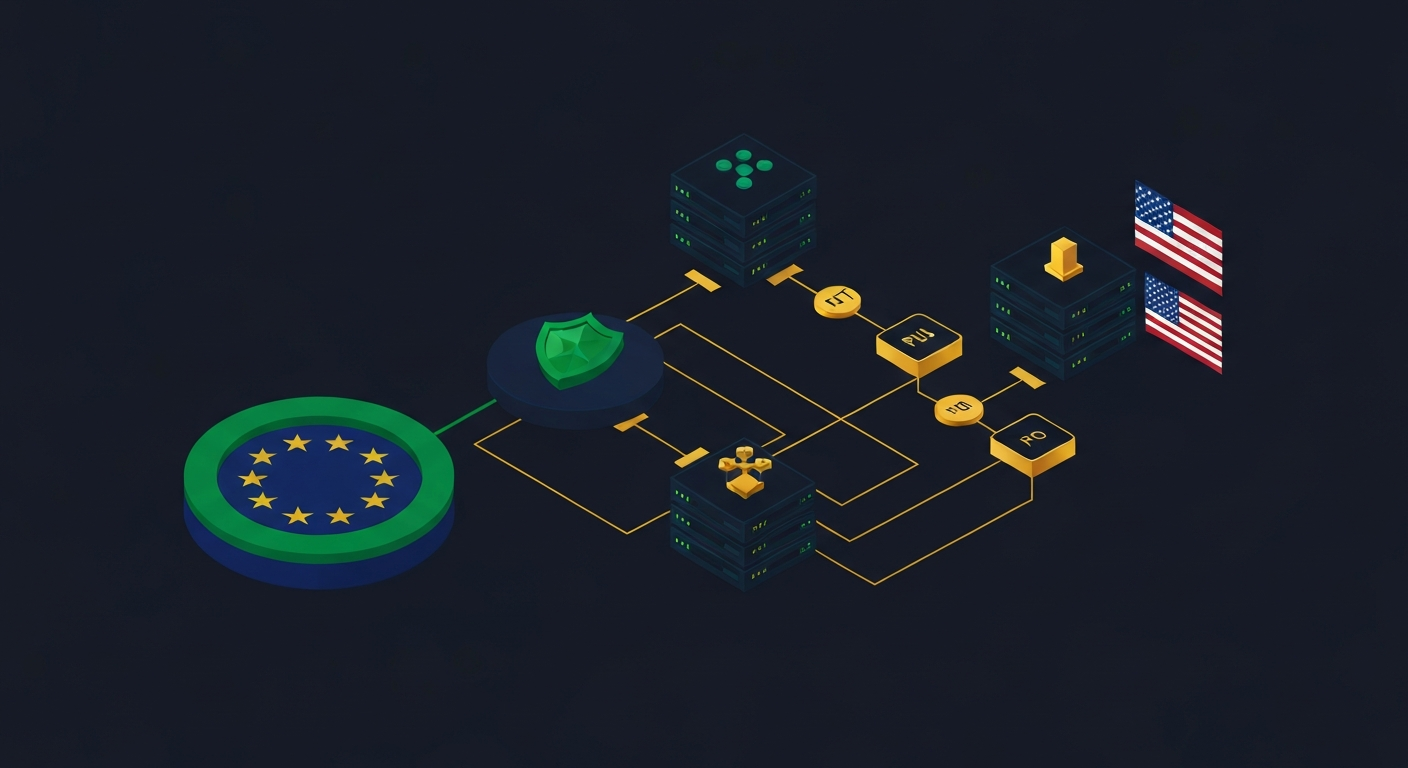
Puppet began in 2005 as Puppet Labs Inc., founded in Portland, Oregon by Luke Kanies. For nearly two decades it defined declarative configuration management — the idea that you describe desired system state and an agent enforces it continuously. In May 2022, Puppet was acquired by Perforce Software, Inc., a Minneapolis-based infrastructure software company itself owned by US private equity firm Clearlake Capital Group (Santa Monica, California).
That acquisition changed everything for EU data protection compliance. Puppet is no longer an independent company. It is a product line within a US-incorporated parent backed by US institutional investors — bringing full CLOUD Act jurisdiction to Puppet's licensing infrastructure, Puppet Forge module repository, and any cloud-hosted enterprise components.
For EU organisations running Puppet to manage hundreds or thousands of servers, the question is no longer just whether Puppet is open source. The question is: which parts of your Puppet infrastructure call home to US-controlled servers, and what data do they send?
CLOUD Act Score: Puppet Enterprise — 16/25
| Dimension | Score | Evidence |
|---|---|---|
| US Jurisdiction | 5/5 | Perforce Software, Inc. is a Delaware corporation. US "person" under CLOUD Act §2713. No EU parent, no EU holding structure. |
| Data Infrastructure | 2/5 | Puppet Enterprise is primarily self-hosted. BUT: Puppet Forge (forge.puppet.com) is US-hosted, PE license servers are Perforce-operated, CD4PE cloud option uses US infrastructure. |
| Personnel / Org Chain | 4/5 | Perforce management chain is US-based. Clearlake Capital partners are Santa Monica, CA. All engineering leadership reports into US C-suite. |
| Investors | 4/5 | Clearlake Capital Group (Santa Monica, CA) — primary owner. TA Associates (Boston, MA) — prior PE backer. Francisco Partners had prior involvement. All US institutional. |
| Government Cooperation | 1/5 | No known NSA/DoD contracts specific to Puppet. Perforce has US government customers via Helix Core (version control). Limited public disclosure. |
| Total | 16/25 | Significant CLOUD Act exposure through corporate structure and US-hosted ancillary infrastructure. Lower than Ansible (20/25) due to primarily self-hosted deployment model. |
Interpretation: A score of 16/25 reflects that Puppet Enterprise's core functionality runs on customer premises (not US cloud), but the corporate parent, licensing infrastructure, module repository, and optional SaaS components create CLOUD Act jurisdiction. Under CLOUD Act §2703(d), US authorities can compel Perforce to produce data from any system Perforce controls — including license compliance telemetry and Forge usage metadata.
The Corporate Structure: From Puppet Labs to Perforce
Understanding GDPR exposure requires tracing the full acquisition chain:
2005: Puppet Labs Inc. incorporated in Oregon, US. Self-funded, later VC-backed (Kleiner Perkins, Cisco Investments, etc.).
2016: Rebranded to Puppet Inc. Raised $42M Series E. US investor-controlled throughout.
2022 (May): Puppet acquired by Perforce Software, Inc. Terms undisclosed.
Perforce Software, Inc.:
- Delaware corporation
- Headquarters: Minneapolis, MN
- Primary owner: Clearlake Capital Group, LLC (Santa Monica, CA) — US private equity
- Portfolio companies include Helix Core (version control), Klocwork (static analysis), Zephyr (test management), and now Puppet
- Annual revenue: ~$200M+ combined portfolio (estimated)
- No EU parent, no EU holding company, no EU incorporation
This means that if a US court issues a lawful demand for data controlled by Perforce — including telemetry about your Puppet Enterprise environment — Perforce cannot invoke EU GDPR as a legal shield. CLOUD Act §2713 makes US persons liable for data stored "abroad" or in subsidiaries, meaning even data on EU servers controlled by Perforce is subject to US court orders.
Five GDPR Risks in Puppet Enterprise
Risk 1: Puppet Forge Telemetry (GDPR Art. 44 — Third Country Transfer)
Puppet Forge (forge.puppet.com) is the central module repository for Puppet content. Every production Puppet environment that installs or updates modules via puppet module install or r10k sends requests to Forge servers operated by Perforce.
What Forge receives:
- Module names and versions being installed
- Puppet agent version and OS type
- Environment identifier (which can contain hostnames or infrastructure naming conventions)
- Source IP address (maps to your infrastructure location)
- API tokens for authenticated Forge access
Why this matters under GDPR: Forge usage metadata constitutes personal data (IP addresses) and operational data that may reveal your entire infrastructure's software dependency graph. These requests go to US-hosted servers operated by Perforce. No SCCs are in place by default. Art. 44 prohibits transfers to third countries without adequate safeguards — the US does not have an adequacy decision covering Perforce/Clearlake's infrastructure.
Mitigation (partial): Run a local Puppet Forge mirror (using the Pulp Puppet plugin or puppet-forge-server) and block outbound traffic to forge.puppet.com at the network level.
Risk 2: Puppet Enterprise License Compliance Reporting (GDPR Art. 28 — Sub-Processors)
Puppet Enterprise (PE) includes license compliance infrastructure that regularly contacts Perforce license servers. The telemetry includes:
- Node count (how many servers your PE deployment manages)
- PE version and environment details
- Catalog compilation statistics
- Environment names (which frequently encode business unit names, application names, or datacenter identifiers)
This data flows to Perforce-operated license servers in the United States as part of PE's subscription model. Under GDPR Art. 28, Perforce acts as a data processor — but the sub-processor agreement is US-law-governed and Perforce cannot resist CLOUD Act demands even if GDPR DPAs are in place.
Mitigation (partial): Puppet Enterprise Air Gap Edition exists for disconnected environments, but it requires a separate commercial agreement and removes PE's update notification capabilities.
Risk 3: CD4PE (Continuous Delivery for Puppet Enterprise) — Pipeline Data Exposure (GDPR Art. 5 — Data Minimisation)
Continuous Delivery for Puppet Enterprise (CD4PE) is Puppet's deployment pipeline tool, integrating Git workflows with PE environments. When deployed in cloud-hosted mode, CD4PE stores:
- Code commit metadata (branch names, commit authors, commit messages)
- Deployment job history (which manifests ran against which environments)
- Impact analysis results (which nodes would be affected by a change)
- Pipeline stage logs (including Puppet catalog output, which may contain system facts)
System facts collected by Puppet agents include: hostname, FQDN, IP addresses, OS version, hardware profile, and installed software list. When this data flows through cloud-hosted CD4PE, it reaches Perforce-controlled US infrastructure.
Note: Self-hosted CD4PE (Docker-based) avoids this risk, but Puppet's commercial documentation increasingly emphasises the cloud-hosted option.
Risk 4: Puppet Development Kit (PDK) Analytics (GDPR Art. 25 — Privacy by Design)
The Puppet Development Kit (PDK) is the standard tool for creating and testing Puppet modules. By default, PDK submits analytics telemetry to Perforce including:
- PDK commands run
- Module development actions
- Error rates and failure types
- OS version and Ruby version
Opt-out requires explicit configuration: analytics: disabled in ~/.config/puppet/analytics.yml. The default-on posture violates GDPR Art. 25's requirement for privacy by design and by default.
Mitigation: Enforce PDK_DISABLE_ANALYTICS=true as an environment variable in CI/CD pipelines and developer workstations. This blocks PDK telemetry from leaving EU infrastructure.
Risk 5: Puppet Bolt Orchestration Analytics (GDPR Art. 13 — Transparency)
Puppet Bolt is the agentless task orchestration tool (SSH/WinRM-based execution across nodes). Bolt includes analytics that are enabled by default:
- Task execution metadata
- Inventory size (how many targets in each task run)
- Module usage statistics
- Error rates
Bolt's privacy disclosure in ~/.puppetlabs/etc/bolt/analytics.yml provides opt-out but does not prominently inform users of the data collection (Art. 13 violation). Bolt analytics send data to Perforce infrastructure in the US.
Mitigation: Set disabled: true in ~/.puppetlabs/etc/bolt/analytics.yml or enforce BOLT_DISABLE_ANALYTICS=true system-wide.
EU-Native Configuration Management Alternatives
Option 1: CFEngine (CFEngine AS — Oslo, Norway)
CLOUD Act Score: 0/25
CFEngine is arguably the most EU-sovereign enterprise configuration management tool available. Founded by Mark Burgess (Norwegian computer scientist, inventor of the concept of computer immunology), CFEngine AS is headquartered in Oslo, Norway with no US parent, no US investment, and no US operational infrastructure.
Corporate structure:
- CFEngine AS — Norwegian limited company (AS = aksjeselskap)
- HQ: Oslo, Norway
- Founders: Norwegian
- No US PE backing, no US venture capital
- Open source: CFEngine Community Edition (GPL v3)
- Commercial: CFEngine Enterprise (licensed from CFEngine AS)
Technical capabilities:
- Agent-based configuration management (cfengine daemon continuous enforcement)
- Promise theory model (convergent enforcement, idempotent)
- Scales to 100,000+ nodes in a single hub (benchmark: 10,000 nodes per hub)
- Built in C — extremely lightweight agent footprint (< 10MB RAM)
- Works without network connectivity (agents converge locally)
- Policy server (hub) entirely self-hosted
Hosting cost: Hetzner CX31 (2 vCPU, 8GB RAM, 80GB NVMe) — €9.16/month handles ~5,000 managed nodes. CFEngine Community Edition: free. CFEngine Enterprise: priced per node/year (contact sales).
Migration from Puppet: CFEngine uses different syntax (CFEngine Policy Language, .cf files) versus Puppet DSL. Migration is a rewrite, not a conversion. Timeline: 6–12 weeks for a mid-size environment (100–500 managed nodes).
Option 2: Rudder (Normation SAS — Paris, France)
CLOUD Act Score: 0/25
Rudder is a compliance and configuration management platform built by Normation SAS, a French company headquartered in Paris. It combines configuration enforcement with continuous compliance auditing — making it particularly useful for GDPR-regulated environments that need audit trails.
Corporate structure:
- Normation SAS — French company (Société par Actions Simplifiée)
- HQ: Paris, France
- Founded: 2009
- No US parent, no US investors
- Open source: Rudder Community Edition (Apache 2.0)
- Commercial: Rudder Enterprise (Normation SAS subscription)
Technical capabilities:
- Agent-based configuration management with web UI
- Continuous compliance scoring (real-time audit dashboard)
- Directive-based policy authoring (UI-first, no DSL required for basic use)
- Audit trail for all configuration changes (GDPR Art. 5(2) accountability)
- Support for Debian/Ubuntu/RHEL/Windows
- Built-in compliance reporting with GDPR-relevant metrics
Why Rudder is valuable for GDPR compliance: The built-in audit trail and compliance scoring directly supports GDPR Art. 32 (technical measures) and Art. 5(2) (accountability). Auditors can see which systems are compliant with security baselines without exporting data to US-hosted SaaS.
Hosting cost: Single Rudder server on Hetzner CX41 (4 vCPU, 16GB RAM) handles ~500 managed nodes — €18.39/month. Community Edition: free. Enterprise adds LDAP, RBAC, advanced compliance reports.
Migration from Puppet: Rudder uses its own concept model (techniques, directives, rules), but imports Puppet manifests partially. Timeline: 4–8 weeks for straightforward environments.
Option 3: Open Source Puppet with EU Hosting and Telemetry Disabled
CLOUD Act Score: 0/25 (if properly configured)
Puppet Community Edition (open source, Apache 2.0) running entirely on EU infrastructure with all telemetry disabled carries zero CLOUD Act exposure. The key requirements:
- No Puppet Forge API calls: Use a local Forge mirror (Pulp Puppet) or vendor all modules directly in your r10k-managed control repository.
- PDK analytics disabled:
PDK_DISABLE_ANALYTICS=trueenforced system-wide. - Bolt analytics disabled:
disabled: truein~/.puppetlabs/etc/bolt/analytics.yml. - No Puppet Enterprise license features: Use Community Edition only (no PE server subscription).
- PuppetDB on EU-hosted PostgreSQL: Self-hosted PuppetDB on Hetzner, OVHcloud, or Scaleway.
Tradeoff: You lose PE's orchestration UI, RBAC, activity reports, and commercial support. Community Edition has no web console (use PuppetDB dashboard instead).
Hosting cost: Puppet Server + PuppetDB on Hetzner CX31 — €9.16/month handles ~200 agents comfortably.
Option 4: mgmt Config (James Shubin — Open Source)
CLOUD Act Score: 0/25
mgmt config is a next-generation configuration management tool by James Shubin, designed for distributed, event-driven infrastructure management. It uses a reactive language (MCL) rather than Puppet DSL.
GDPR relevance: No central server required — nodes communicate peer-to-peer via etcd. No telemetry. No external registry. Suitable for air-gapped environments. Community-maintained, no PE-equivalent commercial offering.
Maturity note: mgmt is still under active development and not yet at enterprise maturity level. Suitable for greenfield EU-sovereign infrastructure projects with engineering bandwidth.
Migration Guide: Puppet Enterprise to EU-Native Config Management
Week 1–2: Inventory and Assessment
# Export all Puppet node inventory
puppet node list --render-as json > /tmp/puppet-nodes.json

# Export all Puppet classes and resource counts
puppet resource -e production --detailed > /tmp/puppet-classes.txt

# List all Puppet modules in use
puppet module list --render-as json > /tmp/puppet-modules.json

# Identify Forge-hosted vs. in-house modules
cat /tmp/puppet-modules.json | jq '.modules[] | select(.forge_name != null) | .forge_name'
Assessment criteria:
- How many nodes under management?
- What percentage of modules are Forge-fetched vs. vendored?
- Is CD4PE in use? (cloud-hosted or self-hosted?)
- Are any Puppet Enterprise features (RBAC, Activity Service, Orchestrator) in use?
Week 3–4: EU Infrastructure Setup
For CFEngine path:
# On Hetzner CX31 (Ubuntu 22.04)
wget -qO- https://cfengine.package-repos.s3.amazonaws.com/releases/cfengine_hub.sh | sudo bash
# Configure policy server
sudo cf-agent --bootstrap <hub-ip>
For Rudder path:
# On Hetzner CX41 (Debian 12)
curl -s https://repository.rudder.io/apt/rudder_setup.sh | bash
apt-get install rudder-server
Week 5–8: Policy Migration
Puppet DSL → CFEngine Policy Language (partial conversion guide):
# Puppet DSL
file { '/etc/nginx/nginx.conf':
  ensure  => file,
  source  => 'puppet:///modules/nginx/nginx.conf',
  owner   => 'root',
  mode    => '0644',
  notify  => Service['nginx'],
}
# CFEngine Policy Language equivalent
files:
  "/etc/nginx/nginx.conf"
    copy_from    => local_cp("${sys.workdir}/masterfiles/nginx/nginx.conf"),
    perms        => mog("644", "root", "root"),
    classes      => if_repaired("reload_nginx");

commands:
  reload_nginx::
    "/usr/sbin/nginx -s reload";
Key conceptual differences:
| Puppet | CFEngine |
|---|---|
| Catalog compilation on server | Policy evaluated locally on agent |
| Resource types (file, service, etc.) | Promise bundles |
| Notify/Before ordering | Classes (conditionals) |
| PuppetDB for reporting | CFEngine Enterprise Mission Portal |
| Hiera for data separation | CFEngine variables + augments |
Week 9–12: Cutover and Decommission
- Run CFEngine/Rudder agents alongside Puppet agents (dry-run mode) on a subset of nodes
- Verify configuration convergence matches Puppet's desired state
- Disable Puppet agent on migrated nodes:
puppet agent --disable "Migrated to CFEngine" - Block outbound traffic to puppet.com, forge.puppet.com at firewall level
- Block PDK/Bolt telemetry endpoints:
reports.puppet.com,pd.datadoghq.com(used by Puppet analytics) - Decommission Puppet Server and PuppetDB
- GDPR Art. 28 cleanup: terminate Puppet Enterprise license and DPA with Perforce
Telemetry Firewall Rules (immediate mitigation, pre-migration)
# Block Puppet Forge API calls (add to UFW or iptables)
ufw deny out from any to $(dig +short forge.puppet.com | head -1)

# Block PE analytics endpoint
ufw deny out to any port 443 comment "puppet-analytics" \
  from any to $(dig +short pd.datadoghq.com | head -1)

# Block PDK analytics
echo "export PDK_DISABLE_ANALYTICS=true" >> /etc/environment

# Block Bolt analytics
mkdir -p /etc/puppetlabs/bolt
echo "disabled: true" > /etc/puppetlabs/bolt/analytics.yml
Cost Comparison: Puppet Enterprise vs EU Alternatives
| Solution | Annual Cost (100 nodes) | CLOUD Act | EU Support |
|---|---|---|---|
| Puppet Enterprise | ~€15,000–€25,000/year | 16/25 | No (US entity) |
| CFEngine Enterprise | ~€5,000–€12,000/year | 0/25 | Yes (Oslo, Norway) |
| Rudder Enterprise | ~€3,600–€8,400/year | 0/25 | Yes (Paris, France) |
| Open Source Puppet (EU-hosted) | €110/year (hosting only) | 0/25 | Community |
| CFEngine Community | €110/year (hosting only) | 0/25 | Community |
Key takeaway: EU-sovereign alternatives cost 40–80% less than Puppet Enterprise while achieving full GDPR compliance and eliminating CLOUD Act jurisdiction.
GDPR Art. 44-49 Compliance Assessment
Running Puppet Enterprise in an EU environment with default settings constitutes unlawful international data transfers under GDPR Chapter V:
| Data Category | Transfer Destination | Legal Basis Needed | Available? |
|---|---|---|---|
| Forge API telemetry (IP, module names) | forge.puppet.com (US) | Art. 46 SCCs | No default SCCs |
| PE license telemetry | Perforce license servers (US) | Art. 46 SCCs | Subject to PE DPA terms |
| PDK analytics | Perforce analytics (US) | Art. 46 SCCs | Opt-out required |
| Bolt analytics | Perforce analytics (US) | Art. 46 SCCs | Opt-out required |
| CD4PE (cloud mode) | Perforce cloud (US) | Art. 46 SCCs | Cloud option DPA required |
Under GDPR Art. 44, transferring personal data to a third country requires either an adequacy decision (the US-EU Data Privacy Framework covers only US entities enrolled in the DPF — Perforce/Clearlake participation must be verified separately) or Standard Contractual Clauses (SCCs) per Art. 46.
Critical gap: Even if SCCs are in place, the CJEU's Schrems II ruling (C-311/18, July 2020) requires a Transfer Impact Assessment (TIA) that evaluates whether US law (specifically CLOUD Act §2703 and FISA §702) undermines the SCCs in practice. Given that Perforce is a US person with active connections to US government customers (via Helix Core), a TIA for Puppet Enterprise would likely conclude that SCCs cannot provide equivalent protection to EU-based processing.
Summary: Puppet Under Perforce in 2026
Puppet's 2022 acquisition by Perforce transformed its compliance posture. The core technology remains strong — Puppet DSL and Facter are mature, the agent convergence model is proven at scale. But the corporate and legal structure now carries full CLOUD Act exposure.
For EU organisations managing servers with Puppet Enterprise:
- Immediate action: Disable all telemetry (PDK, Bolt, Forge direct access) and block analytics endpoints at the firewall.
- Medium-term: Evaluate CFEngine (Norwegian, 0/25) or Rudder (French, 0/25) as enterprise replacements.
- Air-gap option: Open source Puppet with local Forge mirror is GDPR-compliant at 0/25 if properly configured.
- Migration timeline: 6–12 weeks for mid-size environments (CFEngine path) or 4–8 weeks (Rudder path for compliance-focused teams).
The EU-IaC-TOOLS-SERIE reveals a clear pattern: US-owned configuration management platforms (Terraform/HashiCorp/IBM: 16/25, Pulumi: 17/25, Ansible/Red Hat/IBM: 20/25, Puppet/Perforce: 16/25) all carry significant CLOUD Act exposure regardless of whether they are primarily self-hosted. EU-native alternatives (CFEngine, Rudder, OpenTofu) achieve 0–2/25 by eliminating US jurisdiction entirely.
Next in the EU-IaC-TOOLS-SERIE: Chef (Progress Software Corporation) — CLOUD Act exposure from Progress's Delaware incorporation and Broadcom-adjacent ownership history. Chef InSpec and Habitat carry their own compliance telemetry risk.
sota.io is an EU-native managed PaaS — no US parent, no CLOUD Act jurisdiction, Hetzner Germany infrastructure. Deploy from Git, GDPR-compliant by default. Start free →
See Also
- Pulumi EU Alternative 2026: Seattle-Based IaC, CLOUD Act 17/25 — IaC state files are infrastructure intelligence; Pulumi Cloud stores your full EU topology in US-jurisdiction servers compellable under CLOUD Act §2713.
- Ansible EU Alternative 2026: Red Hat/IBM, CLOUD Act 20/25 — IBM's Red Hat acquisition gives US authorities access to AAP execution logs and Galaxy inventory data via the same CLOUD Act exposure Puppet carries under Perforce.
- Chef EU Alternative 2026: Progress Software, CLOUD Act 18/25 — Chef shares the Puppet pattern: strong open-source core, US-owned managed layer; Progress Software and Perforce are both Delaware-registered with equivalent CLOUD Act risk.
EU-Native Hosting
Ready to move to EU-sovereign infrastructure?
sota.io is a German-hosted PaaS — no CLOUD Act exposure, no US jurisdiction, full GDPR compliance by design. Deploy your first app in minutes.