EU AI Act International Compliance Finale 2026: Complete Multi-Framework Comparison & Developer Toolkit
Post #5 (Finale) in the EU AI Act International Compliance 2026 Series
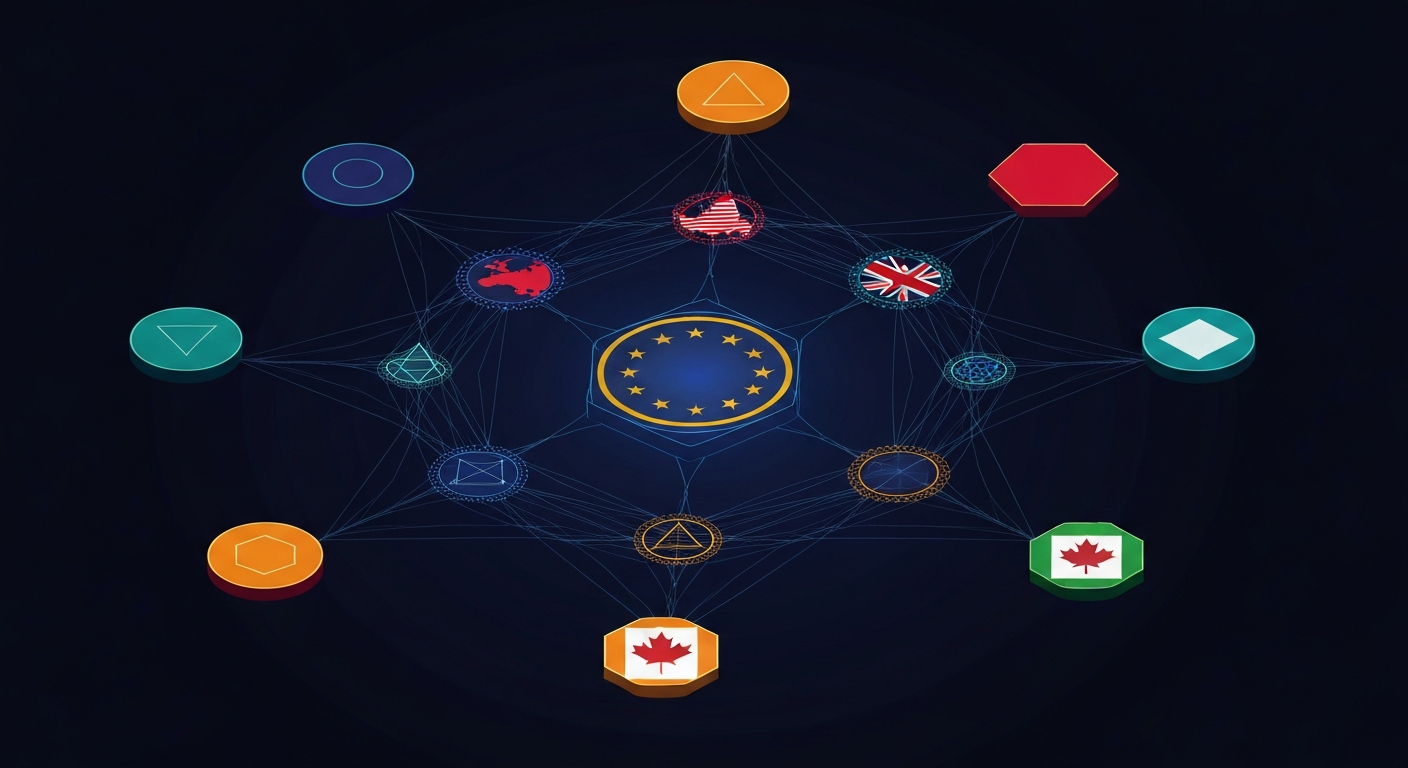
The EU AI Act's 2 August 2026 deadline for high-risk AI obligations is now less than 65 days away. This finale post synthesises four previous deep-dives — against NIST AI RMF, ISO 42001, the UK Pro-Innovation AI Framework, and Singapore's PDPC Model AI Governance Framework — and adds three more jurisdictions: China's Generative AI Interim Measures, Canada's Artificial Intelligence and Data Act (AIDA), and Brazil's AI Bill (PL 2338/2023).
The result is a practical global AI compliance map that tells you exactly which obligations translate across frameworks, which are EU-unique, and how to build a single compliance programme that satisfies multiple regulators simultaneously.
Why Multi-Framework Compliance Is Now Table Stakes
SaaS companies operating internationally face a fractured AI regulatory landscape. Serving EU customers triggers the AI Act. A US federal contract can require NIST AI RMF alignment. Enterprise buyers routinely request ISO 42001 certification. APAC expansion means navigating Singapore's voluntary but market-expected PDPC framework and China's binding Interim Measures if you target mainland Chinese users.
Building separate silos for each jurisdiction is neither practical nor cost-effective. The good news: there is between 55% and 70% conceptual overlap across these frameworks. A unified compliance architecture — built with EU AI Act obligations at its core — satisfies most international requirements with minimal incremental effort.
The Seven Frameworks at a Glance
1. EU AI Act (2024/1689) — Binding, Risk-Based, August 2026
The EU AI Act introduces a four-tier risk classification (unacceptable, high-risk, limited-risk, minimal-risk) with binding obligations that escalate by tier. For high-risk AI systems, the key legal requirements are:
- Art.9 — Risk management system: continuous lifecycle process, not a one-time audit
- Art.10 — Data and data governance: training data documentation, bias examination, special-category safeguards
- Art.11 — Technical documentation: Annex IV template, updated throughout the lifecycle
- Art.13 — Transparency to deployers: instructions for use, intended purpose, performance limits
- Art.14 — Human oversight: stop mechanism, override authority, monitoring of automation bias
- Art.26 — Deployer obligations: fundamental rights impact assessment, staff training, post-market logging
- Art.50 — Transparency for GPAI: disclosure when content is AI-generated
- Art.73 — Serious incident reporting: 15-day initial, 10-day root-cause, 2-day patient-safety timelines
Enforcement model: National Competent Authorities (NCAs) in each member state, coordinated by the EU AI Office. Penalties up to €35M or 7% global turnover.
2. NIST AI Risk Management Framework (US, Voluntary)
NIST AI RMF organises AI governance into four functions: GOVERN (accountability structures), MAP (contextual risk identification), MEASURE (risk analysis and testing), MANAGE (risk treatment and monitoring). It is voluntary at the federal level but increasingly required by US government procurement and sector regulators (financial services, healthcare).
Overlap with EU AI Act: Very high — approximately 80% of EU AI Act high-risk obligations map to NIST AI RMF sub-categories. The primary difference is legal enforceability and the EU's prescriptive documentation templates.
3. ISO/IEC 42001:2023 — International AI Management Standard
ISO 42001 provides a certifiable AI Management System (AIMS) structure, mirroring ISO 9001 and ISO 27001 in its Plan-Do-Check-Act model. Clauses 4–10 cover context, leadership, planning, support, operations, performance evaluation, and improvement.
Overlap with EU AI Act: 70–75%. ISO 42001 does not prescribe specific documentation formats (unlike EU AI Act Annex IV) but its Annex A controls cover risk assessment, transparency, and human oversight in ways that directly support AI Act compliance artefacts.
4. UK Pro-Innovation AI Framework (Voluntary, Principles-Based)
The UK framework — published by DSIT and the AI Safety Institute — establishes five principles: safety, security, robustness; appropriate transparency and explainability; fairness; accountability and governance; and contestability and redress. It is voluntary, with sector regulators (FCA, ICO, CMA) expected to apply these principles to their domains.
Overlap with EU AI Act: 60–65% conceptually. The UK framework lacks the EU's detailed procedural obligations (no Annex IV equivalent) but aligns strongly on transparency, human oversight, and accountability.
5. Singapore PDPC Model AI Governance Framework (Voluntary, Risk-Based)
Singapore's framework — operated by the Infocomm Media Development Authority (IMDA) and the Personal Data Protection Commission — is structured around four governance pillars: internal governance structures, risk determination, operations management, and stakeholder interaction. The AI Verify testing framework provides a toolkit for validating compliance against 11 AI ethics principles.
Overlap with EU AI Act: 55–60%. Strongest alignment on transparency and human oversight; weakest on formal documentation requirements.
6. China Generative AI Interim Measures (Binding, 2023)
China's Interim Measures for the Management of Generative Artificial Intelligence Services (effective 2023) apply to any service providing generative AI to the public in China. Key obligations include: pre-launch safety assessment and algorithm registration with the Cyberspace Administration of China (CAC), content moderation to block "illegal content" under Chinese law, data localisation for personal data of mainland Chinese users, and watermarking/labelling of AI-generated content.
Overlap with EU AI Act: 30–35%. Both require pre-deployment risk assessment and GPAI content labelling (EU Art.50). The divergence is fundamental: China's Measures are content-centric and sovereignty-driven; the EU AI Act is risk-based and rights-centric. A company operating in both jurisdictions must maintain two separate compliance programmes for the regulator-facing obligations.
7. Canada AIDA / Bill C-27 (Proposed, Not Yet in Force)
Canada's Artificial Intelligence and Data Act, part of Bill C-27, proposes obligations for "high-impact AI systems" — a concept broadly analogous to the EU's high-risk category. Key proposed obligations include risk assessment, mitigation measures, monitoring, and incident notification. As of mid-2026, Bill C-27 has passed second reading but has not yet received Royal Assent.
Overlap with EU AI Act: 65–70% (proposal stage). The AIDA drafters explicitly referenced the EU AI Act; the risk-based approach, documentation requirements, and human oversight concepts are structurally similar. An EU AI Act-compliant programme will satisfy the majority of anticipated AIDA obligations, though the specific documentation formats will differ.
The Global AI Compliance Matrix
The table below maps seven frameworks against eight compliance dimensions, using a three-point scale:
- ●●● — Explicit, detailed requirement
- ●●○ — Addressed but less prescriptive
- ●○○ — Partially addressed or sector-specific
- ○○○ — Not addressed / voluntary guidance only
| Compliance Dimension | EU AI Act | NIST AI RMF | ISO 42001 | UK Framework | Singapore PDPC | China Interim Measures | Canada AIDA |
|---|---|---|---|---|---|---|---|
| Risk classification tiers | ●●● | ●●○ | ●●● | ●○○ | ●●○ | ●○○ | ●●○ |
| Pre-deployment risk assessment | ●●● | ●●● | ●●● | ●●○ | ●●● | ●●● | ●●● |
| Technical documentation | ●●● | ●●○ | ●●○ | ○○○ | ○○○ | ●●○ | ●●○ |
| Training data governance | ●●● | ●●○ | ●●○ | ●○○ | ●○○ | ●●● | ●●○ |
| Human oversight / stop mechanism | ●●● | ●●● | ●●○ | ●●● | ●●○ | ○○○ | ●●○ |
| Transparency / disclosure | ●●● | ●●○ | ●●○ | ●●● | ●●● | ●●● | ●●● |
| Incident reporting | ●●● | ●●○ | ●●○ | ●○○ | ○○○ | ●○○ | ●●○ |
| Penalties / enforcement | ●●● | ○○○ | ○○○ | ●○○ | ○○○ | ●●● | ●●○ |
Key insight: EU AI Act and NIST AI RMF score highest on human oversight and incident management. China's Interim Measures uniquely prioritise training data and content controls. ISO 42001 and the EU AI Act are the only frameworks with explicit technical documentation requirements.
Framework Selection Guide: Which Market, Which Framework First?
Use this decision matrix to prioritise your compliance investment:
EU-Headquartered or EU-Customer-Serving SaaS
Primary: EU AI Act (legally binding by 2 August 2026 for high-risk systems) Recommended additions: ISO 42001 (enterprise buyer requirement growing fast), NIST AI RMF (US market preparation) Effort sequence: EU AI Act core artefacts → ISO 42001 gap analysis (estimated 20–30% additional effort) → NIST AI RMF mapping (15% additional)
US-Focused SaaS Expanding to Europe
Primary: NIST AI RMF (federal/enterprise baseline) + EU AI Act (for EU market entry) Recommended: ISO 42001 (bridges both) Note: Start NIST AI RMF governance documentation now; the EU AI Act gap from there is primarily in formal Annex IV templates and NCA notification procedures.
APAC-Focused SaaS (Singapore, ANZ, Japan, Korea)
Primary: Singapore PDPC AI Verify (market-expected, especially for enterprise), ISO 42001 EU entry: EU AI Act Art.26 deployer obligations if you use EU-regulated AI components China: Requires a fully separate compliance stream if serving mainland Chinese users
Global Enterprise SaaS
Optimal stack: EU AI Act (binding legal baseline) + ISO 42001 certification (market differentiator) + NIST AI RMF mapping document (US procurement) + Singapore AI Verify report (APAC enterprise sales) Estimated total effort: 6–8 person-months initial; 1–2 person-months per quarter ongoing
Cross-Framework Obligation Translation Table
The table below shows how EU AI Act articles map to equivalent controls in other frameworks:
| EU AI Act Obligation | NIST AI RMF | ISO 42001 | UK AI Framework | Singapore PDPC |
|---|---|---|---|---|
| Art.9 Risk Management System | MANAGE 1.1–4.2 | Clause 6.1 + Annex A.6 | Principle 1 (Safety) | Pillar 2 (Risk Determination) |
| Art.10 Data Governance | MAP 5.1 + MEASURE 2.5 | Clause 8.4 + Annex A.8 | Principle 3 (Fairness) | Pillar 3 (Ops Management) |
| Art.11 Technical Documentation | GOVERN 1.7 + MAP 1.6 | Clause 7.5 (documented information) | Not prescribed | Not prescribed |
| Art.13 Transparency to Deployers | GOVERN 6.2 + MAP 1.5 | Annex A.6.2.3 | Principle 2 (Transparency) | Pillar 4 (Stakeholder Interaction) |
| Art.14 Human Oversight | MANAGE 4.1–4.2 | Annex A.6.2.7 | Principle 5 (Contestability) | Pillar 2 (Human Intervention) |
| Art.26 Deployer Obligations | GOVERN 1.4 + MAP 5.2 | Clause 8.4 (external context) | All 5 principles apply | Pillar 3 (Operational) |
| Art.73 Incident Reporting | MANAGE 4.3 (incident response) | Clause 10.2 (nonconformity) | Principle 1 (incident handling) | Not prescribed |
The EU AI Act Core Compliance Architecture
For SaaS developers building for August 2026, the recommended compliance architecture has four layers:
Layer 1 — Governance Foundation (Months 1–2)
- Appoint an AI compliance owner (individual or function)
- Map all AI systems against Annex III classification criteria
- Determine provider vs deployer status for each system (Art.26 vs Art.9–20)
- Establish the Quality Management System skeleton under Art.17
Layer 2 — Risk Documentation (Months 2–4)
- For each high-risk system: complete Art.9 risk management plan
- Document training data sources, preprocessing steps, bias examination (Art.10)
- Produce Annex IV technical documentation (Art.11) — version-controlled
- Set up Art.12 automated logging infrastructure
Layer 3 — Operational Controls (Months 3–5)
- Implement Art.14 human oversight: designated stop mechanism, override authority
- Brief users on Art.13: instructions for use, known limitations, intended purpose
- Complete fundamental rights impact assessment under Art.26(10) for deployers
- Train staff on oversight responsibilities (Art.26(6))
Layer 4 — Monitoring and Reporting (Months 4–6+)
- Activate Art.72 post-market monitoring: collect performance data, user feedback
- Configure incident detection pipeline for Art.73 triggers
- Test Art.73 reporting workflow: 15-day initial, 10-day root-cause, 2-day patient-safety
- Register in EU database under Art.49 (for high-risk systems in Annex III)
35-Item Unified Compliance Checklist
This checklist is designed to satisfy EU AI Act obligations and simultaneously advance readiness across NIST AI RMF, ISO 42001, and the UK AI Framework.
Section A: Governance (7 items)
- A1 — AI system inventory complete with risk classification for each system
- A2 — Provider vs deployer status determined per system
- A3 — AI compliance owner designated with board-level escalation path
- A4 — Quality Management System documented (Art.17)
- A5 — Third-party AI component register maintained (Art.26 supply chain)
- A6 — Staff AI governance training completed and logged
- A7 — Policy exceptions process defined with approval authority
Section B: Risk Assessment (7 items)
- B1 — Risk management plan per high-risk system (Art.9)
- B2 — Annex III classification decision documented with rationale
- B3 — Intended purpose and reasonably foreseeable misuse assessed
- B4 — Fundamental rights impact assessment completed (Art.26(10))
- B5 — Data quality and bias examination documented (Art.10)
- B6 — Special-category data processing controls in place (Art.10(5))
- B7 — Residual risk mitigation measures defined
Section C: Technical Documentation (6 items)
- C1 — Annex IV technical documentation file created per system (Art.11)
- C2 — Version control process for documentation updates
- C3 — Architecture diagrams, training data descriptions, validation results included
- C4 — Automated logging configuration with 6-month retention (Art.12/19)
- C5 — EU Declaration of Conformity template prepared (Art.47)
- C6 — EU AI Act database registration in scope (Art.49)
Section D: Transparency and Oversight (8 items)
- D1 — User instructions for use documentation (Art.13)
- D2 — Performance limitations, error rates disclosed to deployers
- D3 — Human stop mechanism implemented and tested (Art.14)
- D4 — Override authority designated and trained
- D5 — Automation bias monitoring procedure active
- D6 — GPAI content labelling/watermarking (Art.50) for generative outputs
- D7 — Chatbot/AI-agent disclosure mechanism live
- D8 — Contact point for deployer technical queries available
Section E: Monitoring and Incident Response (7 items)
- E1 — Post-market monitoring plan active (Art.72)
- E2 — Performance KPIs defined and tracked continuously
- E3 — Serious incident definition communicated to engineering teams (Art.73)
- E4 — 15-day initial notification template prepared
- E5 — 10-day root-cause report template prepared
- E6 — 2-day patient-safety escalation path documented
- E7 — NCA contact details for each EU member state logged
Key Global AI Regulation Deadlines (2026–2028)
| Date | Regulation | Obligation |
|---|---|---|
| 2 August 2026 | EU AI Act | High-risk AI systems: Art.9–26 obligations, Art.73 incident reporting |
| 2 August 2026 | EU AI Act | GPAI transparency obligations: Art.50 watermarking, disclosure |
| 2 February 2027 | EU AI Act | GPAI models with systemic risk: Art.55 model evaluation, incident reporting |
| 2 August 2027 | EU AI Act | Prohibited practices review + enforcement expansion |
| TBD | Canada AIDA | Royal Assent + 3-year implementation grace period anticipated |
| TBD | Brazil PL 2338/2023 | Legislative passage expected 2026–2027; 2-year implementation period |
| Ongoing | China Interim Measures | Annual algorithm registry updates; CAC review cycles |
Building Your Multi-Jurisdiction Compliance Stack
If you are building for EU + US + APAC markets, the recommended technology stack for compliance artefact management is:
Governance layer: A shared AI system registry (spreadsheet or tool like OneTrust / Credo AI) that maps each system to applicable frameworks. Maintain a single source of truth for risk classifications that feeds both EU AI Act and NIST AI RMF documentation.
Documentation layer: Version-controlled documentation in your existing engineering docs platform (Notion, Confluence, GitBook). Create separate "views" for Annex IV (EU) vs NIST AI RMF subcategory mapping vs ISO 42001 Annex A controls — all drawing from the same underlying risk assessment data.
Monitoring layer: Centralise logs per Art.12/19 requirements (6-month minimum retention, with access controls). This same logging infrastructure satisfies NIST AI RMF MEASURE requirements and ISO 42001 Clause 9.
Incident response layer: One incident response playbook with EU AI Act Art.73 timelines as the most demanding baseline. All other frameworks are satisfied when EU timelines are met.
Series Conclusion: What This Means for EU SaaS Developers
This five-post series demonstrated a consistent pattern across all six frameworks: the EU AI Act sets the highest compliance bar, combining legally binding obligations, prescriptive documentation templates, and significant penalties. Companies that build their compliance programme to EU AI Act standards are, by definition, 55–80% of the way to satisfying any other jurisdiction's requirements.
The practical implication: build for EU, document for everywhere. Start with Art.9, Art.10, Art.11, Art.13, Art.14, and Art.73 as your compliance core. Then add:
- ISO 42001 gap analysis for enterprise certification (20–30% incremental effort)
- NIST AI RMF mapping document for US procurement (15% incremental effort)
- Singapore AI Verify report for APAC enterprise sales (10% incremental effort, if you have the ISO 42001 artefacts)
With 64 days until the August 2026 deadline, teams starting today still have enough time to complete the governance foundation and high-priority technical documentation before enforcement begins.
See Also
- EU AI Act Art.9 Risk Management System: Provider Requirements
- EU AI Act Art.26 Deployer Obligations: What Every SaaS Company Must Do Before August
- EU AI Act Art.73 Serious Incident Reporting: Complete Ops Playbook
- EU AI Act vs UK AI Framework: Pro-Innovation Comparison for SaaS Developers
- EU AI Act vs Singapore PDPC AI Governance Framework: APAC-EU Compliance Mapping
EU-Native Hosting
Ready to move to EU-sovereign infrastructure?
sota.io is a German-hosted PaaS — no CLOUD Act exposure, no US jurisdiction, full GDPR compliance by design. Deploy your first app in minutes.