EU AI Act Art.9 Risk Identification: Mapping Failure Modes and Foreseeable Misuse for High-Risk AI
Post #2 in the sota.io EU AI Act Risk Management System 2026 Series
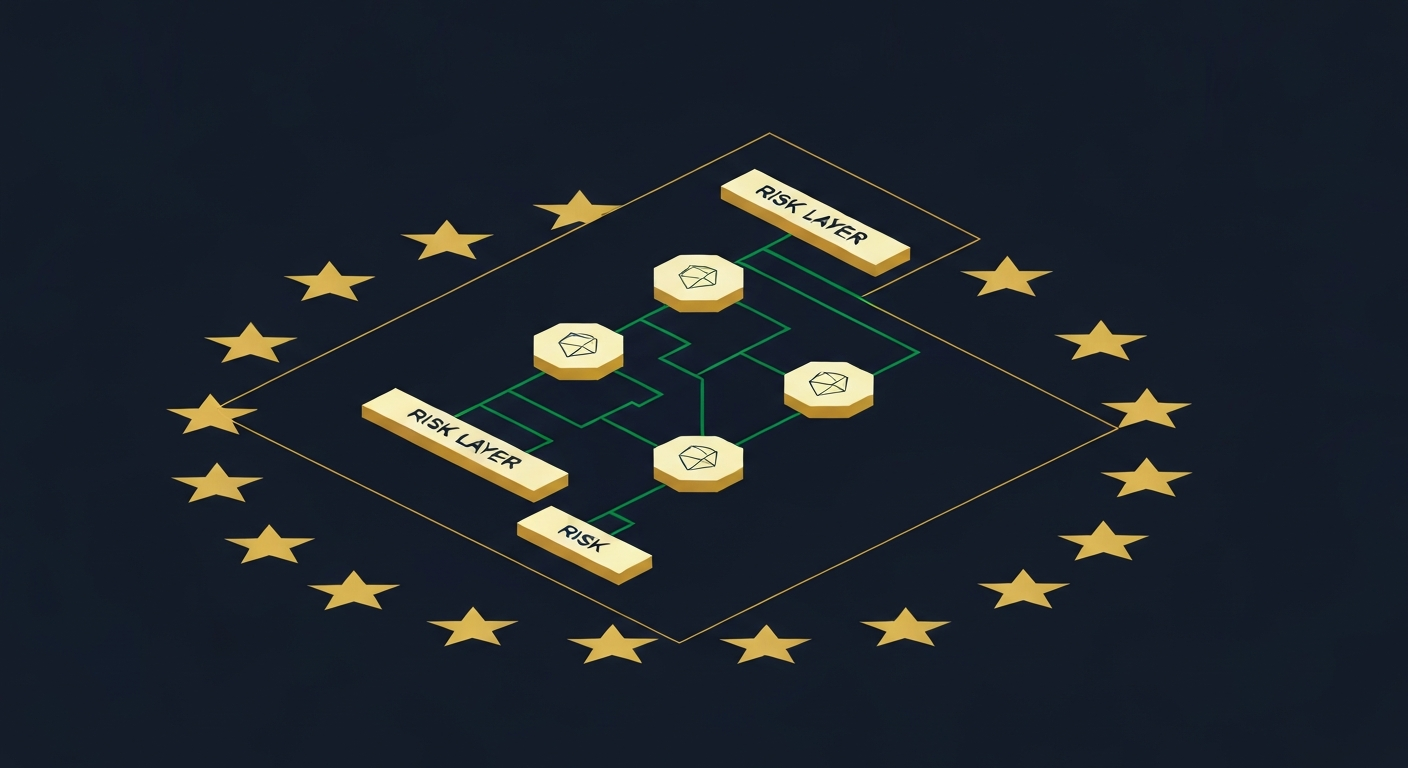
The first step in building a compliant Art.9 Risk Management System is also the hardest: identifying all the ways your AI system can go wrong. Article 9 requires you to map known and reasonably foreseeable risks, including risks arising from reasonably foreseeable misuse. With the August 2, 2026 enforcement deadline approaching, providers who have not yet built a structured risk identification process are running out of time.
This guide provides a systematic methodology for risk identification in high-risk AI systems — the kind of structured analysis that will satisfy conformity assessors and stand up to National Competent Authority scrutiny after August 2026.
Why AI Risk Identification Is Different From Traditional Software Risk
Standard software risk assessment focuses on failures in deterministic logic: null pointer exceptions, race conditions, injection attacks, unhandled edge cases. AI risk identification requires a fundamentally different mental model because AI systems fail statistically, not deterministically.
Your neural network does not crash on a particular input — it produces an incorrect output with some probability. Your computer vision model does not error on a blurry image — it confidently misclassifies it. Your NLP classifier does not throw an exception on adversarial input — it returns a systematically biased prediction. These failure patterns require different discovery techniques, different documentation formats, and different mitigation strategies.
Art.9 acknowledges this complexity by framing risk identification as an iterative, continuous process rather than a one-time audit. Your Risk Management System must evolve as you learn more about how your system behaves in production, as new use cases emerge, and as the regulatory environment develops.
The Three Layers of Art.9 Risk Identification
A complete risk identification exercise for a high-risk AI system operates across three distinct layers:
Layer 1: Technical Failure Modes
Technical failure modes are the ways your AI model produces outputs that are incorrect, unreliable, or inconsistent. These include:
Performance degradation under distribution shift. Your model was trained on one data distribution and may encounter different inputs in production. A credit scoring model trained on applications from one country may underperform on applications with different cultural financial patterns. Document the training distribution, the expected production distribution, and the gap between them.
Overconfidence in low-certainty cases. Many AI models return high confidence scores even when their underlying prediction is uncertain or wrong. This is particularly dangerous in high-risk applications: a diagnostic AI system that returns "95% probability of no anomaly" when it has never seen a similar case before may cause a clinician to skip further investigation.
Sensitivity to irrelevant input features. Your model may have learned spurious correlations during training. A CV screening model that learned to associate mentions of rugby with higher-performing candidates is not using a causal feature — it may have picked up a proxy for demographic characteristics or institutional affiliation. These correlations may not be visible in aggregate performance metrics but will manifest as discriminatory outputs at the individual level.
Adversarial vulnerability. Inputs crafted to deliberately fool your model represent a foreseeable misuse vector. For biometric systems, deepfake injection. For fraud detection, engineered transactions. For content moderation, adversarial text that evades classifiers. Art.9 requires you to identify these attack vectors even if you have not yet experienced them.
Cascading errors in multi-component systems. If your high-risk AI system chains multiple models — preprocessing, classification, post-processing — a failure in one component may not be visible in final outputs until it has propagated through several stages. Map the dependencies between components and identify the failure propagation paths.
Layer 2: Operational Failure Modes
Operational failure modes arise from the interaction between your AI system and its deployment environment — including the humans who operate it and the systems it integrates with.
Automation bias. When humans systematically over-trust AI recommendations, they stop performing independent verification. This is particularly well-documented in clinical decision support, where physicians have reduced diagnostic thoroughness when AI recommendations are present. Art.9 requires you to design your human oversight provisions to counteract automation bias, not merely to satisfy the legal requirement of keeping a human "in the loop."
Context mismatch. Your system may be deployed in operating environments its training did not account for. A loan origination AI designed for retail applicants may be used by an operator for commercial loan applications where the risk profile is fundamentally different. Define the intended use context with enough precision that deployments outside this context are identifiable.
Data quality failures at inference time. Your system was trained on clean, curated data. In production, it will encounter missing fields, incorrect values, data entry errors, and stale information. Document how your system behaves when input data quality degrades and whether users are informed when inputs fall outside the expected range.
Integration failures with upstream and downstream systems. High-risk AI systems rarely operate in isolation. Identify all systems that provide inputs to your AI and all systems that consume its outputs. Map the failure scenarios where upstream data failures affect AI output quality, and where AI output errors propagate into downstream decision-making.
Layer 3: Fundamental Rights Impact Failure Modes
This layer is unique to the Art.9 framework and distinguishes it from standard technical risk assessment. You must identify scenarios where your system's errors have differential impact across protected groups or intersect with fundamental rights.
Discriminatory error rates. Your model may have equal aggregate accuracy but significantly different error rates for different demographic groups. In employment AI, this means some groups face higher false rejection rates. In credit scoring, some groups face higher false decline rates. In biometric systems, some groups face higher misidentification rates. These differential error rates may not be visible without disaggregated performance analysis.
Chilling effects on fundamental rights. A surveillance AI system may have acceptable accuracy but still suppress the exercise of fundamental rights by making people feel monitored and altering their behavior. Emotional recognition in employment contexts may discourage candidates from expressing legitimate concerns about working conditions. Your risk identification must address these non-accuracy-based harms.
Compounding disadvantage. High-risk AI decisions often affect individuals who are already in vulnerable positions: individuals seeking credit who have limited financial history, individuals seeking employment who face structural barriers, individuals seeking access to essential services who have limited alternatives. When your system makes an error for these individuals, the harm is compounded by their limited ability to challenge the decision or seek alternatives.
The Art.9 Foreseeable Misuse Standard
Art.9 requires risk identification to extend to reasonably foreseeable misuse — not just intended use. This is one of the provisions that most providers underestimate. The standard is not "could a determined adversary misuse this system?" — it is "what misuse could a reasonable person foresee given how systems like this are typically deployed?"
Misuse vectors to identify for high-risk AI systems include:
Purpose creep by operators. An AI system certified for one use case may be repurposed by operators for a different use case without provider authorization. A facial recognition system certified for access control may be used by an operator for crowd surveillance. Document what alternative uses your system could be put to and whether your technical design prevents unauthorized repurposing.
Use outside the intended user population. Your system may be designed for use by trained professionals but deployed in contexts where non-professionals operate it. A clinical decision support tool designed for use by medical professionals may be accessed by administrative staff. Identify the minimum competency level required for safe operation and assess what happens when users fall below this threshold.
Deliberate exploitation of model behavior. Sophisticated actors may probe your system to find inputs that produce favorable outputs, then exploit these systematically. Loan applicants may learn which features to inflate. Job applicants may optimize their CVs for AI screeners at the expense of accuracy. Identify where your system's incentive structure creates opportunities for gaming.
Aggregation with other data sources. Your system may be designed to process anonymized data, but its outputs may be combined with other data sources to re-identify individuals or infer sensitive attributes. A health risk prediction model that outputs a probability may be combined with insurance claims data to infer medical conditions. Assess the aggregation risk of your outputs even if individual outputs appear benign.
Practical Risk Identification Methods for SaaS Teams
Failure Mode and Effects Analysis (FMEA) Adapted for AI
Traditional FMEA maps potential failures, their causes, effects, and current controls. For AI systems, each potential failure mode should be characterized by:
- Failure description: What does the AI system output that it should not, or fail to output that it should?
- Triggering conditions: What input characteristics make this failure more likely?
- Detection difficulty: How hard is it for a human or automated monitor to detect this failure when it occurs?
- Severity of harm: What is the worst realistic harm if this failure is undetected and acted upon?
- Affected population: Which users or user groups are most exposed to this failure mode?
- Current controls: What existing design, monitoring, or operational controls reduce the probability or impact of this failure?
Create a risk register with one row per identified failure mode. This register is a living document — it should be updated as you discover new failure modes through testing, post-market monitoring, and incident analysis.
Red-Team Exercises
Red-team exercises involve tasking a group of people with finding ways to cause your system to produce harmful outputs. For compliance purposes, red-team exercises should be:
Structured. Define specific harm categories you want to probe (discriminatory outputs, overconfidence, misuse vectors) rather than open-ended "break it" sessions. This produces documented evidence for your risk register.
Diverse. Teams composed entirely of the same demographic background will miss failure modes that are specific to groups they do not represent. Include participants with relevant domain expertise and lived experience of the high-risk context your system operates in.
Documented. Each identified failure mode should be recorded with the input that triggered it, the output produced, and the harm pathway. These records form part of your Art.9 documentation.
Art.9 specifically requires that testing be conducted by users from different backgrounds where appropriate — red-team exercises with diverse participants directly satisfy this requirement.
Disaggregated Performance Analysis
Aggregate model accuracy metrics will mask differential performance across subgroups. Before finalizing your risk identification, conduct disaggregated analysis across:
- Demographic groups defined by protected characteristics (age, sex, ethnicity, disability status, where observable or inferable)
- User competency levels (expert users vs. less experienced users)
- Input quality levels (high-quality, well-formed inputs vs. noisy, incomplete inputs)
- Temporal segments (performance at deployment vs. 12 months later)
Performance gaps between segments are failure modes that must be documented in your risk register even if your overall performance metrics are acceptable.
Deployment Context Analysis
Walk through your deployment scenarios systematically. For each intended deployment context, ask:
- Who will operate this system, and what is their minimum expected competency?
- What other information sources will operators have access to alongside AI outputs?
- What decisions are made based on AI outputs, and what is the consequence of an incorrect decision for different affected populations?
- What is the expected volume of decisions per day, and does this volume create pressure to reduce human review time?
- What incentive structures do operators face, and do these incentives create pressure to accept AI recommendations without scrutiny?
The answers to these questions generate specific failure modes and misuse scenarios that belong in your risk register.
Documenting Your Risk Identification for Conformity Assessment
Your risk identification documentation must be structured to support your conformity assessment. At minimum, maintain:
A risk register with all identified failure modes, their severity ratings, affected populations, and current controls. This register must be versioned and dated to show that it has been maintained throughout the development lifecycle.
A foreseeable misuse assessment documenting the misuse vectors you identified and the technical or operational controls you put in place to address them. If you determined that certain misuse vectors are not technically preventable, document why and what user-facing measures you have implemented instead.
A methodology description explaining how you conducted your risk identification — what techniques you used, who participated, and what scope was covered. Conformity assessors will want to understand not just what risks you identified but how systematically you looked for them.
Evidence of ongoing identification showing that you have processes in place to identify new risks as your system evolves and as you receive feedback from production deployments. Risk identification is not a one-time exercise — your documentation should reflect this.
What Comes Next in the RMS Series
Risk identification is the foundation of a compliant Art.9 Risk Management System, but it is only the first step. Subsequent posts in this series will cover:
- Post #3: Art.9 Risk Evaluation and Mitigation — assessing which identified risks fall within acceptable bounds and designing proportionate controls
- Post #4: Art.9 Testing Requirements — validating that your mitigations work before you submit for conformity assessment
- Post #5: Art.9 Post-Market Monitoring Integration — maintaining your RMS after deployment and incorporating production feedback
The August 2, 2026 deadline is fewer than ten weeks away. If you are building a high-risk AI system and have not yet started your Art.9 risk identification process, the first action is to convene your team, define the scope of your high-risk use case, and start populating a risk register. A partial, well-documented register is significantly better than no register at all — it demonstrates good faith engagement with the compliance process and provides a foundation for the conformity assessment conversation.
This guide is part of the sota.io EU AI Act Risk Management System 2026 Series. Read Part 1: EU AI Act Art.9 Risk Management System — What High-Risk AI SaaS Providers Must Build for the full overview of Art.9 requirements.
EU-Native Hosting
Ready to move to EU-sovereign infrastructure?
sota.io is a German-hosted PaaS — no CLOUD Act exposure, no US jurisdiction, full GDPR compliance by design. Deploy your first app in minutes.