WhatsApp Business EU Alternative 2026: Why Meta's CLOUD Act Exposure Follows Every Business Message
Post #925 in the sota.io EU Cyber Compliance Series
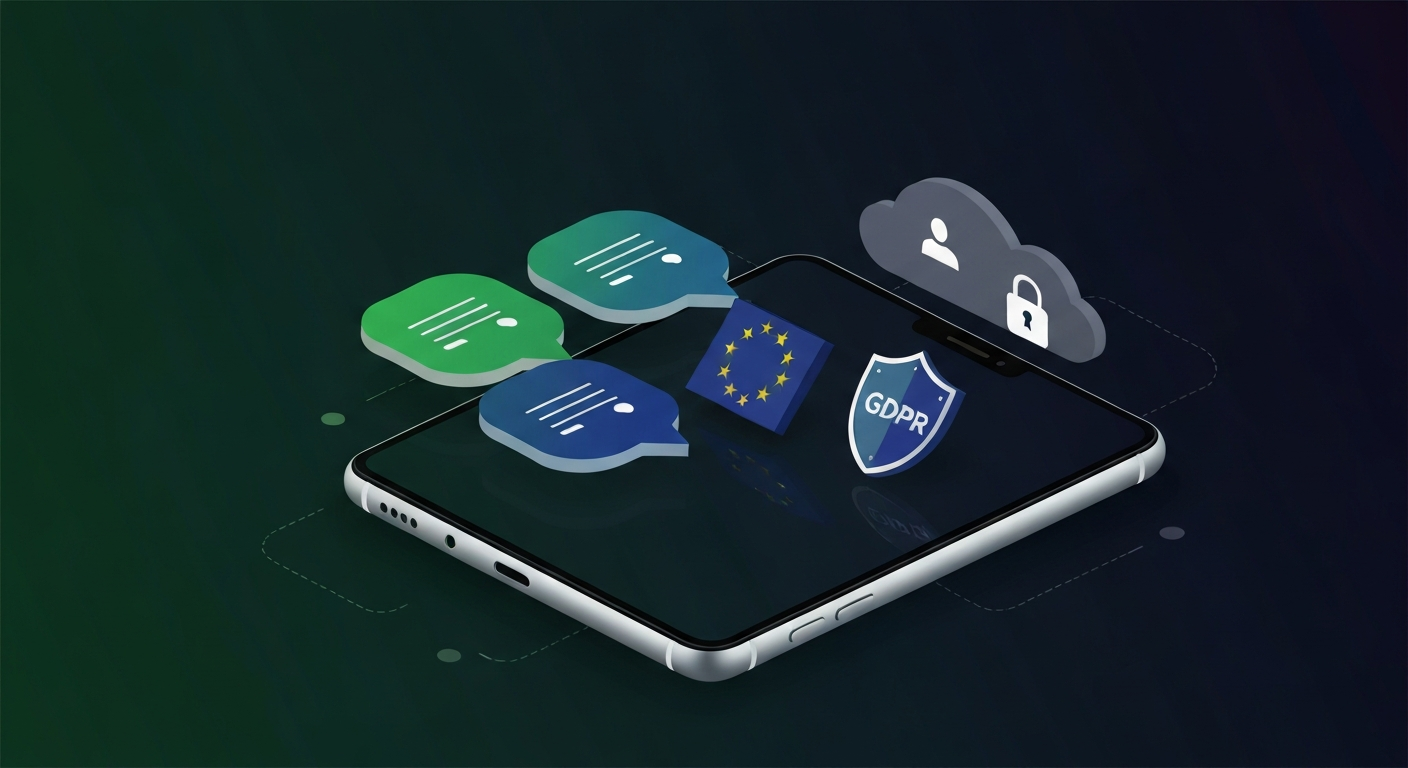
WhatsApp Business is the de facto business messaging channel for hundreds of millions of SMBs and large enterprises across the EU. For customer support, appointment reminders, order confirmations, and marketing campaigns, WhatsApp has become an expected communication channel — particularly in Germany, Spain, Italy, and Poland, where WhatsApp penetration among adults exceeds 80 percent. EU businesses have adopted it as a customer-facing communication layer with the same centrality as email.
That adoption creates a compliance situation that most EU businesses have not fully evaluated. WhatsApp Inc. — the legal entity that operates WhatsApp — is a wholly owned subsidiary of Meta Platforms Inc., a Delaware corporation headquartered in Menlo Park, California. Meta is subject to the US Clarifying Lawful Overseas Use of Data Act (CLOUD Act), which requires US-headquartered technology companies to produce data they control in response to valid US federal legal process, regardless of where that data is physically stored.
The situation is further complicated by the architecture of WhatsApp Business. The consumer WhatsApp application uses end-to-end encryption (the Signal Protocol) for message content. But the WhatsApp Business API — the integration layer used by enterprises, e-commerce platforms, and customer support tools to send and receive WhatsApp messages — does not offer end-to-end encryption in the same sense. Messages sent through the Business API are decrypted at Meta's servers before delivery, processed by Meta's cloud infrastructure, and accessible to Meta in plaintext. This is not end-to-end encrypted communication by any reasonable definition of that term.
This guide explains the GDPR exposure for EU businesses using WhatsApp Business and WhatsApp Business API, why end-to-end encryption does not resolve CLOUD Act risk, and which EU-native alternatives provide structurally different legal protection.
Meta Platforms' Legal Structure: Delaware Incorporation and CLOUD Act Exposure
Meta Platforms Inc. is incorporated in Delaware and headquartered in Menlo Park, California. It is the parent company of WhatsApp Inc., also incorporated in Delaware and headquartered in California. WhatsApp Inc. is the entity that operates the WhatsApp service globally, including WhatsApp Business and the WhatsApp Business Platform (API).
The CLOUD Act (18 U.S.C. § 2713) applies to electronic communication service providers and remote computing service providers that are incorporated or headquartered in the United States. Meta Platforms Inc. and WhatsApp Inc. fall squarely within this definition. Under the CLOUD Act, both entities are required to produce data they possess, control, or have custody of in response to valid US federal legal process — including grand jury subpoenas, National Security Letters, FISA court orders, and law enforcement requests — regardless of where that data is physically stored.
Meta operates data centre infrastructure in the EU, including facilities in Denmark, Sweden, and Ireland. WhatsApp's Data Processing Terms reference Meta Platforms Ireland Limited as the EU data controller for EU users. But the EU data controller designation does not sever the CLOUD Act relationship. WhatsApp Inc. and Meta Platforms Inc. remain US corporate entities subject to US law. A US court order or National Security Letter compelling Meta to produce data controls Meta's obligations regardless of which Irish subsidiary is designated as data controller in the commercial relationship with EU customers.
This is the same structural conflict examined in the analysis of Facebook Messenger and Instagram Direct — Meta's entire communication infrastructure operates under CLOUD Act jurisdiction regardless of the specific legal entity named in the data processing agreement.
Two Architectures, Two Risk Profiles: WhatsApp App vs Business API
The GDPR and CLOUD Act analysis of WhatsApp Business requires distinguishing between two fundamentally different technical architectures.
WhatsApp Business App (consumer-grade encryption)
The WhatsApp Business App — the mobile application used by sole traders, micro-businesses, and SMBs to communicate directly with customers — uses the same end-to-end encryption as the consumer WhatsApp application. The Signal Protocol encrypts message content in transit and at rest on device, such that only the sender and recipient device can decrypt message content.
End-to-end encryption provides meaningful protection against interception in transit and against access by WhatsApp Inc. to the content of encrypted messages while they are stored on devices. But it does not eliminate CLOUD Act risk in several important respects:
-
Metadata is not end-to-end encrypted. WhatsApp collects metadata about communications: who communicated with whom, when, how frequently, message volume, and from what device and location. This metadata is processed by WhatsApp Inc. on its servers and is not end-to-end encrypted. Metadata can be compelling to US law enforcement and intelligence agencies and is fully subject to CLOUD Act compelled production.
-
Backup exposure. WhatsApp messages backed up to Google Drive or Apple iCloud are stored in a form accessible to those providers. Messages backed up before Meta introduced end-to-end encrypted backup (which is optional, not default) may be stored unencrypted in Google's or Apple's cloud — both CLOUD Act subjects with their own exposure. Even with end-to-end encrypted backup, the encryption keys may be stored by Meta or the cloud provider.
-
Business account data. WhatsApp Business account profiles, business catalogue listings, product descriptions, operating hours, and customer labels are stored and processed by WhatsApp Inc. This structured business data is not end-to-end encrypted and is fully accessible to Meta and subject to CLOUD Act compelled production.
-
Customer conversation history. While individual message content may be end-to-end encrypted, the metadata record of customer interactions — contact lists, conversation threads, response times, and conversation labels — is processed by WhatsApp Inc. in its cloud infrastructure.
WhatsApp Business Platform / Business API (no end-to-end encryption for business-to-customer messages)
The WhatsApp Business Platform — formerly called the WhatsApp Business API — is the integration layer used by medium and large enterprises, e-commerce platforms, customer service software, and marketing automation tools to send and receive WhatsApp messages programmatically. This is the architecture underlying the chatbots, order confirmation notifications, and support ticket escalations that arrive via WhatsApp at enterprise scale.
The critical difference from the consumer application: messages sent through the WhatsApp Business API are not end-to-end encrypted between the business and the customer. The business sends messages to Meta's API infrastructure. Meta decrypts, processes, and re-encrypts messages before forwarding to the customer's device. Meta's servers have plaintext access to every message sent and received through the Business API.
This architecture is required for the Business API's functionality — businesses integrate with Meta's cloud platform to send template messages, receive customer replies, and connect WhatsApp messaging to CRM systems and helpdesk software. That integration requires Meta's servers to process message content. The Signal Protocol's end-to-end encryption is not applied between the business's API integration and the customer's device.
From a GDPR and CLOUD Act perspective, this means:
- Every Business API message is processed in plaintext by Meta's cloud infrastructure
- Meta retains message content for platform operation, debugging, and compliance purposes
- US federal legal process can compel Meta to produce Business API message content without the end-to-end encryption barrier that (partially) limits exposure for consumer WhatsApp
- For EU businesses sending customer communications — including customer PII, order details, appointment information, and support conversation content — through the Business API, all of that data is accessible to a US CLOUD Act subject
Third-party Business Solution Providers (BSPs) — Twilio, Infobip, MessageBird, Vonage, and others — that provide WhatsApp Business API access add additional layers of data processing by additional US-headquartered companies, compounding the CLOUD Act exposure.
Meta's GDPR Record: The Largest Data Protection Fines in History
Meta and WhatsApp have the most extensive GDPR enforcement record of any technology company operating in the EU. The Irish Data Protection Commission, acting as Meta's lead supervisory authority under the GDPR one-stop-shop mechanism, has issued some of the largest fines in GDPR history:
WhatsApp-specific enforcement:
- 2021: WhatsApp IE — €225 million. The Irish DPC found that WhatsApp failed to meet GDPR transparency requirements regarding how user data was shared between WhatsApp and other Meta companies. WhatsApp's privacy disclosures were found to be insufficiently clear about data flows within the Meta corporate group.
- 2022: WhatsApp IE — €5.5 million. Fine for processing of special category data without a valid legal basis.
Meta-wide enforcement relevant to WhatsApp users:
- 2023: Meta IE — €1.2 billion (record GDPR fine). Fine for transferring EU personal data to the United States in violation of GDPR Chapter V after Schrems II. This fine directly addresses the structural conflict between Meta's US data transfers and GDPR adequacy requirements — the same conflict that affects WhatsApp Business data flows.
- 2023: Meta IE — €390 million. Fine for Facebook and Instagram relating to consent for behavioural advertising.
The pattern of enforcement reflects a sustained finding by European regulators that Meta's data processing practices — including cross-product data flows, US data transfers, and consent mechanisms — are structurally incompatible with GDPR requirements. WhatsApp, as a Meta subsidiary, operates within the same corporate data architecture that has repeatedly failed regulatory scrutiny.
For EU businesses using WhatsApp Business, relying on Meta's DPA (Data Processing Terms) to satisfy Article 28 obligations requires accepting that Meta's underlying data architecture has been subject to multi-hundred-million-euro GDPR fines for exactly the structural issues that the DPA is meant to address.
GDPR Obligations for EU Businesses Using WhatsApp Business
EU businesses using WhatsApp Business to communicate with customers bear compliance obligations as data controllers. WhatsApp Inc. (or Meta Platforms Ireland Limited in the EU context) acts as a data processor under Article 28. The EU business remains responsible for the lawfulness of the processing.
Article 28 Data Processing Agreement. Businesses using WhatsApp Business API must enter into Meta's Data Processing Terms, which serve as the Article 28 DPA. The DPA defines Meta's obligations as a processor, but given the GDPR enforcement history above, relying on these terms alone without a Transfer Impact Assessment is legally exposed.
Article 46 Transfer Mechanisms and Transfer Impact Assessment. Transfers of EU personal data to WhatsApp Inc. (or through the Business API to US-based BSPs) require a valid Article 46 transfer mechanism. Most businesses rely on Standard Contractual Clauses. But Schrems II requires that SCCs must be supplemented with a TIA demonstrating that the legal framework of the recipient country provides effective protection equivalent to EU law. For Meta — subject to FISA Section 702, Executive Order 12333, and the CLOUD Act — completing a rigorous TIA favourably for content data processed through the Business API is extremely difficult.
Article 13/14 Transparency Obligations. Businesses must inform customers in their privacy notices that WhatsApp (and Meta, and potentially third-party BSPs) process their communication data, the categories of data processed, the legal basis for processing, any international transfers, and the safeguards applied. Most EU business privacy notices do not adequately disclose WhatsApp Business API data flows.
Article 35 DPIA Requirement. For businesses conducting systematic customer communication at scale through WhatsApp Business API — customer support, marketing automation, transactional notifications — an Article 35 Data Protection Impact Assessment is likely required. The large-scale processing of personal data through a channel with documented GDPR enforcement history is precisely the scenario envisaged by DPIA obligations.
NIS2 Supply Chain Security (Article 21(2)(d)). For businesses in NIS2-regulated sectors — including digital infrastructure, managed services, cloud services, and various critical sector operators — WhatsApp Business API represents a supply chain element subject to NIS2 Article 21(2)(d) security requirements. The documented GDPR non-compliance history of the supply chain provider is a relevant factor in the NIS2 supply chain security assessment.
DORA Article 28 for Financial Services. Financial entities subject to the Digital Operational Resilience Act must assess ICT third-party service providers for concentration risk, contractual protections, and exit strategies. If financial services firms use WhatsApp Business API for customer communication, the BSP and Meta are ICT third-party service providers subject to DORA Article 28 contractual requirements, including provisions on data location, audit rights, and sub-processing.
EU-Native WhatsApp Business Alternatives
The following alternatives provide business messaging capabilities without Meta's CLOUD Act exposure and without WhatsApp's GDPR enforcement history.
Element / Matrix (Element NV, Belgium)
Element provides an open-source, federated, end-to-end encrypted messaging platform built on the Matrix protocol. Element NV is incorporated in Belgium, and the Element server infrastructure can be self-hosted within EU data centres or deployed via EU-based hosting providers.
For businesses, Element provides:
- True end-to-end encryption for both consumer and API/bot-based messaging, without a cloud intermediary decrypting message content
- Federation allowing Element servers to communicate with other Matrix servers, including community instances
- Self-hosting option for organisations requiring full data sovereignty on EU-controlled infrastructure
- Element Call for encrypted voice and video within the same platform
- Bridges to other messaging platforms, including WhatsApp (read: received messages can be bridged, though this does not inherit WhatsApp's compliance)
Element is used by the French government (TCHAP), the German Federal Administration, and multiple EU public sector organisations. For EU businesses requiring verifiable data sovereignty and end-to-end encryption, Element represents the strongest structural alternative.
EU compliance basis: Belgian incorporation, EU-hosted infrastructure option, no US parent, no CLOUD Act exposure for self-hosted deployments.
Wire Business (Wire Swiss GmbH, Switzerland)
Wire Business provides enterprise-grade end-to-end encrypted messaging, voice, and video. Wire Swiss GmbH is incorporated in Switzerland, with EU data processing through Wire Swiss's European infrastructure. Switzerland provides GDPR-equivalent data protection through the Swiss Federal Act on Data Protection (nFADP) and has an adequacy decision under GDPR Article 45.
Wire Business features:
- End-to-end encryption for all message types (text, voice, video, files)
- Guest room functionality for external collaboration without requiring full accounts
- API access for integration with enterprise systems
- On-premises deployment option for maximum data control
- ISO 27001 and SOC 2 certifications
EU compliance basis: Swiss incorporation with EU adequacy, no US parent, end-to-end encryption including for business API use cases.
Rocket.Chat (Rocket.Chat Technologies Corp, EU-deployable)
Rocket.Chat is an open-source team communication platform that can be self-hosted on EU infrastructure. While Rocket.Chat Technologies Corp is headquartered in the US, the self-hosted deployment model means that the EU business controls all data on its own EU-hosted servers, with no data transmitted to or stored by Rocket.Chat Inc.
For EU businesses requiring WhatsApp Business-style customer messaging, Rocket.Chat provides an omnichannel inbox feature that can integrate with WhatsApp Business API — though that integration still routes through Meta's infrastructure. The native Rocket.Chat messaging for internal and partner communication is fully EU-sovereign when self-hosted.
EU compliance basis (self-hosted): Data sovereignty through self-hosting on EU infrastructure, no data transfer to US providers, GDPR compliance dependent on EU hosting provider.
STACKFIELD (Stackfield GmbH, Munich, Germany)
STACKFIELD is a German-headquartered secure collaboration and messaging platform specifically designed for GDPR compliance. Stackfield GmbH is incorporated and headquartered in Munich, with all data processed on EU servers in Germany.
STACKFIELD provides:
- End-to-end encrypted messaging (zero-knowledge architecture — Stackfield GmbH cannot decrypt message content)
- Team and project communication in addition to direct messaging
- BSI C5 Type 2 attestation (German Federal Office for Information Security)
- GDPR-compliant DPA with German law governing the processor relationship
For EU businesses in regulated sectors requiring verifiable German data sovereignty and BSI-attested security, STACKFIELD provides the strongest German-specific compliance posture.
EU compliance basis: German GmbH incorporation, German data centres, BSI C5 attestation, no US parent.
Brevo (formerly Sendinblue, Brevo SAS, Paris, France)
Brevo is a French-headquartered marketing and customer communication platform that includes a WhatsApp Business API integration component for transactional and marketing messaging. While using the WhatsApp Business API through Brevo still routes messages through Meta's infrastructure (the CLOUD Act issue is Meta's, not Brevo's), Brevo as a Business Solution Provider is a French company (Brevo SAS, Paris) with EU data centres.
Using Brevo as the intermediary BSP replaces a US-headquartered BSP (Twilio, MessageBird) with an EU-headquartered BSP. This does not eliminate Meta's CLOUD Act exposure for message content, but it removes the additional layer of US jurisdiction introduced by US-based BSPs.
For businesses that cannot immediately migrate off WhatsApp and are focused on minimising their overall CLOUD Act surface, using an EU-headquartered BSP is a partial mitigation.
EU compliance basis (as BSP): French SAS incorporation, EU data centres, GDPR compliance as processor — but note: Meta's CLOUD Act exposure for message content remains regardless of BSP choice.
Signal (Open Whisper Systems / Signal Foundation, US — with caveats)
Signal's Foundation is US-based, which means it is subject to CLOUD Act jurisdiction. However, Signal's architecture provides a meaningful mitigation: Signal's end-to-end encryption is designed such that Signal the company cannot access message content (unlike Meta/WhatsApp Business API). Signal's business model does not involve monetising user data. Signal has published detailed technical documentation of its privacy architecture and its sealed sender protocol, which limits metadata exposure.
For businesses requiring CLOUD Act immunity for the messaging infrastructure provider, Signal is not a structurally safe choice — it is a US-incorporated entity subject to US legal process. But for businesses focused on minimising content access by the provider, Signal's architecture provides stronger protection than WhatsApp Business App and categorically stronger protection than WhatsApp Business API.
EU compliance assessment: US-incorporated foundation is a structural limitation. Signal's architecture limits content access by the provider, but CLOUD Act compelled production of metadata and potentially encrypted content (requiring device access) remains a legal exposure.
Migration Path: Moving EU Customer Communication Off WhatsApp
For EU businesses evaluating migration away from WhatsApp Business, the practical path depends on the use case:
Customer support and CRM integration: Element with Matrix bridges, or Rocket.Chat self-hosted with an omnichannel inbox, provides a migration path for businesses currently using WhatsApp for customer support ticket management. Both support integration with CRM systems and helpdesk software.
B2C transactional messaging (order confirmations, appointment reminders): Brevo or a similar EU-headquartered email/SMS provider replaces WhatsApp for transactional communications. Email and SMS remain the most widely supported and legally defensible channels for transactional messaging with EU consumers.
Internal team communication: Wire Business, Element, or STACKFIELD replaces internal WhatsApp Business group messaging with a fully EU-compliant encrypted alternative.
Consumer-facing chat on websites and apps: A self-hosted Rocket.Chat or Element deployment, embedded as a customer widget, replaces the WhatsApp Business widget with EU-sovereign infrastructure.
The migration challenge is consumer habit: in markets with very high WhatsApp penetration (Germany, Spain, Italy, Netherlands), customers expect WhatsApp as a communication channel. Migration away from WhatsApp requires customer communication explaining the change and alternative channel options. For regulated sectors (financial services, healthcare, legal services), the GDPR and DORA compliance exposure of WhatsApp Business API makes this a necessary conversation regardless of consumer habit.
The Structural Argument for EU-Native Business Messaging
The GDPR compliance case for WhatsApp Business rests on Data Processing Terms with an entity that has accumulated over €1.5 billion in GDPR fines, Standard Contractual Clauses that require a Transfer Impact Assessment that is difficult to complete favourably given FISA Section 702, and end-to-end encryption that applies only to the consumer WhatsApp app — not to the Business API that most enterprises actually use.
For EU businesses making a procurement decision today, the structural argument is: the compliance cost of using WhatsApp Business — DPIAs, TIAs, ongoing DPC enforcement monitoring, potential DPA non-compliance findings, NIS2 supply chain assessments — exceeds the migration cost of adopting an EU-native messaging platform that eliminates the jurisdictional conflict at source.
EU-native alternatives like Element, Wire Business, and STACKFIELD are not theoretical: they are used by EU governments, financial institutions, and regulated enterprises that have already completed the GDPR and compliance analysis. The infrastructure and compliance documentation already exist.
sota.io is an EU-native managed PaaS that deploys on Hetzner Germany infrastructure — for businesses building customer-facing applications that include messaging or communication features, the hosting infrastructure inherits none of the CLOUD Act exposure that comes with AWS, Google Cloud, or Azure. Details at sota.io.
This article is part of the sota.io EU Cyber Compliance Series. See also the analyses of Google Chat, Slack, Microsoft Teams, Zoom, and Discord in the EU Communications Series.
EU-Native Hosting
Ready to move to EU-sovereign infrastructure?
sota.io is a German-hosted PaaS — no CLOUD Act exposure, no US jurisdiction, full GDPR compliance by design. Deploy your first app in minutes.