VMware Carbon Black EU Alternative 2026: CLOUD Act & GDPR Risk in Enterprise EDR
Post #1198 in the sota.io EU Cyber Compliance Series — EU-ENDPOINT-SECURITY-SERIE #1/5
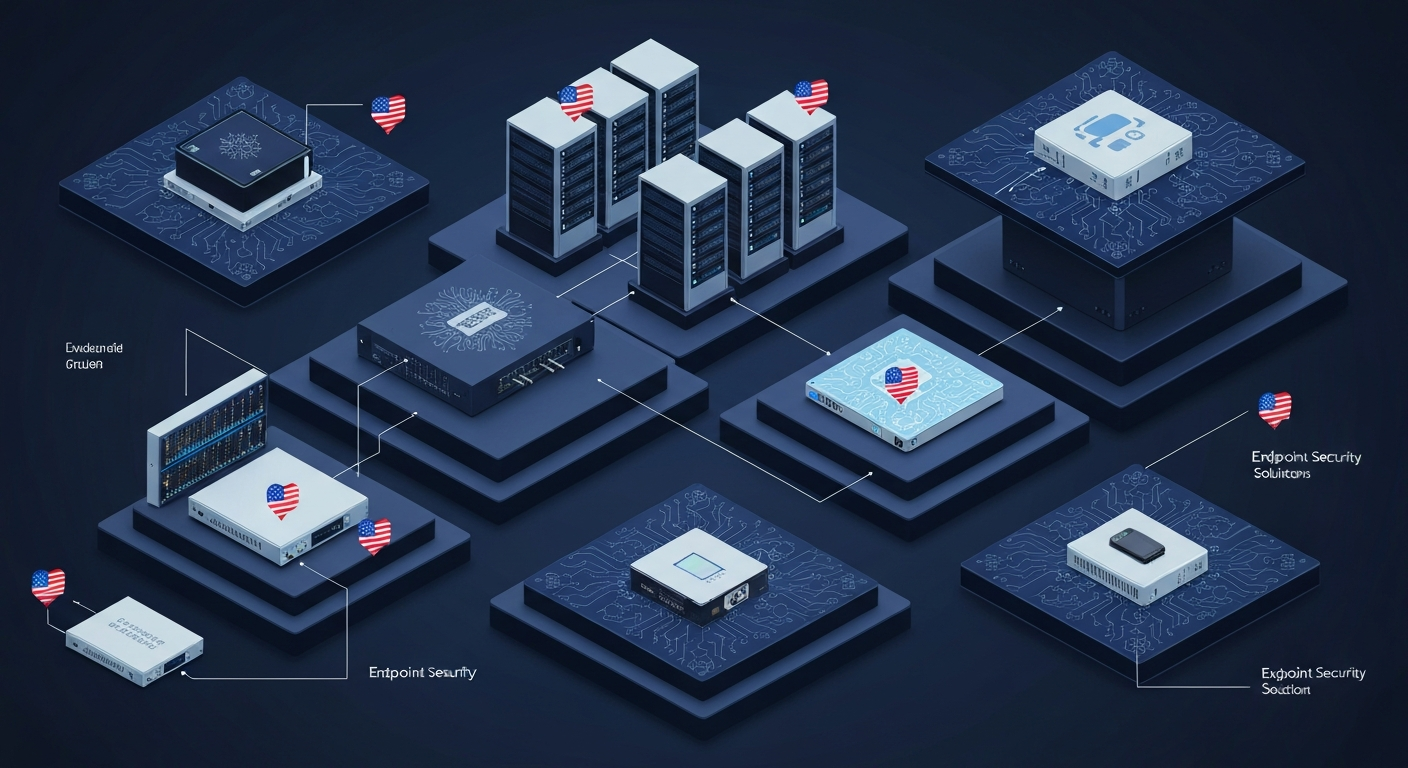
VMware Carbon Black is one of the most widely deployed enterprise Endpoint Detection and Response (EDR) platforms in Europe's critical infrastructure, financial sector, and government agencies. When Broadcom Inc. acquired VMware in October 2023 for $69 billion, a critical jurisdictional fact changed for every European organisation running Carbon Black agents on their endpoints: their kernel-level telemetry — process trees, file write operations, network connection maps, user session data — is now under the control of a Delaware C-Corporation fully subject to the US CLOUD Act (18 U.S.C. §2713).
This is not a theoretical risk. This is the documented legal architecture that governs every Carbon Black deployment outside the United States.
Broadcom Inc.: Corporate Structure and CLOUD Act Exposure
VMware Carbon Black's chain of jurisdiction:
| Layer | Entity | Jurisdiction |
|---|---|---|
| Parent corporation | Broadcom Inc. | Delaware C-Corp, HQ San Jose CA |
| Subsidiary | VMware LLC | Delaware LLC (formerly VMware, Inc.) |
| Product entity | Carbon Black (formerly Carbon Black Inc.) | Delaware, acquired by VMware 2019 |
| EU customer contract | Broadcom/VMware regional entities | Subject to US parent jurisdiction |
CLOUD Act §2713 compellability: Any US company — including US-incorporated subsidiaries of non-US parents — can be compelled by US law enforcement to produce electronic communications data stored anywhere in the world. Broadcom Inc. is unambiguously a US company. EU data residency does not shield Carbon Black telemetry from US government requests directed at Broadcom corporate entities.
Key legal anchors:
- Broadcom Inc. incorporated in Delaware, listed on NASDAQ (AVGO)
- VMware LLC registered as a Delaware limited liability company post-acquisition
- Carbon Black Government Cloud holds FedRAMP High authorization (US federal agencies)
- Broadcom participates in CISA JCDC (Joint Cyber Defense Collaborative) alongside FBI and NSA
Carbon Black's Kernel-Level Telemetry: What Moves Under US Jurisdiction
The EDR agent architecture of Carbon Black (CB Defense / CB Enterprise EDR) operates at the kernel level on every monitored endpoint. Understanding what this means for GDPR and CLOUD Act compliance requires understanding what data the agent collects:
Process and Thread Telemetry
Every process created on a Carbon Black-monitored endpoint generates an event: process name, executable path, command-line arguments, parent process, user context (username, SID), timestamp. This data streams to Carbon Black's cloud analytics platform — CB Cloud — for real-time correlation and threat detection.
GDPR Art.4(1) implication: Employee usernames associated with process execution constitute personal data. If an employee on an HR system runs a report, Carbon Black logs that user's process activity. Under Carbon Black's cloud model, that data is processed in Carbon Black's backend infrastructure, which is ultimately controlled by Broadcom Inc.
File Write and Registry Operations
Every file written, modified, or deleted on a monitored endpoint can be logged by Carbon Black's behavioral analytics. This includes document paths (which often contain employee names or department identifiers), configuration changes, and sensitive file access patterns.
GDPR Art.5(1)(c) proportionality tension: Comprehensive endpoint telemetry necessarily captures data beyond what is needed for pure security monitoring. DPIA requirements under Art.35 apply when systematic monitoring of employees is involved — which enterprise EDR inherently is.
Network Connection Maps
Carbon Black logs every TCP/UDP connection from monitored endpoints: source IP, destination IP, destination port, bytes transferred, process responsible. For European organisations with inter-site VPN connectivity, this creates a complete network topology map under Carbon Black's (Broadcom's) data custody.
NIS2 Art.21(2)(a) conflict: NIS2 requires organisations to maintain network security measures. The same network topology data that NIS2 mandates you protect becomes accessible to US law enforcement via the CLOUD Act when Carbon Black processes it.
Carbon Black's Cloud Backend: US Infrastructure Architecture
Carbon Black's CB Cloud backend operates from Amazon Web Services US regions as the primary analytics tier. While Carbon Black offers EU data residency options (AWS eu-central-1 Frankfurt), the control plane — authentication services, policy management, the analytics engine that processes threat intelligence — remains in US-controlled infrastructure or subject to Broadcom's US corporate control.
The data residency limitation: EU data residency means your endpoint telemetry is stored in an EU AWS region. It does not mean:
- Broadcom Inc. cannot be compelled to produce that data under the CLOUD Act
- The analytics processing (threat correlation, AI-driven detection) happens exclusively in EU infrastructure
- Broadcom's US-based security operations teams cannot access EU-stored data for platform operations
CLOUD Act Risk Matrix: Carbon Black Scoring
| Risk Dimension | Score | Evidence |
|---|---|---|
| US corporate parent jurisdiction | 5/5 | Broadcom Inc. Delaware C-Corp, NASDAQ-listed |
| Federal law enforcement relationships | 4/5 | FedRAMP High, CISA JCDC membership, FBI Cyber Division partnerships |
| Intelligence community exposure | 3/5 | FedRAMP High authorisation implies IC vetting; Broadcom semiconductor division has DoD contracts |
| Data sensitivity | 4/5 | Kernel-level process, file, network telemetry = infrastructure fingerprint |
| EU data residency effectiveness | 3/5 | EU storage option available but control plane under US jurisdiction |
| Total | 19/25 | HIGH CLOUD Act Risk |
Five GDPR Compliance Problems with Carbon Black
Problem 1: Art.28 Processor Agreement with US Parent Control
GDPR Art.28 requires data processors to process personal data only on documented controller instructions, with specific contractual protections. When you sign a Carbon Black agreement, your processor is ultimately a Broadcom/VMware entity. However, Broadcom Inc. as the US parent corporation retains effective control over all subsidiaries — including the ability to respond to CLOUD Act demands.
The Art.28 gap: A legally compliant Data Processing Agreement (DPA) with VMware's EU entity cannot override the CLOUD Act compellability of Broadcom Inc. This creates a structural conflict between the DPA's written protections and the practical legal reality.
Problem 2: Art.44-49 Data Transfer and Adequacy Framework
Carbon Black's threat intelligence sharing — where anonymised or aggregated endpoint telemetry feeds into threat intelligence databases — constitutes an international data transfer under GDPR Art.44. The current adequacy framework (EU-US Data Privacy Framework, 2023) covers commercial data transfers but has a specific carve-out for national security access, which is precisely the mechanism the CLOUD Act uses.
Schrems II shadow: The 2020 Schrems II ruling invalidated the Privacy Shield specifically because US surveillance law creates access rights incompatible with EU fundamental rights. The EU-US DPF addresses some commercial transfers but does not resolve the CLOUD Act compellability problem for US companies.
Problem 3: Employee Monitoring Under Art.88 and Local Labour Law
Enterprise EDR systematically monitors employee endpoints. This triggers Art.88 GDPR (processing in the context of employment) and its interaction with national labour laws. In Germany, §26 BDSG requires that employee monitoring be necessary to detect criminal offenses or for other legitimate purposes, with proportionality constraints. In France, the CNIL requires prior information to employees and works council consultation.
The Carbon Black compliance gap: Many European Carbon Black deployments were configured for maximum telemetry (US security standards) rather than EU proportionality requirements. The platform's default settings often exceed what EU labour law permits for routine endpoint monitoring.
Problem 4: FedRAMP and Intelligence Community Data Flows
Carbon Black Government Cloud holds FedRAMP High authorisation, meaning it has been vetted for handling highly sensitive US government data. This authorisation comes with obligations and relationships — Broadcom's security team has undergone US government suitability reviews, and the platform architecture has been designed for compatibility with US federal cybersecurity requirements.
GDPR conflict: The same architecture that satisfies US federal requirements (comprehensive logging, CISA-compatible alert sharing, FBI access facilitation) is in direct tension with EU privacy requirements. FedRAMP High systems are built to enable US government access, not to prevent it.
Problem 5: AI-Driven Threat Correlation and DPIA Requirements
Carbon Black's core value proposition is AI-driven behavioural analysis: the CB Analytics engine processes endpoint telemetry to identify novel threats. This AI processing involves automated profiling of endpoint behaviour — which, when linked to employee usernames, constitutes automated profiling of individuals under GDPR Art.22.
DPIA obligation (Art.35): Systematic monitoring of employees combined with AI-driven profiling constitutes high-risk processing requiring a mandatory Data Protection Impact Assessment. The DPIA must assess whether EU-equivalent protections exist for data processed under Broadcom's US corporate control — a difficult assessment to make favourably.
EU-Native EDR Alternatives: CLOUD Act Risk Comparison
WithSecure Elements EDR (Helsinki, Finland) — 0/25
WithSecure Corporation (formerly F-Secure Business) is incorporated in Finland (Finnish Business ID: 0705579-2), listed on Nasdaq Helsinki (WITH). No US parent, no US controlling interest.
- Headquarters: Helsinki, Finland
- Jurisdiction: Finnish law, EU GDPR directly applicable
- CLOUD Act exposure: 0/25 — Finnish company, no US compellability
- Product: WithSecure Elements Endpoint Detection & Response
- Key capability: EDR with threat intelligence from the WithSecure Threat Intelligence Cloud (EU-operated)
- NIS2 relevance: WithSecure actively participates in ENISA's NIS2 implementation guidance
- GDPR score: Native EU processor, straightforward Art.28 compliance
G DATA CyberDefense AG (Bochum, Germany) — 0/25
G DATA CyberDefense AG is a German stock corporation founded in 1985, headquartered in Bochum, North Rhine-Westphalia. 100% privately held, no US investment or control.
- Headquarters: Bochum, Germany
- Jurisdiction: German law (BDSG, DSGVO), BSI-regulated
- CLOUD Act exposure: 0/25 — German company, no US nexus
- Product: G DATA Endpoint Protection Enterprise / Managed EDR
- Key strength: BSI-audited, German government and critical infrastructure deployments
- NIS2 alignment: Deep integration with BSI technical guidelines (BSI-TR-03116)
ESET Protect Elite (Bratislava, Slovakia) — 6/25
ESET spol. s r.o. is a Slovak private limited company (IČO: 31333532), founded in 1992, headquartered in Bratislava. EU-incorporated with some exposure through US distribution and ESET North America operations.
- Headquarters: Bratislava, Slovakia (EU member state)
- Jurisdiction: Slovak law, EU-incorporated
- CLOUD Act exposure: 6/25 — EU-incorporated but US subsidiary (ESET North America LLC) creates limited indirect exposure; primary data processing in EU
- Product: ESET Protect Elite (EDR + XDR + threat intelligence)
- Key strength: Strong threat intelligence from ESET Research (established European malware analysis)
- Limitation: ESET North America subsidiary and US sales operations create marginal CLOUD Act surface
Bitdefender GravityZone (Bucharest, Romania) — 8/25
Bitdefender SRL is a Romanian company (CUI: 14388010) founded in 2001, headquartered in Bucharest. Venture-backed with US investors (Vitruvian Partners, General Atlantic) but EU-incorporated and no US parent corporation.
- Headquarters: Bucharest, Romania (EU member state)
- Jurisdiction: Romanian law, EU GDPR applicable
- CLOUD Act exposure: 8/25 — US investors (Vitruvian, General Atlantic have US operations) create limited indirect exposure; Bitdefender itself is not a US corporation
- Product: Bitdefender GravityZone Ultra / GravityZone Enterprise
- Key strength: Strong AV/EPP heritage with modern EDR capabilities; EU cloud infrastructure option
- Limitation: US private equity involvement creates some governance exposure
CLOUD Act Risk Matrix: All Providers Compared
| Provider | Jurisdiction | CLOUD Act Score | NIS2 Art.21 Fit |
|---|---|---|---|
| VMware Carbon Black (Broadcom) | Delaware, USA | 19/25 HIGH | Problematic |
| WithSecure Elements | Finland, EU | 0/25 CLEAR | Excellent |
| G DATA CyberDefense | Germany, EU | 0/25 CLEAR | Excellent (BSI-aligned) |
| ESET Protect Elite | Slovakia, EU | 6/25 LOW | Good |
| Bitdefender GravityZone | Romania, EU | 8/25 LOW-MEDIUM | Good |
NIS2 Art.21(2)(g) Supply Chain Assessment for EDR
NIS2 Directive Article 21(2)(g) requires essential and important entities to implement "basic cybersecurity practices and cybersecurity training, including incident handling" with appropriate supply chain security measures. EDR platforms are a critical supply chain component: they operate at kernel level on every monitored system, they have network connectivity for telemetry, and they receive automatic content updates.
The SUNBURST precedent: The 2020 SolarWinds SUNBURST attack demonstrated that monitoring/security software supply chains are high-value targets for nation-state actors. An EDR platform with FedRAMP-level US government relationships is a particularly attractive target — both for compromise and for CLOUD Act-based intelligence access.
NIS2 Art.21(2)(g) Carbon Black assessment:
| Supply Chain Risk | Carbon Black | EU-Native Alternative |
|---|---|---|
| Vendor jurisdiction risk | US/Broadcom — HIGH | EU-incorporated — LOW |
| Update supply chain | Broadcom-controlled, US-origin | EU-controlled |
| Threat intelligence sharing | CISA-integrated, US IC compatible | ENISA/EU CERT-aligned |
| Regulatory cooperation | FBI Cyber Division, NSA CISA | ENISA, national CERTs |
| CLOUD Act compellability | YES | NO (for 0/25 alternatives) |
Migration Path: Carbon Black to EU-Native EDR
Phase 1: Assessment (Weeks 1-4)
- Inventory Carbon Black deployment scope: agent count by OS, platform edition (CB Defense vs CB Enterprise EDR vs CB Endpoint Standard)
- DPIA review: If no DPIA exists for Carbon Black, this is your legal trigger to conduct one now (Art.35 mandatory for systematic employee monitoring with AI profiling)
- Evaluate telemetry requirements: What detection capabilities are critical? This drives alternative selection
Phase 2: Pilot Deployment (Weeks 5-12)
- Select EU-native alternative based on organisation size and threat model:
- SME / straightforward compliance: WithSecure Elements or G DATA
- Enterprise with strong threat intelligence needs: ESET Protect Elite
- Large enterprise EU-headquartered: Bitdefender GravityZone Ultra
- Parallel run: Deploy EU-native EDR on a pilot group (100-500 endpoints) alongside Carbon Black
- Validate detection coverage: Compare alert quality, false positive rates, threat detection capability
Phase 3: Full Migration (Weeks 13-24)
- Endpoint migration waves: Replace Carbon Black agents OS-version by OS-version (Windows → macOS → Linux)
- Threat intelligence migration: Re-subscribe to threat intel feeds from EU sources (ENISA, national CERT-EU, commercial EU threat intel providers)
- SIEM integration update: Re-wire EDR telemetry to your SIEM/SOC platform with EU-native source
- Carbon Black licence termination: Coordinate termination and data deletion under Carbon Black's retention policies (GDPR Art.17 erasure rights apply)
TCO Comparison: 1000-Endpoint 3-Year Deployment
| Solution | 3-Year Licence | Professional Services | Total |
|---|---|---|---|
| VMware Carbon Black Enterprise EDR | €180k–€300k | €50k | €230k–€350k |
| WithSecure Elements EDR (Enterprise) | €90k–€150k | €30k | €120k–€180k |
| G DATA Endpoint Protection Enterprise | €75k–€120k | €25k | €100k–€145k |
| ESET Protect Elite | €80k–€140k | €25k | €105k–€165k |
| Bitdefender GravityZone Ultra | €100k–€160k | €30k | €130k–€190k |
EU-native options are 40-60% cheaper over 3 years — and you get CLOUD Act-free data sovereignty without additional compliance overhead.
Decision Framework: Which EU-Native EDR for Your Organisation?
| Organisation Profile | Recommended Solution | Rationale |
|---|---|---|
| German public sector / KRITIS | G DATA CyberDefense | BSI-audited, German jurisdiction, BSI-TR-03116 aligned |
| EU financial sector (DORA Art.28) | WithSecure Elements | Finnish jurisdiction, DORA ICT third-party risk minimum |
| EU healthcare (NIS2 essential entity) | ESET Protect Elite or WithSecure | EU-incorporated, GDPR Art.35 DPIA straightforward |
| Multi-country EU enterprise | Bitdefender GravityZone | Centralised management, EU cloud option, mature enterprise features |
| High-assurance / intelligence exposure concern | WithSecure or G DATA | 0/25 CLOUD Act score, no US investor governance exposure |
Practical GDPR Compliance Checklist for EDR Selection
Before selecting or renewing any EDR platform, verify:
- Is the EDR vendor incorporated in the EU or a country with GDPR adequacy? (Carbon Black: NO)
- Is there any US parent company with CLOUD Act compellability? (Carbon Black: YES — Broadcom Inc.)
- Does the vendor hold FedRAMP authorisation? (Carbon Black Government Cloud: YES — risk indicator)
- Is the telemetry analytics processing (not just storage) in EU-controlled infrastructure? (Carbon Black: PARTIAL)
- Has a DPIA been completed covering systematic employee endpoint monitoring with AI profiling? (Art.35 mandatory)
- Does the Art.28 DPA address the CLOUD Act compellability of the vendor's US parent? (Carbon Black: structural gap)
- Do update supply chains originate from EU-controlled infrastructure? (Carbon Black: US-controlled)
Conclusion: Carbon Black's CLOUD Act Score of 19/25
VMware Carbon Black, under Broadcom's ownership, presents a 19/25 CLOUD Act risk score for European organisations — the highest we have seen in the enterprise EDR category. The combination of Delaware incorporation, FedRAMP High government cloud, CISA JCDC membership, DoD-adjacent semiconductor contracts, and kernel-level telemetry across your entire monitored endpoint fleet creates a GDPR compliance challenge that EU data residency options do not resolve.
For European organisations in NIS2-essential or NIS2-important sectors, the supply chain security requirements of Art.21(2)(g) and the ICT third-party risk provisions of DORA Art.28 point in the same direction: endpoint telemetry under a US company's control is a risk that can and should be eliminated.
WithSecure Elements EDR (Finland, 0/25) and G DATA CyberDefense (Germany, 0/25) provide enterprise-grade EDR capability at lower cost, with genuine data sovereignty that survives CLOUD Act scrutiny, ENISA-aligned threat intelligence, and straightforward GDPR Art.28 compliance.
The question for your next Carbon Black renewal is not whether the CLOUD Act risk is real. It is whether the risk is necessary — and for European organisations, it is not.
Next in the EU-ENDPOINT-SECURITY-SERIE: Trellix EU Alternative 2026 (formerly McAfee Enterprise + FireEye — Symphony Technology Group PE, Musarubra US LLC, Delaware) — CLOUD Act risk in XDR and threat intelligence platforms.
All CLOUD Act scores use the sota.io 25-point methodology. Scores reflect jurisdiction, intelligence community relationships, data sensitivity, and EU data residency effectiveness. See EU Security Tools Comparison 2026 for methodology.
EU-Native Hosting
Ready to move to EU-sovereign infrastructure?
sota.io is a German-hosted PaaS — no CLOUD Act exposure, no US jurisdiction, full GDPR compliance by design. Deploy your first app in minutes.