SolarWinds EU Alternative 2026 — CLOUD Act, SUNBURST Supply Chain Attack & GDPR Risk for EU Network Monitoring
Post #1193 in the sota.io EU Network Security Compliance Series — EU-NETWORK-MONITORING-SERIE #1/5
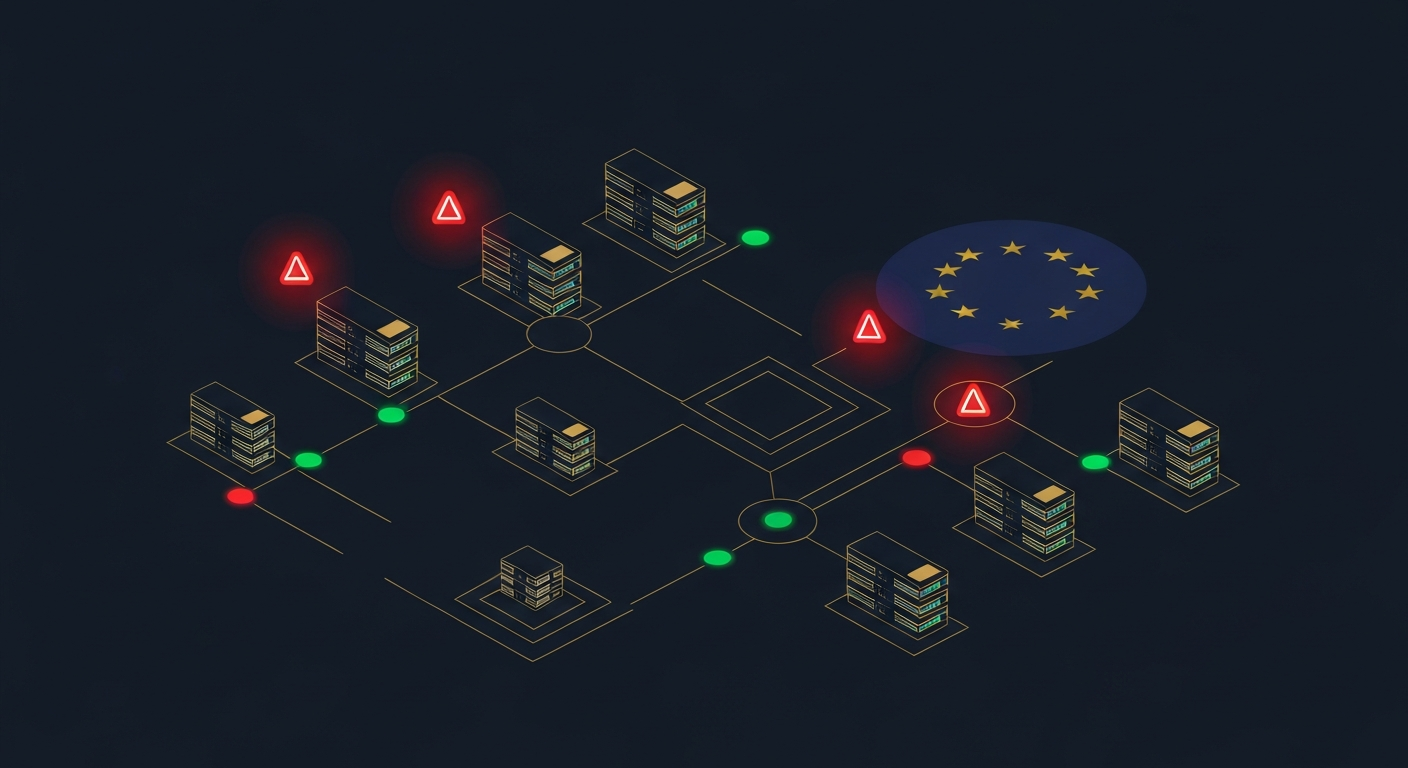
When European IT teams evaluate network monitoring platforms, SolarWinds remains one of the most recognised names in the market. The SolarWinds Platform (formerly Orion), SolarWinds Observability, and the broader product portfolio are deployed across thousands of EU enterprises and public sector organisations. Yet from a data sovereignty and regulatory compliance perspective, SolarWinds carries two distinct risk layers that European data protection officers must understand before any procurement decision: the structural CLOUD Act exposure shared by all US-incorporated technology vendors, and the specific, documented supply chain compromise risk demonstrated by the December 2020 SUNBURST attack.
This post is the first in the five-part EU Network Monitoring Series, covering SolarWinds Corporation against the CLOUD Act Exposure Framework (25 criteria) and identifying EU-native alternatives that score 0/25.
SolarWinds Corporation: Corporate Structure & CLOUD Act Exposure
Company: SolarWinds Corporation
Headquarters: Austin, Texas, USA
Incorporation: Delaware, USA
Stock: NYSE: SWI (public)
Products covered: SolarWinds Platform (Orion successor), SolarWinds Observability (SaaS), Network Performance Monitor, NetFlow Traffic Analyzer, Log Analyzer
CLOUD Act Exposure Score: 20/25
SolarWinds is incorporated in Delaware and headquartered in Texas. As a US-incorporated public company listed on the NYSE, it is fully subject to the Clarifying Lawful Overseas Use of Data Act (CLOUD Act, 2018). The CLOUD Act gives US law enforcement agencies the legal authority to compel US-based technology providers to produce customer data stored anywhere in the world, including in EU data centres. EU standard contractual clauses and GDPR Art. 44-46 safeguards do not override CLOUD Act compulsion orders, and the EU-US Data Privacy Framework (DPF) does not address law enforcement access.
Why SolarWinds Scores 20/25 on the CLOUD Act Exposure Framework
The 25-criterion framework assesses US law exposure across corporate structure, data residency, government contracting, intelligence relationships, and secondary processing vectors.
Criteria triggering maximum exposure:
- Delaware incorporation → automatic CLOUD Act jurisdiction
- Texas principal office → US nexus confirmed
- NYSE-listed public company → SEC-regulated, EDGAR filings public
- FedRAMP Moderate authorisation on SolarWinds products → explicit US federal government customer base
- Published cooperation with FBI, CISA, and the Cyber Safety Review Board following SUNBURST
- SEC enforcement action (2023) against SolarWinds and its CISO regarding cybersecurity disclosure — company is under active federal regulatory scrutiny
Partial exposure criteria:
- SolarWinds Observability SaaS: US data centre option available; EU region available but contract is with US entity
- Agent telemetry: opt-in phone-home for product improvement; data processed in the US
- Subsidiary structure: N-able Technologies was spun off in 2021, reducing but not eliminating the dependency surface
The SUNBURST Supply Chain Attack: What European Organisations Need to Know
No discussion of SolarWinds is complete without the December 2020 disclosure of the SUNBURST and SUNSPOT supply chain attacks, which remain the most consequential supply chain compromise in enterprise IT history.
Timeline and Scope
October 2019 – March 2020: Threat actors (later attributed to APT29 / Cozy Bear, operated by Russia's Foreign Intelligence Service, SVR) gained initial access to SolarWinds development and build infrastructure. The attackers inserted a dormant backdoor — named SUNSPOT — into the Orion software build pipeline.
February–June 2020: Malicious Orion software updates (versions 2019.4 through 2020.2.1 HF1) were digitally signed by SolarWinds and distributed to 18,000+ customers through the legitimate update mechanism.
December 2020: FireEye (now Mandiant) disclosed the compromise while investigating its own breach. US agencies (NSA, CISA, FBI, ODNI) issued a joint statement; Microsoft, Amazon, and major US federal agencies confirmed compromise.
Impact: Approximately 100 organisations were specifically targeted for follow-on exploitation, including the US Treasury Department, Department of State, Department of Homeland Security, Department of Defense, the European Parliament, and multiple EU member state agencies. The attackers used the Orion backdoor (SUNBURST DLL) to move laterally across networks, steal credentials, and exfiltrate data undetected for up to 14 months.
What This Means for EU Compliance Risk
From a GDPR and NIS2 perspective, the SUNBURST incident creates a documented, historical risk vector specific to SolarWinds:
- Integrity of monitoring agents: Orion agents are deployed with elevated privileges across monitored infrastructure. A compromised agent has the capability to read network credentials, configuration data, and sensitive infrastructure details — all of which constitute personal data and business-confidential information under GDPR Art. 4.
- Update chain trust: GDPR Art. 32 requires appropriate technical measures to ensure processing security. Relying on a vendor whose update pipeline was compromised for 14 months requires documented risk justification.
- Article 28 liability: As a data processor, SolarWinds carries contractual liability under GDPR Art. 28(3)(f) for assisting with data subject rights and Art. 28(3)(c) for security measures. The SUNBURST incident created an Art. 33 personal data breach notification obligation for every EU organisation that deployed affected Orion versions.
- SEC enforcement as red flag: In October 2023, the SEC charged SolarWinds and CISO Timothy Brown with fraud and internal controls failures for allegedly misleading investors about the company's cybersecurity posture before and after SUNBURST. For EU data protection officers, active federal enforcement against a vendor creates additional procurement risk.
Five Specific GDPR Risks of SolarWinds Deployment in the EU
Risk 1: Network Topology Data Under US CLOUD Act Jurisdiction
SolarWinds network monitoring products collect comprehensive network topology data: device inventories, IP address assignments, routing tables, VLAN configurations, interface statistics, and bandwidth utilisation. This data constitutes a complete map of an organisation's IT infrastructure. When processed through SolarWinds-hosted services or transmitted to US-controlled control planes for licence management, telemetry, or SaaS analytics, this highly sensitive data falls within CLOUD Act jurisdiction.
GDPR relevance: Network topology data combined with user device assignments constitutes personal data under GDPR Art. 4(1) and Recital 26. Transfer to US-controlled systems requires an Art. 44 adequacy decision or Art. 46 safeguards — neither of which prevents CLOUD Act compulsion.
Risk 2: SolarWinds Observability SaaS — Log and Metric Data in US Data Centres
SolarWinds Observability (the cloud-native successor to Orion for log management, metrics, and distributed tracing) offers US and EU deployment regions. However, the contractual relationship is with SolarWinds Corporation (US entity), and global support, engineering, and incident response access to production data remains subject to US legal process.
GDPR relevance: GDPR Art. 28(1) requires that processors provide sufficient guarantees. Where a US parent entity has technical access to EU-regional data for support purposes, this constitutes an international transfer requiring specific safeguards.
Risk 3: Agent Telemetry and Product Improvement Data
SolarWinds collects anonymised telemetry from deployed agents to improve product performance and detect anomalies. This data includes configuration patterns, monitored device types, and performance baselines — transmitted to SolarWinds infrastructure in the United States.
GDPR relevance: Even anonymised telemetry derived from EU infrastructure processing can, in aggregation, constitute personal data under GDPR Art. 4 (Recital 26 "singling out" test). Opt-out is available but not always configured in enterprise deployments.
Risk 4: FedRAMP-Certified Products and US Government Data Access Pathways
SolarWinds holds FedRAMP Moderate authorisation on several products. FedRAMP certification requires vulnerability disclosure to CISA and cooperation with US federal security processes. This creates a documented government access pathway distinct from CLOUD Act compulsion: FedRAMP programme obligations require ongoing information sharing with US civilian federal agencies.
GDPR relevance: A FedRAMP-certified vendor actively engaged in US federal cybersecurity programmes represents a higher-risk processor category for EU public sector and critical infrastructure operators subject to NIS2 Art. 21.
Risk 5: Post-SUNBURST Supply Chain Integrity Uncertainty
Following SUNBURST, SolarWinds implemented a "Secure by Design" programme including a new secure build environment. However, the supply chain compromise was undetected for 14 months despite SolarWinds' existing internal controls. EU organisations deploying on-premises SolarWinds software must evaluate whether the post-2020 improvements satisfy GDPR Art. 32(1)(d) requirements for "a process for regularly testing, assessing and evaluating the effectiveness of technical and organisational measures."
GDPR relevance: NIS2 Art. 21(2)(d) explicitly requires essential and important entities to implement "supply chain security, including security-related aspects concerning the relationships between each entity and its direct suppliers or service providers." SolarWinds Orion represents a high-criticality supplier relationship.
EU-Native Network Monitoring Alternatives: 0/25 CLOUD Act Score
The following alternatives are incorporated in EU member states or the EEA, have no US parent company, and score 0/25 on the CLOUD Act Exposure Framework.
Zabbix — Zabbix SIA (Latvia) — 0/25
HQ: Riga, Latvia (EU member state)
Incorporation: Zabbix SIA (Latvian private limited company)
US parent: None
CLOUD Act score: 0/25
Zabbix is open-source enterprise network monitoring software maintained by Zabbix SIA, a fully EU-incorporated company. It supports SNMP, IPMI, JMX, agent-based, and agentless monitoring with a comprehensive feature set comparable to SolarWinds Network Performance Monitor. Self-hosted deployment means all monitoring data remains within the EU organisation's infrastructure.
Zabbix is used in production by EU critical infrastructure operators, telecom providers, and financial institutions. The Zabbix SIA commercial support model includes SLAs compatible with NIS2 Art. 21 supplier security requirements.
Migration note: Zabbix auto-discovery and SNMP trap handling closely parallels SolarWinds NTA capabilities. Template library includes 7,000+ pre-built monitoring templates. Migration tooling available for SolarWinds infrastructure exports.
Icinga — Icinga GmbH (Germany) — 0/25
HQ: Nuremberg, Bavaria, Germany
Incorporation: Icinga GmbH (German limited liability company)
US parent: None
CLOUD Act score: 0/25
Icinga originated as a community fork of Nagios Core and has evolved into an enterprise-grade monitoring platform with an Icinga Director (web-based configuration), Icinga Web 2, and Icinga DB. Icinga GmbH offers commercial Icinga Business Edition with enterprise support.
As a German company subject exclusively to German/EU law, Icinga qualifies for EU public sector procurement under GDPR Art. 28 without Art. 44 transfer concerns. Supported by OSBA (Open Source Business Alliance) certification processes.
Checkmk — Checkmk GmbH (Germany) — 0/25
HQ: Munich, Bavaria, Germany
Incorporation: Checkmk GmbH (German GmbH, formerly tribe29 GmbH)
US parent: None
CLOUD Act score: 0/25
Checkmk is a unified monitoring platform for infrastructure, applications, and cloud resources. The Checkmk Raw edition (open source) and Checkmk Cloud edition (SaaS) are developed and operated by Checkmk GmbH, a Munich-based company with no US controlling interest.
Checkmk is particularly well-suited for hybrid EU deployments combining on-premises infrastructure monitoring with AWS EU region monitoring or Azure Germany region deployments. The commercial Checkmk Enterprise/Cloud editions include SLAs, RBAC, and audit logging suitable for NIS2 Art. 21 compliance documentation.
Paessler PRTG — Paessler AG (Germany) — 0/25
HQ: Nuremberg, Bavaria, Germany
Incorporation: Paessler AG (German stock corporation, private)
US parent: None
CLOUD Act score: 0/25
Paessler AG develops PRTG Network Monitor, one of the most widely deployed network monitoring platforms in Europe. Unlike SolarWinds, Paessler is a German company with no US parent, making PRTG a natural SolarWinds Platform replacement for organisations requiring EU data sovereignty.
PRTG supports SNMP v1/v2c/v3, WMI, NetFlow, sFlow, IPFIX, REST API sensors, and database monitoring. The on-premises PRTG Network Monitor keeps all monitoring data within the deploying organisation's infrastructure. Paessler's Hosted Probe (cloud-augmented monitoring) is operated by Paessler AG under German and EU law.
Competitive note: PRTG pricing is sensor-based and generally lower than SolarWinds Platform for comparable monitoring scope. Numerous EU enterprises have migrated from SolarWinds to PRTG specifically for compliance reasons following SUNBURST.
LibreNMS — Open Source (Self-Hosted) — 0/25
Governance: Community project, BSD licence
US exposure: None (self-hosted on EU infrastructure)
CLOUD Act score: 0/25
LibreNMS is a community-maintained auto-discovering PHP/MySQL-based network monitoring system supporting SNMP, syslog, and performance graphing. For EU organisations requiring a zero-cost, fully self-hosted option with no vendor dependency, LibreNMS deployed on EU VPS infrastructure (Hetzner, OVH, Scaleway) achieves complete data sovereignty.
Limitations compared to commercial options: no commercial SLA, requires in-house management capability, UI less polished than Checkmk or PRTG.
NIS2 Art. 21 Mapping: Network Monitoring Under EU Cybersecurity Law
The EU NIS2 Directive (EU 2022/2555), effective October 2024, imposes network monitoring obligations directly relevant to this procurement decision.
| NIS2 Article | Requirement | SolarWinds Risk | EU Alternative Path |
|---|---|---|---|
| Art. 21(2)(a) | Risk analysis and information system security policies | US entity as monitor = CLOUD Act exposure in risk register | Replace with 0/25 tool |
| Art. 21(2)(d) | Supply chain security | SUNBURST documents supply chain compromise history | EU-native eliminates vendor CLOUD Act vector |
| Art. 21(2)(e) | Security in network and information system acquisition | Procurement must assess security of monitoring tools | EU alternatives have no US jurisdiction gap |
| Art. 21(2)(f) | Policies and procedures on the effectiveness of cybersecurity measures | Network monitoring data quality and integrity | Post-SUNBURST integrity questions require documented mitigation |
| Art. 21(3) | Proportionality and entity risk profile | Critical/essential entities → stricter supply chain standards | PRTG/Checkmk/Zabbix recommended for NIS2-inscoped operators |
Art. 21(2)(d) is particularly significant: NIS2 explicitly requires essential and important entities to assess "security-related aspects concerning the relationships between each entity and its direct suppliers." SolarWinds, as a vendor with documented supply chain compromise history and active SEC enforcement, represents a supplier relationship that must be specifically documented and risk-assessed in NIS2 compliance programmes.
CLOUD Act Risk Matrix: SolarWinds vs EU-Native Alternatives
| Criteria | SolarWinds (US) | Zabbix (Latvia) | Icinga (Germany) | Checkmk (Germany) | PRTG (Germany) |
|---|---|---|---|---|---|
| CLOUD Act jurisdiction | ✗ Yes (20/25) | ✓ No (0/25) | ✓ No (0/25) | ✓ No (0/25) | ✓ No (0/25) |
| EU incorporation | ✗ No | ✓ Yes | ✓ Yes | ✓ Yes | ✓ Yes |
| US parent company | ✗ Yes | ✓ None | ✓ None | ✓ None | ✓ None |
| Supply chain incident history | ✗ SUNBURST 2020 | ✓ None documented | ✓ None documented | ✓ None documented | ✓ None documented |
| FedRAMP certified | ✗ Yes | ✓ No | ✓ No | ✓ No | ✓ No |
| On-premises option | ✓ Yes | ✓ Yes | ✓ Yes | ✓ Yes | ✓ Yes |
| Commercial support SLA | ✓ Yes | ✓ Yes | ✓ Yes | ✓ Yes | ✓ Yes |
| GDPR Art. 44 transfer needed | ✗ Required | ✓ Not needed | ✓ Not needed | ✓ Not needed | ✓ Not needed |
Three Migration Scenarios
Scenario A: Replace SolarWinds Platform (On-Premises Orion)
Recommended path: Paessler PRTG or Checkmk Enterprise
Rationale: Both support the same SNMP/WMI/NetFlow/agent protocols as Orion. PRTG sensor-based licensing often reduces cost vs SolarWinds node-based licensing. Checkmk provides a more flexible API for DevOps-style automation.
Timeline: 4-8 weeks for discovery-to-monitoring parity; 8-12 weeks for alert policy and report migration.
Scenario B: Replace SolarWinds Observability (Cloud/SaaS)
Recommended path: Checkmk Cloud (hosted by Checkmk GmbH in EU) or self-hosted Zabbix on Hetzner/OVH
Rationale: Checkmk Cloud provides the managed SaaS experience without CLOUD Act exposure; Zabbix self-hosted achieves lowest TCO for teams with in-house ops capability.
Timeline: 2-4 weeks for SaaS migration with API-based integration; 6-10 weeks for self-hosted with HA setup.
Scenario C: Regulated Sector (NIS2 Essential Entity, Financial, Healthcare)
Recommended path: Zabbix with commercial Zabbix SIA support contract
Rationale: Zabbix SIA's EU incorporation and open-source codebase allow full supply chain audit. Commercial support SLA provides NIS2 Art. 21(2)(d) vendor contractual compliance. BSI-aligned deployment guides available.
Timeline: 8-16 weeks for enterprise-grade HA deployment with full documentation package.
Summary: Should EU Organisations Deploy SolarWinds in 2026?
SolarWinds carries two compounding compliance risks that EU data protection officers and CISO teams must evaluate:
-
CLOUD Act structural exposure (20/25): As a US-incorporated public company with FedRAMP certifications and active federal regulatory relationships, SolarWinds monitoring data — including highly sensitive network topology data — is subject to US compulsion under CLOUD Act regardless of EU data centre location.
-
SUNBURST supply chain history: The 2020 compromise demonstrated 14 months of undetected malicious access to the Orion build pipeline, resulting in active federal enforcement (SEC), congressional hearings, and NIS2 Art. 21(2)(d) supplier risk justification requirements for any EU essential entity continuing SolarWinds deployment.
For EU organisations subject to GDPR Art. 32 and NIS2 Art. 21, the procurement risk justification burden for SolarWinds is higher than for any EU-native alternative. Paessler PRTG (Nuremberg), Checkmk (Munich), and Zabbix (Riga) all provide enterprise-grade network monitoring capabilities with 0/25 CLOUD Act exposure and no documented supply chain compromise history.
Next in the EU Network Monitoring Series: Nagios XI EU Alternative 2026 — Nagios Enterprises LLC (Saint Paul MN, CLOUD Act exposure, proprietary vs open-source split, and EU-native community alternatives).
sota.io is a European cloud platform built for GDPR-compliant deployments. All infrastructure runs within the EU, subject solely to EU law.
EU-Native Hosting
Ready to move to EU-sovereign infrastructure?
sota.io is a German-hosted PaaS — no CLOUD Act exposure, no US jurisdiction, full GDPR compliance by design. Deploy your first app in minutes.