Pinecone EU Alternative 2026 — Vector Database CLOUD Act Exposure & GDPR Compliance
Post #1 in the sota.io EU Vector Database CLOUD Act Series
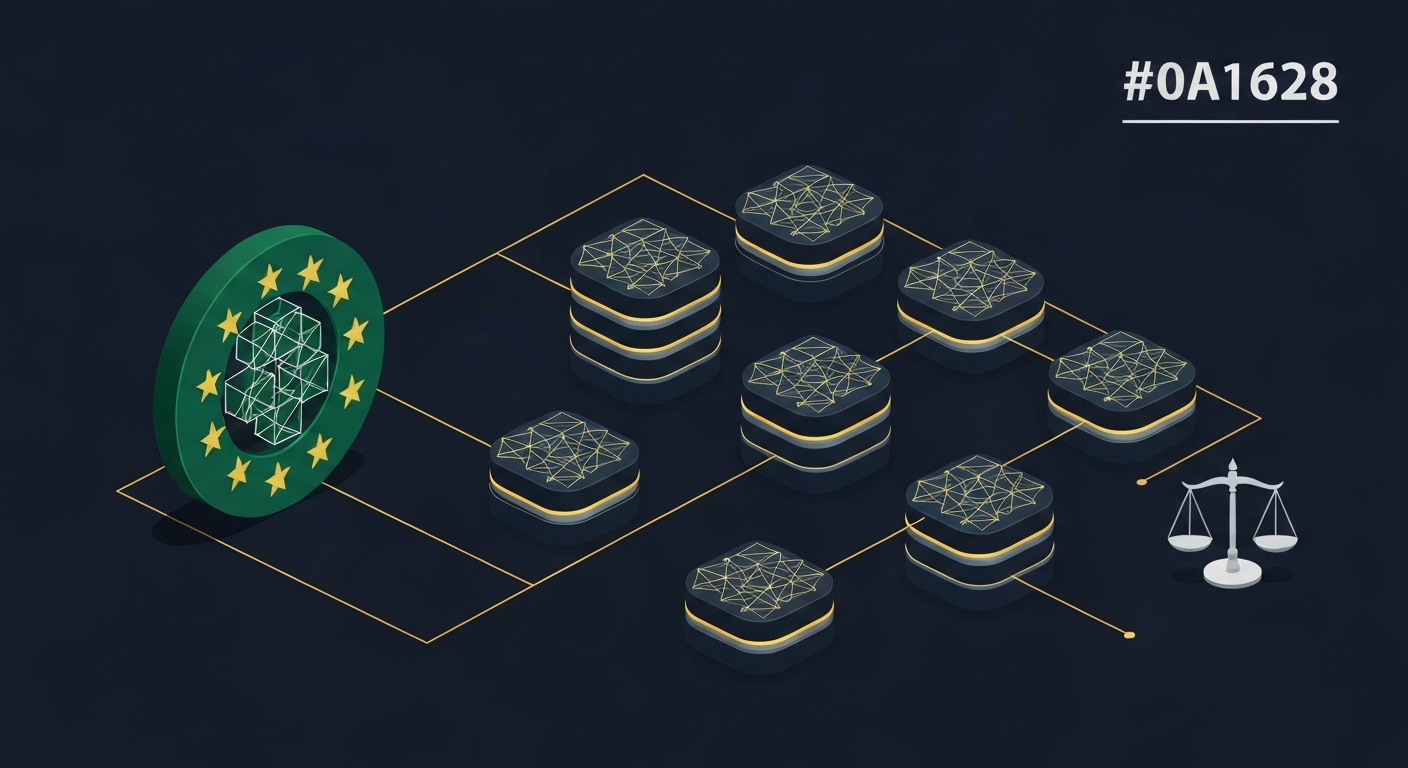
Vector databases have become the memory layer of modern AI systems. When you build a Retrieval-Augmented Generation (RAG) application for EU users — a customer support chatbot, a document search system, a personalized recommendation engine — you store the semantic fingerprints of your users' interactions in a vector database. Pinecone is the market leader for hosted vector databases. But Pinecone Systems Inc. is incorporated in Delaware and headquartered in New York City, which means every embedding stored in Pinecone falls under the US CLOUD Act.
This post analyzes Pinecone's CLOUD Act exposure using the same 5-dimension framework we've applied across 30+ US enterprise software providers in this series: corporate structure, hosting infrastructure, data sensitivity, regulatory compliance posture, and EU alternative maturity.
What Is Pinecone?
Pinecone is a fully managed vector database service launched in 2019 by Pinecone Systems Inc. It specializes in storing and querying high-dimensional embedding vectors — the numerical representations that AI models use to encode semantic meaning from text, images, and other data.
Key capabilities:
- Serverless and pod-based vector indexes
- Metadata filtering alongside vector similarity search
- Multi-cloud deployment on AWS, GCP, and Azure
- Pinecone Inference API for generating embeddings via hosted models
- Native integrations with LangChain, LlamaIndex, OpenAI, and Anthropic
As of 2026, Pinecone serves thousands of enterprise customers building RAG applications, semantic search systems, and AI-powered recommendation engines.
Corporate structure: Pinecone Systems Inc. is incorporated in Delaware and headquartered at 505 Howard Street, San Francisco (SOMA district). The company has raised over $400M from investors including Andreessen Horowitz, Tiger Global, and Menlo Ventures — all US-domiciled venture capital firms. Pinecone is a private company.
CLOUD Act Matrix: Pinecone (19/25)
| Dimension | Score | Detail |
|---|---|---|
| D1: Corporate Jurisdiction | 5/5 | Delaware C-Corp, US domiciled, San Francisco HQ. 18 U.S.C. § 2713 applies. |
| D2: Hosting Infrastructure | 3/5 | EU regions available (AWS eu-west-1 Ireland, GCP europe-west3 Frankfurt) but US-controlled cloud provider. Serverless architecture makes data residency complex. |
| D3: Data Sensitivity | 5/5 | Embedding vectors encode semantic content of documents and user queries — implicit personal data. EU AI Act Art.10 training data provenance. Query vectors contain user intent. |
| D4: Regulatory Compliance Posture | 3/5 | GDPR DPA available, EU SCCs (Standard Contractual Clauses), SOC 2 Type II, ISO 27001. US CLOUD Act applies regardless of contractual protections. |
| D5: EU Alternative Maturity | 3/5 | Qdrant (Berlin, Rust-native), Vespa.ai (Norway), Weaviate (Amsterdam) are viable but require migration effort. |
| Total | 19/25 | High CLOUD Act exposure — significant for EU AI deployments. |
Why D3 Scores Maximum (5/5)
The data sensitivity dimension deserves special attention for vector databases. Unlike traditional databases storing structured records, vector databases store embedding representations — and these carry profound GDPR implications.
Embedding vectors as personal data: Under GDPR Art. 4(1), personal data is "any information relating to an identified or identifiable natural person." Embedding vectors derived from personal data — user queries, document contents, conversation histories — can be used to:
- Identify the semantic intent of a specific user's queries over time
- Reconstruct approximately similar content through embedding inversion techniques
- Cluster and profile users based on behavioral patterns encoded in their query vectors
- Link embedding clusters to individual identities via metadata
The European Data Protection Board (EDPB) has consistently held that pseudonymized data remains personal data when re-identification is possible. Given that modern embedding models (text-embedding-3-large, Cohere embed-v3, etc.) produce deterministic vectors, and given that embedding inversion research has demonstrated partial content reconstruction, there is a strong argument that query embeddings from identified users are personal data under GDPR.
EU AI Act Art. 10 (Training Data Governance): If your RAG system fine-tunes on EU user interaction data, the training data provenance documentation required under EU AI Act Art. 10(3) likely references the same embedding store. Under CLOUD Act, US authorities can subpoena that documentation — creating the same Compliance Evidence Paradox documented in our EU AI Governance Tools series.
The RAG Pipeline Memory Paradox
Here is the core sovereignty problem for EU enterprises building with Pinecone:
A RAG application works by:
- Taking user input (a query or document)
- Converting it to an embedding vector via a language model
- Storing that vector in the vector database
- At query time, retrieving semantically similar vectors
- Feeding retrieved context to the generation model
The vector database is the semantic memory of your AI system. It stores the compressed meaning of everything your users have interacted with. For a customer support chatbot, this means the semantic fingerprints of every support query your EU customers have ever asked. For a document search system, it means the vector representations of every EU employee document.
The CLOUD Act risk: Under 18 U.S.C. § 2713, the US government can compel Pinecone to disclose all stored data — including embedding vectors — without requiring notification to affected users or to the EU data controller. A US national security letter or FISA court order directed at Pinecone could expose the entire semantic memory of your EU AI system to US government review.
Why EU server location doesn't help: Pinecone's EU regions (AWS eu-west-1, GCP europe-west3) store data physically in Europe. But CLOUD Act jurisdiction follows the corporate entity, not the physical data location. Because Pinecone Systems Inc. is a US-incorporated company, it is subject to CLOUD Act regardless of where its servers sit. This is the foundational sovereignty gap that EU data residency commitments cannot close.
The GDPR Art. 48 collision: GDPR Art. 48 prohibits EU data controllers from complying with foreign court orders that require transferring personal data to a foreign jurisdiction unless those transfers comply with Chapter V of GDPR. If Pinecone receives a CLOUD Act order requiring disclosure of EU user embedding vectors, Pinecone must comply with US law — but compliance may constitute a GDPR Art. 48 violation for the EU enterprise that stored the data. EU enterprises are caught in a legal impossibility: their data processor (Pinecone) must comply with US law, but that compliance violates EU law.
Pinecone's GDPR Commitments: What They Cover and What They Don't
Pinecone offers:
- Data Processing Agreement (DPA): Available for enterprise customers, covering standard GDPR processor obligations
- EU Standard Contractual Clauses (SCCs): Post-Schrems II transfer mechanism
- Data residency controls: Pinecone serverless supports region selection including EU regions
- Encryption at rest and in transit: AES-256 and TLS 1.3
- SOC 2 Type II certification: Annual third-party security audit
- ISO 27001 certification: Information security management
What these commitments don't cover: GDPR SCCs and DPAs govern how Pinecone handles data in normal commercial operations. They do not and cannot override the US government's authority to compel disclosure under CLOUD Act. The SCCs explicitly carve out situations where disclosure is required by law. Pinecone's contractual privacy commitments are real and meaningful — but they are structurally incapable of protecting against lawful US government access.
The UK Information Commissioner's Office (ICO) and several EU data protection authorities have noted in guidance that SCCs alone are insufficient protection when the third country's domestic law creates systemic access obligations — which is precisely what CLOUD Act does.
EU-Native Vector Database Alternatives
For EU enterprises that require genuine data sovereignty, three EU-headquartered vector database options offer CLOUD Act exposure of 0/25:
Qdrant — Berlin, Germany (0/25)
Qdrant Solutions GmbH is incorporated in Germany and headquartered in Berlin. Qdrant is an open-source vector database written in Rust, with a managed cloud offering (Qdrant Cloud) deployed on EU infrastructure.
Sovereignty profile:
- German GmbH — German/EU corporate jurisdiction
- Qdrant Cloud available on AWS/GCP/Azure with EU regions
- On-premise deployment available (full sovereignty)
- No US corporate parent, no US VC majority control
- Rust performance: competitive with Pinecone on latency benchmarks
CLOUD Act exposure: 0/25 — German GmbH not subject to US CLOUD Act
Feature comparison with Pinecone:
- Payload filtering: Qdrant supports rich JSON payload filtering, comparable to Pinecone metadata
- Sparse-dense hybrid search: Qdrant 1.9+ supports SPLADE sparse vectors + dense vectors
- Quantization: Qdrant supports scalar and product quantization for cost reduction
- Collections vs. Indexes: different conceptual model but equivalent functionality
- Client SDKs: Python, Go, Rust, TypeScript — parity with Pinecone
Gap vs. Pinecone: Qdrant Cloud is less mature than Pinecone's serverless offering. No built-in inference API (must bring your own embedding model). Smaller ecosystem of pre-built integrations, though LangChain and LlamaIndex both support Qdrant natively.
Vespa.ai — Trondheim, Norway (0/25)
Vespa.ai AS is a Norwegian company spun out of Yahoo in 2022 as an independent entity. Vespa is a mature vector search and ranking platform with over two decades of production use at Yahoo/Verizon Media.
Sovereignty profile:
- Norwegian AS (Aksjeselskap) — Norwegian/EEA corporate jurisdiction
- No US corporate ownership (independent since 2022 spinout)
- Open-source, self-hostable on EU infrastructure
- Vespa Cloud available with EU deployment options
Technical differentiation:
- Combines traditional keyword search (BM25) with vector search in a single query
- Built-in ML model serving — can run transformer models directly in the query pipeline
- Tensor computation engine — arbitrary tensor operations at query time
- Designed for high-throughput production use (billions of documents)
CLOUD Act exposure: 0/25 — Norwegian AS not subject to US CLOUD Act
Weaviate — Amsterdam, Netherlands (2/25 estimated)
Weaviate BV is incorporated in the Netherlands and headquartered in Amsterdam. Weaviate is EU-headquartered but has received US venture investment (Index Ventures, NEA, Salesforce Ventures, Google Ventures).
Sovereignty nuance: Weaviate BV is a Dutch company (Dutch jurisdiction, not US CLOUD Act), but significant US VC ownership raises the question of whether US investor pressure could indirectly influence data access decisions. This is categorically different from CLOUD Act jurisdiction — there is no legal basis for CLOUD Act access — but it represents a softer sovereignty concern.
Weaviate Cloud is available with EU regions. Weaviate is also fully open-source (Apache 2.0) and self-hostable on EU infrastructure.
For maximum sovereignty: Self-hosted Qdrant on Hetzner (Germany) or a German/EU-based VPS provides 0/25 CLOUD Act exposure with no external dependencies.
Procurement Decision Framework
For EU enterprises evaluating vector database choices:
IF handling EU personal data (customer queries, user documents)
  → AVOID Pinecone (19/25 CLOUD Act exposure)
  → PREFER Qdrant Cloud EU region OR self-hosted Qdrant/Vespa.ai

IF EU AI Act high-risk system (biometric, employment, credit, health)
  → MANDATORY: EU-sovereign vector database (CLOUD Act 0/25)
  → Qdrant DE region OR self-hosted → training data provenance in EU jurisdiction

IF only handling non-personal documents (public whitepapers, product catalogs)
  → Pinecone risk profile is lower (D3 sensitivity reduced)
  → Still evaluate contractual obligations carefully

IF existing Pinecone deployment
  → Audit which personal data categories are embedded
  → Prioritize migrating customer query histories, support logs, user-generated content
  → Non-personal document embeddings are lower priority for migration
GDPR Compliance Checklist for Vector Database Deployments
Before storing embeddings in any vector database, EU data controllers should verify:
- Art. 30 RoPA entry: Is the vector database listed as a processing system in your Records of Processing Activities? What legal basis covers embedding storage?
- Art. 25 Data Minimization: Are you storing only necessary embeddings? Can you use approximate (lower-dimensional) vectors to reduce information density?
- Art. 17 Erasure: Can you delete all embeddings associated with a specific user upon erasure request? (Most vector DBs support deletion by ID — verify you maintain the ID mapping.)
- Art. 35 DPIA: If embedding personal conversations or health/employment data, have you conducted a Data Protection Impact Assessment?
- Art. 44-49 Transfer Basis: If using a US-hosted vector database, what is the transfer basis? SCCs alone are insufficient if your DPA concludes CLOUD Act creates systemic access risk.
- EU AI Act Art. 10: Is your training data provenance documentation stored in EU-sovereign infrastructure?
Migration Path: Pinecone to Qdrant
For teams currently running Pinecone who want to migrate to Qdrant:
Step 1 — Parallel index creation: Create equivalent Qdrant collections mirroring your Pinecone index dimensions and distance metrics (cosine, dot product, Euclidean).
Step 2 — Export and re-embed: Pinecone's fetch() API allows exporting vectors by ID. However, Pinecone does not store the original text — only the embedding vectors. If you need the original documents, retrieve from your primary data store and re-embed using your chosen EU-hosted inference endpoint.
Step 3 — Metadata migration: Pinecone metadata maps directly to Qdrant payload. Qdrant supports rich JSON payloads with indexed fields for efficient filtering.
Step 4 — Gradual traffic shift: LangChain and LlamaIndex both support Qdrant natively. Swap the vector store configuration with minimal code change. Run parallel queries for validation.
Estimated migration effort: For a typical enterprise RAG deployment (10-50M vectors), plan for 1-2 sprint cycles: infrastructure setup, export/re-embed pipeline, integration testing, and performance validation.
The EU Vector Database Landscape in 2026
| Provider | HQ | CLOUD Act | Notes |
|---|---|---|---|
| Qdrant | Berlin, Germany | 0/25 | Rust-native, open-source, GmbH |
| Vespa.ai | Trondheim, Norway | 0/25 | Norwegian AS, mature, OSS |
| Weaviate | Amsterdam, Netherlands | ~2/25 | Dutch BV, US VC funded, OSS |
| pgvector | OSS (self-hosted) | 0/25 | PostgreSQL extension, no vendor |
| Pinecone | San Francisco, US | 19/25 | Delaware C-Corp, CLOUD Act applies |
| Chroma | San Francisco, US | High | Delaware C-Corp, early stage |
| Zilliz/Milvus Cloud | San Francisco, US | High | Delaware C-Corp, Milvus OSS base |
The EU vector database ecosystem is maturing rapidly. Qdrant in particular has emerged as the most production-ready EU-native option, with extensive benchmarks showing competitive performance against Pinecone for the most common RAG workloads.
Summary
Pinecone is a technically excellent vector database — fast, scalable, and deeply integrated into the modern AI development ecosystem. Its CLOUD Act exposure (19/25) reflects its US corporate structure, not a failure of its privacy engineering.
For EU enterprises building AI systems that handle EU personal data, the RAG Pipeline Memory Paradox is a structural compliance risk: your AI system's semantic memory of EU user interactions is subject to US government access under 18 U.S.C. § 2713. No contractual arrangement — no DPA, no SCC, no data residency commitment — can override this legal reality.
EU-native alternatives exist and are production-ready. Qdrant (Berlin) and Vespa.ai (Norway) offer 0/25 CLOUD Act exposure with feature parity for most enterprise RAG use cases. For teams already on Pinecone, a phased migration of high-sensitivity data categories (user query histories, personal document embeddings) to Qdrant is achievable within a typical sprint cycle.
Next in this series: Weaviate — EU-headquartered but US-VC-funded. Does Dutch incorporation provide genuine CLOUD Act protection when US investors hold significant ownership stakes?
This analysis is part of the sota.io EU Cloud Sovereignty Series, examining the CLOUD Act exposure of enterprise software providers used by European organizations. Series focus: the infrastructure layer of modern AI systems.
[See also: EU AI Governance Tools — Credo AI | Arthur AI | Fiddler AI | Weights & Biases | Comparison Finale]
EU-Native Hosting
Ready to move to EU-sovereign infrastructure?
sota.io is a German-hosted PaaS — no CLOUD Act exposure, no US jurisdiction, full GDPR compliance by design. Deploy your first app in minutes.