FreshBooks EU Alternative 2026: Canada Five Eyes + PIPEDA Adequacy Gaps vs EU-Native Accounting Software
Post #4 in the sota.io EU Accounting Software Series
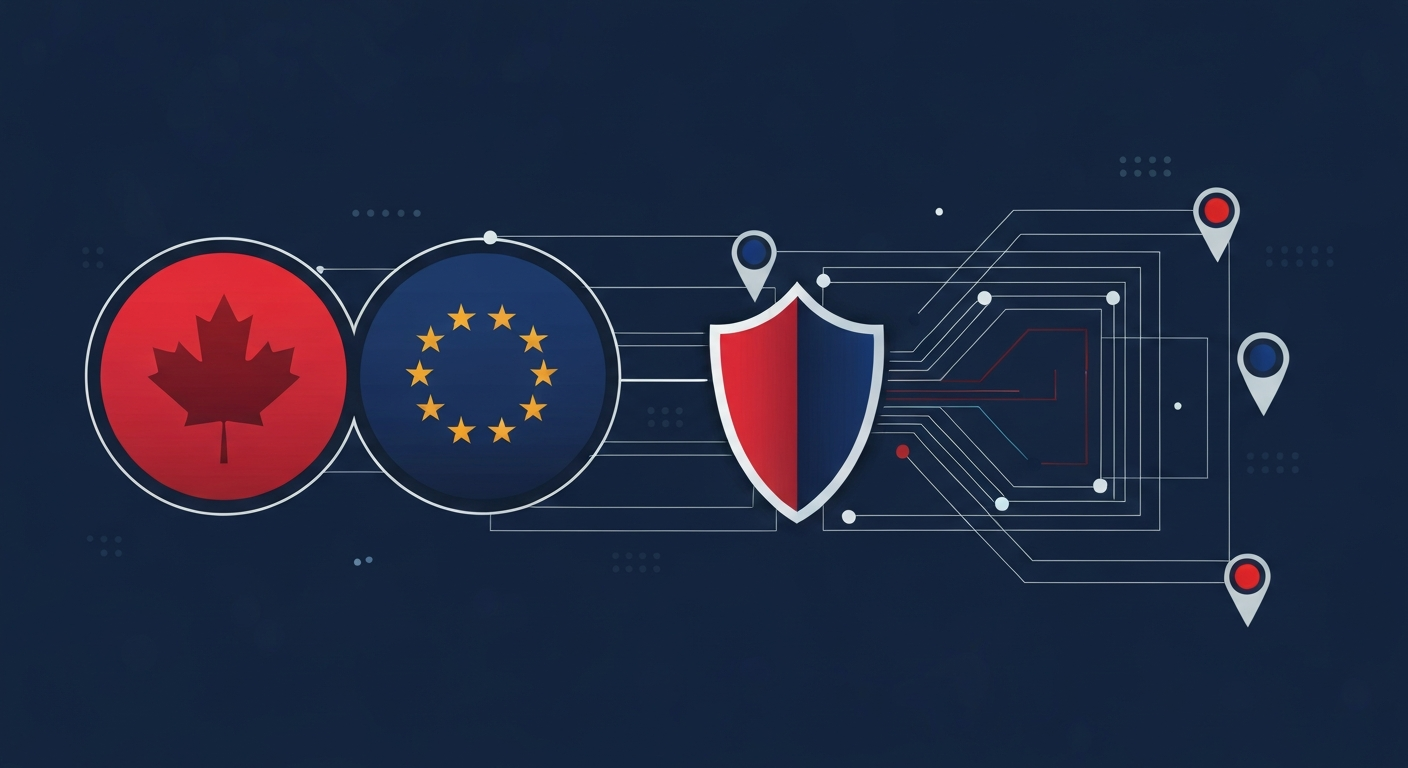
FreshBooks is not American. That distinction matters — until you look at it more closely. The company is based in Toronto, Ontario, subject to Canadian law, and Canada has held an EU adequacy decision since 2001. On the surface, transferring EU financial data to FreshBooks looks legally cleaner than using QuickBooks or Xero.
But Canada is a Five Eyes partner. The Communications Security Establishment (CSE) shares signals intelligence with the NSA, GCHQ, ASD, and GCSB in near-real-time. Canada's national security legislation contains broad access powers. And FreshBooks's own infrastructure runs on AWS US-East as its primary region, routing EU customer data through American cloud infrastructure anyway.
This post breaks down the legal risk in detail: what PIPEDA's adequacy decision actually covers, where it doesn't protect you, and which EU-native accounting tools genuinely eliminate the exposure.
Who Controls Your FreshBooks Data?
FreshBooks (operating entity: 2ndSite Inc.) is incorporated in Ontario, Canada. Its principal office is at 1655 Dupont Street, Toronto, Ontario. The company is majority-owned by General Atlantic, a US private equity firm headquartered in New York.
| Entity | Jurisdiction | Key Risk |
|---|---|---|
| 2ndSite Inc. (FreshBooks) | Ontario, Canada | Subject to PIPEDA + Canadian national security law |
| General Atlantic (majority owner) | New York, USA | US person — potential CLOUD Act exposure via ownership |
| FreshBooks infrastructure (primary) | AWS us-east-1 (Virginia, USA) | Amazon.com Inc. US parent — CLOUD Act applies |
| FreshBooks infrastructure (EU) | AWS eu-west-1 (Ireland) | Amazon Web Services EMEA SARL — but Amazon.com controls |
The ownership structure adds a layer that few users consider: a US private equity firm controls FreshBooks. While the operating entity is Canadian, General Atlantic could be subject to US legal process compelling disclosure of FreshBooks customer data under US law — including the CLOUD Act and US securities/financial regulations.
More immediately: FreshBooks processes EU customer data on AWS infrastructure, which is subject to Amazon.com Inc.'s CLOUD Act obligations regardless of which AWS region stores the data.
Canada's EU Adequacy Decision: What It Actually Covers
The European Commission granted Canada partial adequacy under the old Data Protection Directive in 2001 (Commission Decision 2002/2/EC), later preserved under GDPR. This decision covers:
- Commercial organizations subject to PIPEDA
- Private-sector transfers for commercial purposes
The adequacy decision explicitly excludes:
- Public sector data transfers
- Employment records sent to Canada
- Data about Canadian residents (the decision only covers EU→Canada transfers)
- National security and law enforcement access — the adequacy decision does not bind or limit Canadian intelligence agencies
That last point is critical. The EU Commission's adequacy assessment of Canada focuses on PIPEDA's commercial framework. It does not — and cannot — certify that Canadian intelligence services will not access EU personal data stored in Canada.
Five Eyes: The Hidden Risk in Canada's Adequacy Decision
Canada is one of the Five Eyes (FVEY) intelligence alliance members, alongside the United States, United Kingdom, Australia, and New Zealand. This alliance, formalized through UKUSA Agreement arrangements, involves systematic signals intelligence (SIGINT) sharing.
The Communications Security Establishment (CSE), Canada's SIGINT agency, operates under the CSE Act 2019 with broad authority to collect foreign signals intelligence. Under the UKUSA Agreement, CSE routinely shares intelligence — including communications metadata and content — with the NSA and GCHQ.
What this means for FreshBooks data:
If EU personal data stored on FreshBooks's AWS infrastructure is captured by CSE SIGINT collection programs, that data can be shared with US and UK intelligence agencies under FVEY arrangements — without any notification to EU data subjects, without a court order visible to EU authorities, and without triggering PIPEDA's individual rights provisions.
The EDPB's guidance on Schrems II and subsequent Chapter V transfer assessments requires a Transfer Impact Assessment (TIA) that evaluates not just the law on paper but the practical access capabilities of foreign intelligence services. An honest TIA for FreshBooks that accounts for CSE's FVEY relationships would need to flag this as a material risk.
| Intelligence Agency | Country | FVEY Role | Shares with |
|---|---|---|---|
| NSA | USA | Principal SIGINT collector | All FVEY |
| GCHQ | UK | European SIGINT hub | All FVEY |
| CSE | Canada | North American SIGINT | All FVEY |
| ASD | Australia | Asia-Pacific SIGINT | All FVEY |
| GCSB | New Zealand | Pacific SIGINT | All FVEY |
Your FreshBooks invoice data — customer names, VAT numbers, payment amounts, business relationships — could flow through any of these channels if it is captured in SIGINT collection.
PIPEDA vs GDPR: The Gap That Adequacy Doesn't Close
Even setting aside national security, PIPEDA and GDPR differ in ways that matter for EU businesses:
Data subject rights:
- GDPR Article 17 provides an unqualified right to erasure. PIPEDA's erasure rights are weaker and subject to more exceptions.
- GDPR Article 22 restricts automated decision-making. PIPEDA has no equivalent provision.
- GDPR Article 33-34 require breach notification within 72 hours. PIPEDA requires "as soon as feasible" notification — a lower standard.
Data minimization:
- GDPR Article 5(1)(c) establishes data minimization as a core principle. PIPEDA requires limiting collection to "what is necessary for the purposes" but enforcement has historically been weaker.
Enforcement:
- GDPR fines can reach 4% of global annual turnover. The OPC (Office of the Privacy Commissioner of Canada) can only recommend compliance — it cannot issue binding orders or fines. The CPPA (Consumer Privacy Protection Act, not yet in force) would give the OPC some fining authority, but implementation is delayed.
The adequacy decision was based on PIPEDA's framework circa 2001. The Commission has signaled that it intends to review Canada's adequacy status. Businesses relying on Canadian adequacy as a long-term compliance strategy carry the risk that the decision could be suspended or withdrawn.
What Financial Data Is at Stake?
FreshBooks stores the following EU personal data categories that are relevant under GDPR:
- Customer invoicing records: names, addresses, email addresses, VAT numbers
- Payment data: transaction amounts, payment methods, bank reference numbers
- Supplier/vendor records: contractor identities, payment terms
- Time tracking data: when your employees or contractors worked, on what projects
- Expense records: receipts, expense categories, business travel data
- Revenue data: business performance indicators that may be commercially sensitive
For EU businesses, this data is subject to GDPR. For EU freelancers and small businesses using FreshBooks to invoice EU clients, the data includes the personal data of those EU clients — making FreshBooks a data processor for which you, as the controller, bear GDPR responsibility.
Under GDPR Article 28, your contract with FreshBooks must ensure FreshBooks provides "sufficient guarantees" of GDPR compliance. The question is whether FreshBooks's DPA, which relies on SCCs for the AWS infrastructure transfers, provides those guarantees in light of FVEY intelligence access.
FreshBooks's GDPR Compliance Position
FreshBooks has published GDPR documentation and offers SCCs for EU customers. However:
-
The SCCs cover the EU→Canada transfer under the adequacy decision framework. They do not separately address the Canada→US transfer via AWS us-east-1 for EU customer data.
-
FreshBooks's DPA acknowledges AWS as a subprocessor but routes the AWS transfer through Amazon's own GDPR compliance framework — which itself relies on SCCs and the AWS Data Processing Addendum. This creates a chain: EU business → FreshBooks (Canada) → AWS (Ireland, then replicated/processed via AWS global infrastructure).
-
The FVEY risk is not disclosed in FreshBooks's GDPR documentation as a named risk factor. EU businesses must derive it themselves from the adequacy decision's national security carve-out and Canada's CSE Act.
EU-Native Alternatives to FreshBooks
These alternatives keep your financial data within the EU, under full GDPR jurisdiction, with no Five Eyes exposure:
| Tool | Country | Best For | Price |
|---|---|---|---|
| Lexoffice | Germany (Haufe Group, Freiburg im Breisgau) | SMEs, freelancers, GmbH/UG | from €7.90/mo |
| sevDesk | Germany (Stuttgart) | Freelancers, small businesses, invoicing-heavy | from €14.90/mo |
| FastBill | Germany (Frankfurt) | Freelancers, subscription businesses | from €8/mo |
| DATEV Mittelstand | Germany (Nuremberg, cooperative) | SMEs working with German-speaking accountants | Contact pricing |
| Billit | Belgium (Ghent) | Belgian businesses, multilingual EU invoicing | from €12/mo |
| Holded | Spain (Barcelona) | Spanish and European SMEs, ERP+accounting | from €12/mo |
| Zervant | Finland (Helsinki) | Nordic and European freelancers, simple invoicing | Free + paid plans |
Why these are genuinely safer:
- Lexoffice is owned by Haufe Group, a German family-run media and software company with no US or non-EU ownership. Data stays in German data centers (certified to ISO 27001). DATEV integration built in.
- sevDesk is a German GmbH, founder-owned, with infrastructure in German AWS Frankfurt — but unlike FreshBooks, the parent company is German with no US controlling interest. SevDesk's recent funding comes from German PE (Acton Capital), not US funds.
- DATEV eG is structured as a German cooperative (e.V.) — literally owned by German tax advisors. It has no external shareholders, no US ownership, and runs its own German data centers. It is structurally immune to CLOUD Act and FVEY corporate-access vectors.
- Billit operates from Belgium under Belgian law, stores data in EU data centers (OVHcloud EU), and is funded by Belgian investors.
The Compliance Decision Framework
For EU DPOs and finance teams assessing FreshBooks:
Step 1 — Conduct a Transfer Impact Assessment Map every data flow: EU business → FreshBooks → AWS. Assess CSE's FVEY access capabilities as a practical matter (not just the formal law). Flag the national security carve-out in Canada's adequacy decision.
Step 2 — Review Your GDPR Article 28 Processor Agreement Check whether FreshBooks's DPA explicitly addresses the AWS subprocessor chain for EU customer data. Request clarification on which AWS regions process EU data and under what legal basis.
Step 3 — Apply the EDPB's Schrems II Risk Test Under EDPB Recommendations 01/2020 on supplementary measures: if effective supplementary technical measures cannot be implemented (i.e., you cannot encrypt data in a way that prevents FreshBooks from accessing it while still using the service), the transfer should not proceed.
Step 4 — Consider Data Residency FreshBooks offers an EU data residency option (AWS eu-west-1, Ireland) for some tiers. This addresses the AWS location question but does not address the FVEY risk: AWS Ireland is still Amazon.com Inc. infrastructure, and CSE/NSA access does not depend on the physical location of servers.
Step 5 — Evaluate Migration Cost vs Compliance Risk For EU businesses whose primary data protection concern is commercial compliance (not government surveillance), FreshBooks's adequacy-backed transfers may be defensible with proper TIA documentation. For businesses in regulated sectors (finance, healthcare, legal) where client confidentiality is critical, the FVEY exposure warrants migrating to an EU-native alternative.
Summary
FreshBooks occupies an interesting middle ground in EU data sovereignty analysis: it is Canadian (not US), benefits from EU adequacy, and is not directly subject to the US CLOUD Act in the same way as Intuit or Xero's parent. But:
- Canada is a Five Eyes partner with active SIGINT sharing with the NSA and GCHQ
- FreshBooks's infrastructure runs on AWS us-east-1 as its primary region, creating a direct CLOUD Act exposure via Amazon
- The EU adequacy decision for Canada does not cover national security access and is under review
- General Atlantic (US PE, majority owner) creates a potential US legal process vector
For EU businesses that treat financial data sovereignty as a compliance priority rather than a checkbox, the EU-native alternatives — Lexoffice, sevDesk, DATEV, Billit — eliminate these risks entirely by keeping data in EU-jurisdiction infrastructure with EU-owned parents.
The accounting software market has matured to the point where EU-native tools match FreshBooks on core features (invoicing, expense tracking, bank reconciliation, multi-currency). The compliance premium for switching is real but bounded — and decreasing as EU DPAs increase enforcement scrutiny of Five Eyes-adjacent data transfers.
This post is part of the sota.io EU Accounting Software Series. Previous posts: QuickBooks · Xero · Sage. Next: NetSuite/Oracle.
EU-Native Hosting
Ready to move to EU-sovereign infrastructure?
sota.io is a German-hosted PaaS — no CLOUD Act exposure, no US jurisdiction, full GDPR compliance by design. Deploy your first app in minutes.