EU NIS2 National Enforcement Comparison 2026: How All 27 Member States Differ for SaaS
Post #1317 in the sota.io EU Cyber Compliance Series — EU NIS2 National Enforcement #5/5 (Finale)
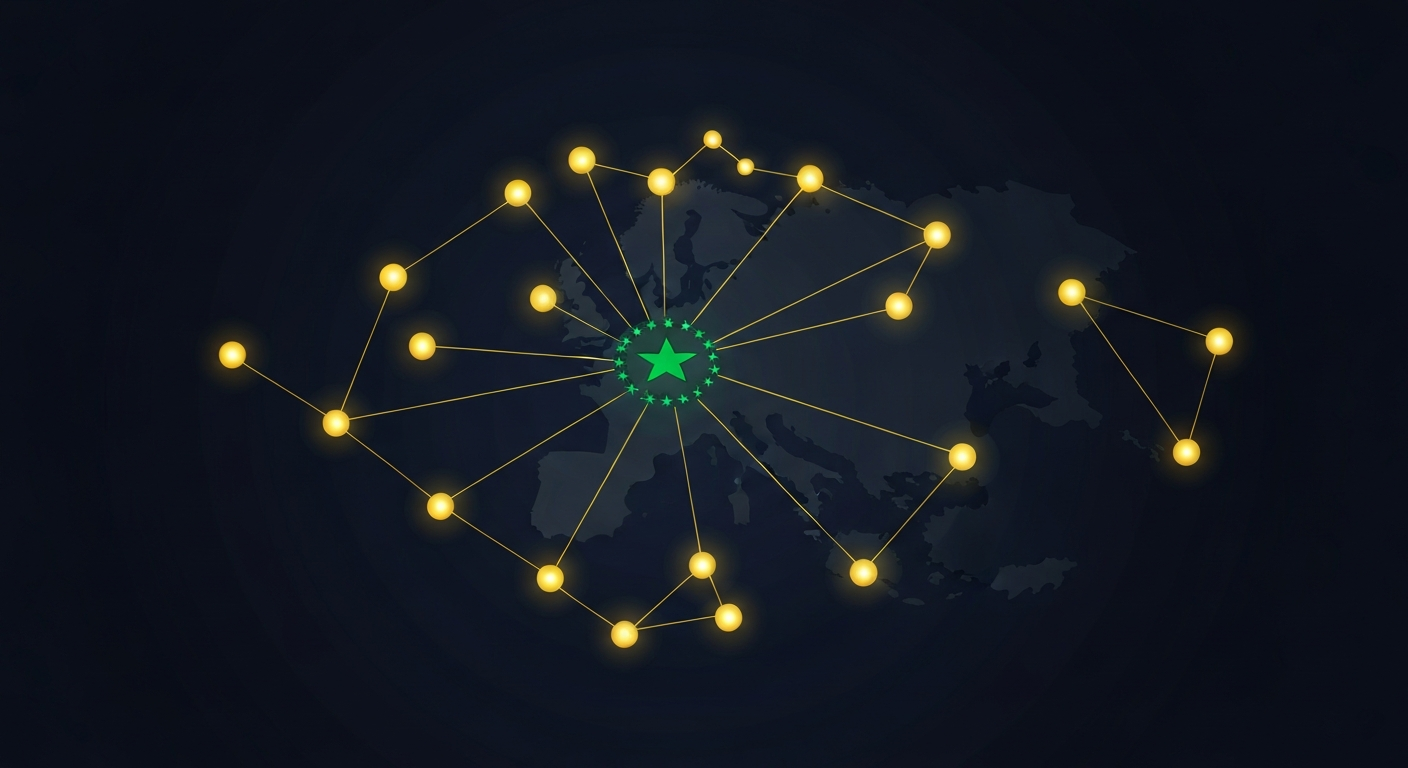
NIS2 is one directive — but 27 different laws. Every EU member state transposed the Network and Information Security Directive 2 into national legislation with its own enforcement agency, penalty structure, sector scope, and sovereign cloud requirements. For SaaS vendors operating across the EU, "NIS2 compliant" means nothing without the country suffix.
This final post in our EU NIS2 National Enforcement series synthesises the four country deep-dives (France, Netherlands, Spain, Italy) into a cross-country decision framework: which markets impose the highest compliance overhead, where US-SaaS faces legal restrictions, and how to build a multi-country NIS2 stack efficiently.
The NIS2 National Enforcement Landscape
The EU NIS2 Directive (2022/2555) required all member states to transpose the law by 17 October 2024. As of mid-2026, compliance varies significantly — some countries run active enforcement programmes while others are still building their regulatory infrastructure.
The Three Enforcement Tiers
Tier 1 — Active Enforcement (High Compliance Overhead): Italy, France, Germany, the Netherlands, and Spain have fully operational enforcement regimes with active supervisory programmes, public audits, and documented fines.
Tier 2 — Established Framework (Medium Overhead): Austria, Belgium, Czech Republic, Denmark, Finland, Ireland, Luxembourg, Poland, Portugal, Romania, and Sweden have transposed NIS2 with functional enforcement agencies but fewer completed audits.
Tier 3 — Building Capacity (Lower Immediate Overhead): Bulgaria, Croatia, Cyprus, Estonia, Greece, Hungary, Latvia, Lithuania, Malta, Slovakia, and Slovenia have transposed or are finalising transposition, with enforcement capacity still scaling up.
Country Deep-Dives: The Tier 1 Markets
Italy — Strictest Legal Restrictions on US-SaaS
Enforcement Authority: ACN (Agenzia per la Cybersicurezza Nazionale)
NIS2 National Law: D.Lgs. 138/2023 (September 2023, transposed early)
Penalty Maximum: €10M or 2% global turnover (Essential entities)
What makes Italy unique:
Italy operates the most legally restrictive NIS2 environment for US-SaaS through three overlapping mechanisms:
-
Golden Power (Poteri Speciali) — Italy's sovereign technology framework, codified in Law 56/2012 and expanded in 2022, gives the government veto power over foreign acquisitions and operational control over "strategic national infrastructure." For cloud services to critical national infrastructure, government approval may be required before procurement.
-
QC1/QC2/QC3 Cloud Qualification — ACN's cloud qualification framework categorises cloud services into three levels. QC3 — required for the most sensitive public sector and CNI workloads — explicitly excludes AWS, Azure, and GCP because their EU entities are subsidiaries of US parent companies subject to the CLOUD Act. QC3 qualification requires EU-controlled legal ownership and no US parent company CLOUD Act exposure.
-
PSNC (Polo Strategico Nazionale) — Italy's state-backed sovereign cloud (TIM + Leonardo + CDP + Sogei) operates as the QC3-compliant alternative. Public sector entities in NIS2 scope that require QC3 must use PSNC-approved providers.
SaaS implication: For Italian Essential entities in public sector or CNI, US-SaaS is not a policy preference question — it's potentially a legal procurement barrier. SaaS vendors need EU-controlled data residency (not just EU region) plus supply chain analysis showing no US parent CLOUD Act exposure.
Garante GDPR enforcement adds a fourth layer — the Italian DPA banned ChatGPT in 2023, demonstrating willingness to act on US AI services' compliance failures.
France — Most Stringent Certification Process
Enforcement Authority: ANSSI (Agence Nationale de la Sécurité des Systèmes d'Information)
NIS2 National Law: Loi n° 2023-703 (26 July 2023)
Penalty Maximum: €10M or 2% global turnover
What makes France unique:
-
ANSSI Visa de Sécurité — France's voluntary-but-influential product certification creates de facto mandatory certification for government contracts and NIS2-regulated entities. Visa Premier requires passing ANSSI's penetration testing and documentation audit. Without a Visa, selling to French public sector NIS2 entities is commercially difficult even when legally permissible.
-
SecNumCloud — France's sovereign cloud label, managed by ANSSI, requires cloud providers to have no non-EU legal exposure. Like Italy's QC3, SecNumCloud effectively excludes AWS, Azure, and GCP EU regions because the requirement covers the entire legal entity chain, not just data centre location. French defence, intelligence, and critical government agencies are SecNumCloud-mandated.
-
Graduated supervision — ANSSI operates a formal "essential function" mapping that determines which services within an entity require the highest level of NIS2 controls. The mapping process itself takes months and requires ANSSI engagement.
SaaS implication: France combines aggressive certification culture with sophisticated regulatory engagement. SaaS vendors serving French Essential entities need either ANSSI Visa certification (for the product) or SecNumCloud-compliant data processing (for the cloud layer). Workarounds are closing — France is increasingly explicit that SecNumCloud must apply to the full processing chain.
Germany — Most Systematic Implementation
Enforcement Authority: BSI (Bundesamt für Sicherheit in der Informationstechnik)
NIS2 National Law: NIS2UmsuCG (October 2024)
Penalty Maximum: €10M or 2% global turnover
What makes Germany unique:
-
BSI C5 (Cloud Computing Compliance Criteria Catalogue) — Germany's cloud security standard, now in its third iteration (C5:2020), is a formal audit-based certification required for cloud services to German federal agencies and increasingly referenced in NIS2 compliance programmes. C5 Type II attestation (audited operations over a period, not just point-in-time) is the expected standard. AWS, Azure, and GCP all have C5 Type II attestations — but SaaS vendors using these clouds must obtain their own C5 or reference the IaaS provider's scope explicitly.
-
KRITIS Designation — Germany's critical infrastructure law (KRITIS-Dachgesetz, effective 2026) extends mandatory security requirements to broader sectors. Companies designated as KRITIS operators face the most demanding BSI oversight, including mandatory incident reporting within 24 hours and BSI-approved security operations centre (SOC) requirements.
-
BSI Scale — Germany's BSI is the EU's largest national cybersecurity agency, with deep technical engagement capacity. The agency publishes detailed technical guidance on NIS2 implementation, creating a clear (if demanding) compliance roadmap.
SaaS implication: Germany has the clearest compliance path of the Tier 1 markets — BSI C5 is well-documented and audited by recognised certification bodies. The key distinction from France/Italy: Germany accepts US-cloud-provided BSI C5 attestations at face value (CLOUD Act exposure is a risk to manage, not a legal prohibition). KRITIS-Dachgesetz §13 registration deadline is 17 July 2026.
Netherlands — Most Pragmatic Enforcement
Enforcement Authority: NCSC-NL (Nationaal Cyber Security Centrum) + RDI (Rijksinspectie Digitale Infrastructuur)
NIS2 National Law: Wet beveiliging netwerk- en informatiesystemen 2 (Wbni2)
Penalty Maximum: €10M or 2% global turnover
What makes the Netherlands unique:
-
CCUF (Cloud Computing Usability Framework) — Like Germany's BSI C5, the Netherlands has a cloud security framework (CCUF) used for government procurement. Unlike France's SecNumCloud, CCUF does not exclude non-EU-controlled providers per se — it focuses on contractual controls and audit rights.
-
Pragmatic sector engagement — NCSC-NL operates through sector-specific ISACs (Information Sharing and Analysis Centres) rather than individual company supervision. Dutch NIS2 entities typically engage with their sector ISAC first, then with NCSC-NL for incident reporting.
-
Amsterdam's financial sector — Amsterdam's financial sector (Euronext, major bank headquarters) operates under DORA in addition to NIS2. The dual-regulation environment has forced sophisticated incident response and supply chain transparency practices ahead of other EU markets.
SaaS implication: The Netherlands offers the most commercially friendly NIS2 environment among Tier 1 markets — regulatory engagement is sector-ISAC-mediated, sovereign cloud requirements are contractual rather than legal entity based, and NCSC-NL provides detailed practical guidance. Still a rigorous environment, but accessible to well-organised SaaS vendors.
Spain — Most Aggressive Fines
Enforcement Authority: INCIBE (Instituto Nacional de Ciberseguridad) + DSN (Departamento de Seguridad Nacional) + CCN-CERT
NIS2 National Law: Ley de Coordinación de Ciberseguridad (Proyecto de Ley 2024)
Penalty Maximum: €10M or 2% global turnover (Essential); €7M or 1.4% (Important)
What makes Spain unique:
-
Multi-agency enforcement — Spain's NIS2 enforcement involves three agencies (INCIBE for private sector, CCN-CERT for public sector/CNI, DSN for coordination), creating potential regulatory overlap. SaaS vendors operating in multiple Spanish sectors may face supervision from different agencies.
-
AEPD coordination — Spain's data protection authority (AEPD) has demonstrated aggressive enforcement posture on US data transfers. Post-Schrems II, AEPD issued several cross-border transfer decisions that increased commercial risk for EU-US data flows. Under NIS2, AEPD and INCIBE share enforcement responsibility for incidents involving personal data.
-
Early transposition pressure — Spain was slow to formally transpose NIS2 (the law was still in parliamentary process in mid-2024), but enforcement pressure has been building through INCIBE's existing mandate. Once the formal law passes, INCIBE has indicated intention to actively exercise its new NIS2 supervisory powers.
SaaS implication: Spain's primary risk for SaaS vendors is the multi-agency coordination complexity combined with AEPD's aggressive data transfer enforcement. A security incident involving personal data in Spain may trigger simultaneous INCIBE (NIS2) and AEPD (GDPR) investigations with different timelines and remediation requirements.
Cross-Country Comparison Matrix
| Dimension | Italy | France | Germany | Netherlands | Spain |
|---|---|---|---|---|---|
| US-SaaS Legal Restriction | ⛔ QC3 + Golden Power | ⚠️ SecNumCloud exclusion | ✅ CLOUD Act = risk, not prohibition | ✅ CCUF-contractual | ⚠️ AEPD pressure |
| Sovereign Cloud Label | PSNC (QC3) | SecNumCloud | BSI C5 | CCUF | CCN-certified |
| Certification Path | QC1/QC2/QC3 + ACN audit | ANSSI Visa + SecNumCloud | BSI C5 Type II | CCUF + ISAC engagement | INCIBE + CCN-CERT |
| Regulatory Complexity | Very High | High | High | Medium | High |
| Enforcement Maturity | High | High | Very High | High | Medium-High |
| Primary Compliance Body | ACN | ANSSI | BSI | NCSC-NL + RDI | INCIBE |
| Key Deadline 2026 | ACN registration | ANSSI supervision | KRITIS §13 (Jul-26) | Wbni2 compliance | Law finalisation |
| Public Sector US-SaaS | Potentially illegal (QC3) | Restricted (SecNumCloud) | Permitted with C5 | Permitted with CCUF | Permitted with AEPD controls |
The 22 Other Member States: Key Differences
Beyond the Tier 1 markets, SaaS vendors operating across the EU face a patchwork of national implementations.
Northern & Western Europe (Tier 2)
Austria (ENISA): Transposed via Netz- und Informationssystemsicherheitsgesetz 2 (NISG 2). Austrian NIS2 closely follows the EU Directive text with limited national additions. The BSI Austria (A-SIT) provides technical guidance aligned with German BSI. Low additional overhead for vendors already compliant with German NIS2.
Belgium (CCB): Belgium's Centre for Cybersecurity Belgium has been among the most active NIS2 transposers, with the NIS2 National Law (Loi du 26 avril 2024 relative à la cybersécurité) implementing a detailed supervisory regime. CCB operates active compliance checks for Tier 1 (formerly Essential) entities in the financial, energy, and transport sectors.
Denmark (CFCS): Denmark's Centre for Cyber Security (CFCS) operates an established threat intelligence sharing model. Danish NIS2 implementation emphasises sector-ISAC cooperation over direct regulatory engagement, similar to the Netherlands.
Finland (Traficom): Finnish NIS2 via cybersecurity law aligns with Traficom's existing regulatory mandate. Finland's government-business cooperation model means NIS2 compliance is integrated into existing sector security programmes rather than creating new supervisory burden.
Ireland (NCSC Ireland): Ireland is the EU home of many US SaaS companies (AWS EU, Meta, Google, Microsoft EU headquarters). The Irish NCSC has worked to build NIS2 compliance capacity without creating disproportionate overhead on the tech sector. Ireland's NIS2 implementation preserves proportionality for SME-range companies.
Luxembourg (CIRCL): Luxembourg's CIRCL (Computer Incident Response Centre Luxembourg) handles NIS2 supervision for the country's significant financial services sector. Luxembourg's small jurisdiction means most NIS2 Essential entities are large financial institutions with dedicated compliance teams.
Sweden (NCSC Sweden): Sweden was one of the first to pass NIS2 national law (Cybersäkerhetslagen, 2024). Swedish enforcement emphasises incident reporting speed — the 24-hour initial notification requirement is strictly monitored.
Eastern Europe (Tier 2/3)
Poland (CERT Polska): Poland transposed NIS2 through uKSC amendment with a focus on energy and critical infrastructure sectors. Polish NIS2 enforcement has been active against energy sector operators, with less focus on IT/SaaS vendors unless serving Critical Entities.
Czech Republic (NÚKIB): The Czech NÚKIB has expanded its remit significantly under NIS2, covering more sectors than under NIS1. Czech NIS2 implementation includes a particularly detailed classification process for determining Essential vs. Important entity status.
Romania (DNSC): Romania's Directorate for National Cybersecurity operates with EU coordination but limited enforcement track record. Lower immediate compliance overhead for SaaS vendors with limited Romanian market presence.
Greece (ADAE + ENISA): Greece's NIS2 implementation is recent. The Hellenic Authority for Communication Security and Privacy coordinates with ENISA for capacity building.
Hungary (SZTFH): Hungary's Supervisory Authority for Regulated Activities implemented NIS2 with a focus on financial services and energy. Political considerations add complexity — Hungary's relationship with both EU and non-EU tech providers requires monitoring.
Baltic States (Estonia, Latvia, Lithuania): The Baltic states have prioritised cybersecurity since 2014 given geopolitical context. Estonia's RIA, Latvia's CERT.LV, and Lithuania's NKSC are active and technically sophisticated. All three have existing NATO cybersecurity alignment that makes NIS2 compliance relatively straightforward for well-organised vendors.
Bulgaria, Slovakia, Slovenia, Croatia, Cyprus, Malta: All transposed NIS2 or are finalising. Enforcement capacity is building. For SaaS vendors, the primary obligation is notifying the national CERT of incidents — supervisory oversight is lighter than Tier 1 markets.
Multi-Country NIS2 Compliance Strategy for SaaS
Building NIS2 compliance once and operating across all 27 markets requires a layered strategy:
Layer 1: EU-Baseline Compliance (All 27 Markets)
- Risk management framework aligned with ENISA NIS2 guidelines
- Incident reporting capability: 24-hour initial notification, 72-hour detailed report, 1-month final report (varies by country — design to strictest)
- Supply chain security documentation: map all sub-processors and their NIS2 status
- Business continuity tested annually with documented recovery objectives
- Vulnerability disclosure policy with ENISA-registered contact
Layer 2: High-Overhead Markets (France, Italy, Germany)
- BSI C5 Type II attestation (Germany-first, accepted in Netherlands, Austria)
- SecNumCloud-compatible architecture (France): EU-controlled data processing chain, no CLOUD Act exposure in the critical path
- ANSSI Visa for products (France): invest if selling to French government or regulated sector
- QC1/QC2 qualification plan (Italy): at minimum, QC1 for standard commercial use; QC3 required for public sector/CNI
Layer 3: Sovereign Cloud Architecture
For vendors who cannot achieve SecNumCloud/QC3 qualification (because of US parent company structure), the practical answer is architectural separation:
- EU-only data path — all customer data stays within EU-sovereign cloud (Hetzner, Scaleway, OVHcloud-EU entity, IONOS)
- Control plane isolation — US parent company has no technical access to EU customer data
- Contractual attestation — EU entity agreement with explicit CLOUD Act protection language
- Sub-processor audits — annual review of all sub-processors for their own sovereignty status
This architecture doesn't achieve QC3 if the EU entity is still legally a subsidiary — but it dramatically reduces practical risk and satisfies NIS2 proportionality requirements for Important entities.
Layer 4: Country-Specific Requirements
- Italy: Register with ACN NIS2 portal, document cloud qualification level, prepare Golden Power analysis for public sector tenders
- France: Engage ANSSI-accredited auditor, review ANSSI Visa roadmap, map SecNumCloud gap
- Germany: BSI C5 Type II, KRITIS assessment, BSI incident reporting API integration
- Netherlands: Join relevant sector ISAC, NCSC-NL incident notification, CCUF gap analysis
- Spain: INCIBE registration, CCN-CERT for public sector, AEPD data transfer impact assessment
The NIS2 Compliance Cost by Market
For a SaaS vendor with 50 EU employees and €10M ARR:
| Market | Estimated Annual Compliance Overhead | Key Cost Drivers |
|---|---|---|
| Germany | €80,000–€150,000 | BSI C5 audit (€40-80K), KRITIS assessment, legal |
| France | €100,000–€200,000 | ANSSI Visa audit, SecNumCloud gap analysis, legal |
| Italy | €70,000–€130,000 | ACN registration, QC qualification, Golden Power analysis |
| Netherlands | €40,000–€80,000 | ISAC membership, NCSC engagement, CCUF review |
| Spain | €50,000–€100,000 | INCIBE registration, AEPD data transfer review, multi-agency coordination |
| Remaining 22 | €10,000–€30,000 each | CERT registration, incident reporting setup, local legal review |
Total EU-wide NIS2 compliance: A well-designed shared baseline (Layers 1+2) with country-specific modules costs less than sequential country-by-country compliance. Shared BSI C5/SOC 2 Type II saves 40–60% versus separate national audits.
When to Use EU-Sovereign Hosting
The country comparison produces a clear signal for SaaS architecture:
Use EU-sovereign hosting (Hetzner, Scaleway, OVHcloud, IONOS) when:
- Serving Italian public sector (QC3 requirement)
- Serving French defence, intelligence, or SecNumCloud-mandated agencies
- Processing data subject to KRITIS designation in Germany
- Any customer contractually requiring "no CLOUD Act exposure"
US-hyperscaler EU regions remain viable when:
- Customers are Important (not Essential) entities
- No public sector or CNI customer requirement for sovereign cloud
- BSI C5 Type II is available and referenced in contracts
- CLOUD Act risk is managed via contractual protections + data minimisation
The practical middle ground for most SaaS vendors: dual architecture. EU-sovereign processing for the data plane (where customer data lives), US-hyperscaler EU region for the control plane (lower-sensitivity operational workloads). This achieves NIS2 proportionality while avoiding the QC3/SecNumCloud full rebuild.
EU NIS2 National Enforcement: What's Next
The enforcement landscape will intensify through 2026–2027:
-
Fine escalation: Italy, France, and Germany are beginning formal enforcement actions. First significant fines expected by Q4 2026.
-
Cross-border coordination: ENISA's NIS Cooperation Group is building shared enforcement databases — a violation in one country will increasingly be visible to other member state authorities.
-
Sector expansion: The "Important entities" scope will grow as national implementation matures. More SaaS vendors will be classified within NIS2 scope through supply chain associations (serving an Essential entity makes you a critical supplier).
-
AI systems as NIS2 risk: As AI Act requirements layer onto NIS2, the intersection of AI system security requirements and NIS2 network/information security requirements will create new compliance complexity — particularly for GenAI features in SaaS products.
-
Certification harmonisation: There is EU-level pressure to harmonise national cloud security certifications (BSI C5, SecNumCloud, QC) into a single European Cloud Security Certification Scheme under ENISA. If achieved, this dramatically reduces multi-country overhead — but remains 2–4 years away.
Summary: The EU NIS2 National Enforcement Series
This five-part series has mapped the NIS2 landscape from individual country implementations to cross-EU strategy:
- Post #1313 (France): ANSSI Visas, SecNumCloud, and why Paris is harder than Brussels for US-SaaS
- Post #1314 (Netherlands): NCSC-NL's sector-ISAC model, Amsterdam financial sector DORA overlay
- Post #1315 (Spain): INCIBE/CCN-CERT multi-agency complexity, AEPD enforcement posture
- Post #1316 (Italy): ACN Golden Power, QC1/QC2/QC3, how Italy legally excludes AWS/Azure/GCP from sensitive workloads
- Post #1317 (Finale): Cross-country matrix, 27 member state landscape, multi-country compliance strategy
The core insight across all five posts: NIS2 creates regulatory fragmentation, not harmonisation. The Directive provides a floor, but national transpositions have created a patchwork of sovereign cloud requirements, certification schemes, and enforcement intensities that require market-by-market strategy.
For SaaS vendors, the efficient response is a shared EU-sovereign baseline that satisfies the most demanding markets (Italy QC2+, Germany BSI C5, France SecNumCloud-adjacent) while adding country-specific modules for Tier 2 and Tier 3 markets.
sota.io runs on EU-sovereign infrastructure (Hetzner, Germany) with no US parent company exposure — making it the simplest NIS2-compliant deployment target for regulated European SaaS teams.
Stay up to date: Subscribe to the sota.io EU Compliance Newsletter for NIS2 enforcement updates across all 27 member states.
Previous in series: Italy NIS2: ACN, Golden Power & QC3 | Spain NIS2: INCIBE & AEPD
EU-Native Hosting
Ready to move to EU-sovereign infrastructure?
sota.io is a German-hosted PaaS — no CLOUD Act exposure, no US jurisdiction, full GDPR compliance by design. Deploy your first app in minutes.