EU Email Security Comparison 2026: Proofpoint vs Mimecast vs Barracuda vs Cisco — CLOUD Act Risk Matrix and EU-Native Alternatives
Post #5 in the sota.io EU Email Security Series
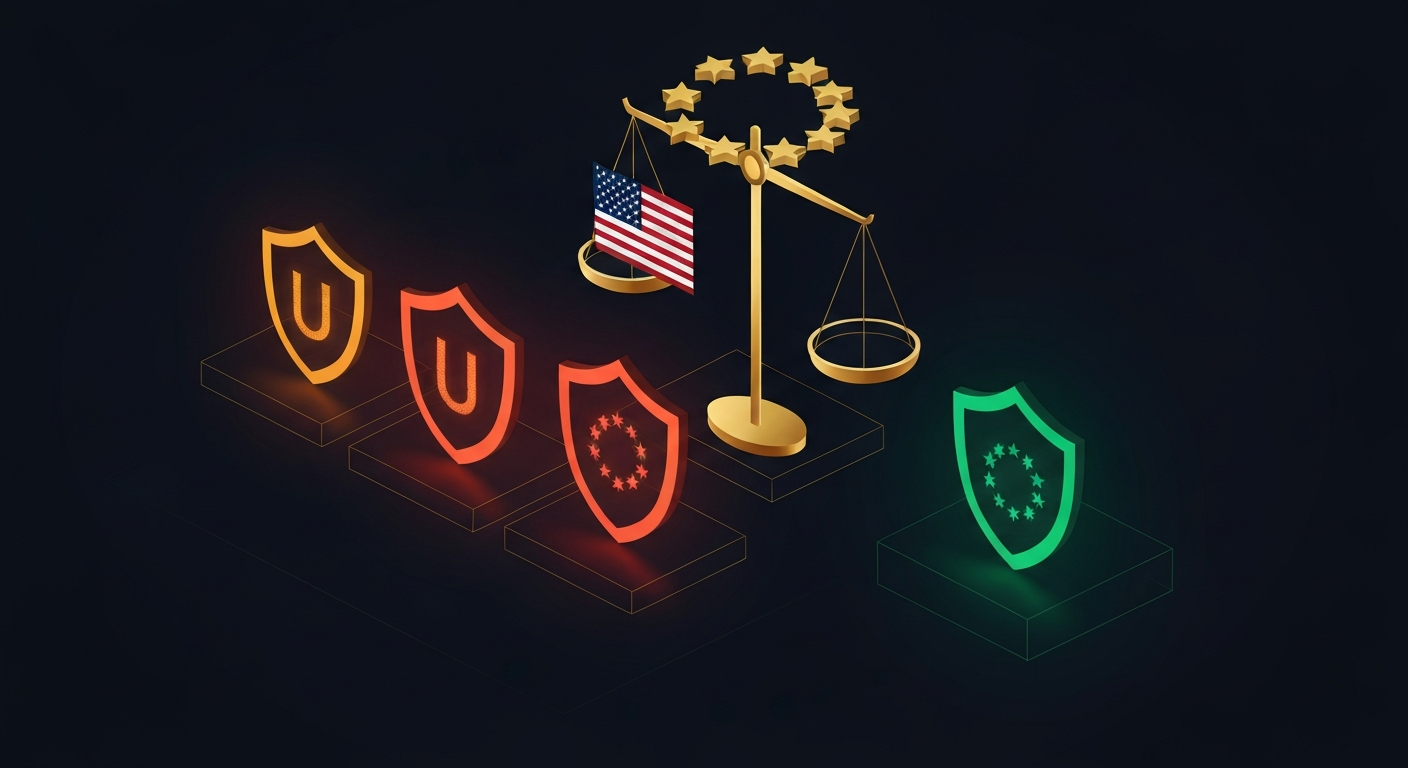
Email is the number-one attack vector for EU enterprises — and every dominant Secure Email Gateway (SEG) vendor is incorporated in the United States. This means your organisation's inbound phishing telemetry, outbound content scans, executive impersonation alerts, and sensitive attachment metadata are processed by systems subject to the US CLOUD Act (18 U.S.C. § 2713), regardless of where the processing servers sit.
This finale compares the four US vendors covered in this series — Proofpoint, Mimecast, Barracuda Networks, and Cisco Secure Email — across a unified CLOUD Act risk matrix. We then map them against NIS2 Art. 21(2) requirements, provide a TCO comparison, and identify EU-native alternatives that score 0/25 on jurisdiction risk.
The EU Email Security Series: A Jurisdiction Summary
| Vendor | Incorporation | CLOUD Act Score | PE / Parent | Notable Risk Factor |
|---|---|---|---|---|
| Cisco Secure Email | Cisco Systems Inc., San Jose CA / Delaware | 21/25 | Nasdaq: CSCO, US DoD contractor | Cisco Talos + JCDC formal threat-data sharing with FBI, CISA, NSA |
| Proofpoint | Proofpoint Inc., Sunnyvale CA / Delaware | 18/25 | Thoma Bravo PE $12.3B LBO 2021 | FedRAMP High, Nexus Threat Intelligence under US jurisdiction |
| Barracuda Networks | Barracuda Networks Inc., Campbell CA / Delaware | 18/25 | KKR PE ~$4B 2022 | CVE-2023-2868 CISA KEV — unprecedented hardware-replacement advisory, UNC4841 China-nexus APT |
| Mimecast | Mimecast Ltd., Lexington MA / Delaware | 16/25 | Permira PE (UK-registered) | Email archive compellable under US law; UK IPA 2016 dual exposure |
Series CLOUD Act range: 16–21 out of 25 risk points. No vendor in the market-leader tier scores below 15.
CLOUD Act Risk Matrix: Methodology
Each vendor was scored across 25 risk indicators grouped in five categories:
| Category | Max Points | What It Measures |
|---|---|---|
| Corporate Jurisdiction | 5 | US incorporation, subsidiary structure, parent company US nexus |
| Law Enforcement Cooperation | 5 | FBI/CISA/NSA data-sharing memoranda, FedRAMP, JCDC membership |
| Data Location Control | 5 | Ability of EU customer to enforce data residency without US parent override |
| Threat Intelligence Sharing | 5 | Whether email content/metadata feeds US government threat-intel pipelines |
| PE / Financial Structure | 5 | Leveraged buyout debt pressure, fund jurisdiction, US FISA exposure of investors |
A score of 0/25 means no US CLOUD Act exposure (typical of EU-native providers). A score of 25/25 means maximum exposure — every indicator triggered.
Vendor-by-Vendor Analysis
Cisco Secure Email — 21/25 (Highest Risk)
Why 21/25 matters: Cisco is not merely a cloud vendor — it is a US Department of Defense contractor and a founding member of the Joint Cyber Defense Collaborative (JCDC), an operational memorandum between DHS/CISA, FBI, and NSA that formally obligates Cisco to share threat intelligence. Cisco Talos, the world's largest commercial threat intelligence team, feeds its analysis of email-borne threats — including samples derived from customer email streams — into this US government intelligence pipeline.
Five GDPR risks unique to Cisco:
- Art. 44 transfer risk — Email content and metadata processed by Cisco systems flows through Talos analysis pipelines anchored to US jurisdiction.
- Art. 5(1)(b) purpose limitation — Threat telemetry derived from your organisation's emails may feed government intelligence purposes not stated in your DPA.
- Art. 28(3)(h) audit rights — DoD contractor status means some Cisco infrastructure is subject to US government security requirements that may conflict with customer audit rights.
- Art. 32 security — JCDC operational cooperation means Cisco systems can be tasked for US government cyber defence missions; the scope of access is not fully disclosed.
- Art. 13/14 transparency — Cisco's privacy documentation does not fully disclose the scope of JCDC telemetry sharing with US government agencies.
Decision: Cisco Secure Email is not recommended for EU organisations handling data subject to GDPR Art. 9 (health, biometric) or for critical infrastructure operators subject to NIS2 Art. 21.
Proofpoint — 18/25 (Very High Risk)
Why 18/25: Thoma Bravo's $12.3 billion leveraged buyout in 2021 created a Delaware-anchored debt structure where Proofpoint's core IP and revenue flows are pledged to US creditors. More critically, Proofpoint's Nexus Threat Intelligence platform — which analyses the email behaviour, click patterns, and attachment interactions of Proofpoint customers — operates under US jurisdiction and is marketed as feeding US government threat-sharing frameworks.
Key Proofpoint GDPR risks:
- Art. 44 — Nexus analyses behavioural data (which employees click phishing links, who opens malicious attachments) under US jurisdiction.
- Art. 5(1)(e) storage limitation — Email archive products (Proofpoint Archive) retain email indefinitely; retention schedules are configurable but the archive itself is US-compellable.
- Art. 25 data minimisation — Targeted Attack Protection (TAP) rewrites URLs and proxies link clicks, creating a detailed employee browsing record under US control.
- Art. 28 processor obligations — Thoma Bravo's PE portfolio creates multi-party data processor chains with US financial entities.
- FedRAMP High — Proofpoint's government-grade certification implies the product meets US government access requirements by design.
Barracuda Networks — 18/25 (Very High Risk, with State-Actor Compromise History)
Why 18/25 with a unique compounding factor: Barracuda's CLOUD Act score is numerically identical to Proofpoint, but the CVE-2023-2868 incident adds a category the other vendors lack: documented, multi-year state-actor exploitation of Barracuda's own hardware appliances.
The UNC4841 threat group (attributed to the People's Republic of China by CISA and Mandiant) exploited a critical vulnerability in Barracuda Email Security Gateway (ESG) appliances from October 2022 through May 2023 — seven months undetected. The malware families installed (SALTWATER, SEASPY, SEASIDE, SUBMARINE) achieved firmware-level persistence that survived factory resets. Barracuda's response was unprecedented: the company recommended hardware replacement rather than patching, the first time a major enterprise security vendor had issued such guidance.
GDPR implications of the incident:
- Art. 33/34 breach notification — Any EU organisation running Barracuda ESG appliances during October 2022–May 2023 may have an outstanding obligation to notify DPAs and affected data subjects.
- Art. 32 security — A vendor that suffered undetected state-actor access for seven months to its core email scanning hardware presents a material security risk.
- Art. 28(2) sub-processor controls — KKR's portfolio structure means Barracuda's data processing may involve shared infrastructure with other PE portfolio companies.
Bottom line: Barracuda's CLOUD Act risk and its state-actor compromise history make it the highest-risk vendor in this series when both factors are combined.
Mimecast — 16/25 (High Risk, Lowest in Series)
Why 16/25 (relatively lower): Mimecast's acquirer, Permira, is a UK-registered PE fund — not a US fund like KKR. This reduces the financial-chain CLOUD Act exposure by 2 points. However, Mimecast Ltd. remains Delaware-incorporated, and the UK's Investigatory Powers Act 2016 (IPA) creates a parallel surveillance obligation that EU DPAs have specifically flagged.
Key Mimecast GDPR risk: The dual jurisdiction problem — Mimecast email archives are simultaneously compellable under US CLOUD Act and UK IPA bulk interception powers. For a German Mittelstand company, this means email data sits under two foreign intelligence statutes.
Score summary:
- US corporate jurisdiction: 4/5
- Law enforcement cooperation: 2/5
- Data location control: 3/5
- Threat intelligence sharing: 3/5
- PE / financial structure: 4/5 (Permira UK, lower than KKR)
GDPR Art. 44 Third-Country Transfer Analysis
All four vendors transfer email content to the United States. The legal mechanism analysis:
| Vendor | Transfer Mechanism | Schrems II Weakness |
|---|---|---|
| Cisco | SCCs + Binding Corporate Rules | Talos/JCDC telemetry is a FISC-compellable secondary purpose |
| Proofpoint | SCCs + EU adequacy reliance | Nexus behavioural analytics = secondary processing not disclosed in SCCs |
| Barracuda | SCCs | Post-CVE-2023-2868: hardware compromise creates uncontrolled data access risk |
| Mimecast | SCCs + UK IDTA | Dual US/UK IPA exposure; UK transfer adds second foreign intelligence statute |
The core Schrems II problem: SCCs require the data importer to inform the exporter if it cannot comply with SCCs (e.g., due to a national security order). In practice, US CLOUD Act orders and FISA §702 orders include gag clauses that prohibit disclosure. All four vendors are structurally unable to fulfil their SCC notification obligations when subject to US government demands.
NIS2 Art. 21(2) Compliance Mapping
NIS2 Directive Article 21(2) requires "essential" and "important" entities to implement:
| NIS2 Requirement | Risk with US-Incorporated SEG Vendor |
|---|---|
| Art. 21(2)(a) Risk analysis and information system security policies | Threat intelligence data feeding US government pipelines creates policy conflicts |
| Art. 21(2)(b) Incident handling | CISA-reported threat data may be compelled before EU operators can act |
| Art. 21(2)(d) Supply chain security | US PE ownership creates opaque sub-processor chains |
| Art. 21(2)(e) Network and IS security | JCDC membership (Cisco) means vendor infrastructure is operationally linked to US government |
| Art. 21(2)(h) Human resources security | Behavioural analytics (Proofpoint TAP) under US jurisdiction conflict with employee data rights |
NIS2 Compliance Verdict: EU "essential entities" (energy, transport, banking, health, water, digital infrastructure) operating under NIS2 face a material compliance gap when using US-incorporated SEG vendors. ENISA's 2025 Threat Landscape explicitly identified supply chain concentration in US cloud providers as a systemic EU risk.
EU-Native Email Security Alternatives (All 0/25)
| Vendor | HQ | CLOUD Act Score | Key Strengths | Weakness |
|---|---|---|---|---|
| Hornetsecurity GmbH | Hannover, DE | 0/25 | German DPA-audited, full EU data residency, complete SEG + archiving + awareness training | Smaller threat intelligence corpus than US vendors |
| NoSpamProxy | Paderborn, DE (Net at Work GmbH) | 0/25 | On-premise or EU-hosted, S/MIME and PGP encryption built-in, extensive German enterprise references | No behavioural analytics / sandboxing comparable to Proofpoint TAP |
| SEPPmail AG | Münsingen, CH | 0/25 | Swiss-hosted, end-to-end encryption via GINA portal (no-plugin recipient decrypt), eIDAS-compliant | CH jurisdiction (not EU member, but Swiss DSG aligned); primarily encryption-focused |
| Retarus GmbH | Munich, DE | 0/25 | Enterprise-grade, SAP-certified, full EU-27 data residency guarantee, transactional + inbound | Less market visibility than Hornetsecurity; pricing less transparent |
| Self-hosted stack | EU VPS (Hetzner/Scaleway/OVH) | 0/25 | Mailcow + rspamd + ClamAV + SpamAssassin; total cost control | Operational overhead; no commercial SLA; threat detection relies on open-source rule updates |
Recommended path for NIS2 essential entities: Hornetsecurity (commercial SLA + German DPA audit) or NoSpamProxy (on-premise for maximum control) depending on threat model.
Total Cost of Ownership Comparison (250-seat organisation)
| Vendor | Annual Licensing | Incident Response Cost Risk | Regulatory Fine Risk | True 3-Year TCO |
|---|---|---|---|---|
| Cisco Secure Email | ~€35,000 | HIGH (state-actor/Talos exposure) | HIGH (NIS2 Art.21 gap) | €105,000–€180,000 |
| Proofpoint | ~€40,000 | MEDIUM-HIGH (Nexus analytics risk) | HIGH | €120,000–€200,000 |
| Barracuda Networks | ~€25,000 | VERY HIGH (CVE-2023-2868 history) | HIGH | €75,000–€250,000 |
| Mimecast | ~€30,000 | MEDIUM (IPA dual exposure) | HIGH | €90,000–€160,000 |
| Hornetsecurity | ~€15,000 | LOW | LOW | €45,000–€55,000 |
| Self-hosted | ~€5,000 | MEDIUM (operational) | LOW | €15,000–€30,000 |
Incident response cost risk includes GDPR Art. 33/34 notification costs, DPA investigation costs, and potential fines up to 2% of annual global turnover.
Decision Framework: Which Vendor for Which Use Case
Is your organisation subject to NIS2 "essential entity" requirements?
├── YES → Do NOT use any US-incorporated SEG vendor (Cisco/Proofpoint/Barracuda/Mimecast)
│         Use: Hornetsecurity (commercial) or NoSpamProxy (on-premise)
└── NO → Does your organisation process GDPR Art. 9 special category data?
          ├── YES → Mimecast (lowest score 16/25) with Transfer Impact Assessment
          │         OR Hornetsecurity/SEPPmail for zero risk
          └── NO → Risk-ranked order (lower = less exposure):
                    1. Mimecast 16/25 (if EU residency contractually guaranteed)
                    2. Proofpoint 18/25 (if FedRAMP cross-use not a concern)
                    3. Barracuda 18/25 (ONLY if CVE-2023-2868 remediated and no appliances)
                    4. Cisco 21/25 (avoid for EU-sensitive workloads)
4-Step Migration Roadmap: Moving from US SEG to EU-Native
Phase 1 — Inventory (Week 1–2)
- Catalogue all email flows: inbound filtering, outbound DLP, archiving, encryption gateways
- Map which Proofpoint/Mimecast/Barracuda/Cisco features are actively used vs. licensed but unused
- Identify any US-government-specific features (FedRAMP, government threat feeds) — these are signs of deep CLOUD Act integration
Phase 2 — Vendor Selection (Week 3–4)
- Hornetsecurity for organisations wanting commercial SLA with German DPA audit trail
- NoSpamProxy for on-premise deployments requiring S/MIME integration with existing PKI
- SEPPmail if email encryption is the primary requirement (for law firms, healthcare, finance)
- Self-hosted Mailcow stack for DevOps-capable teams with cost constraints
Phase 3 — Parallel Operation (Month 2–3)
- Run EU-native SEG in parallel with existing US vendor
- Validate spam/phishing detection rates over 4 weeks of production traffic
- Migrate archiving first (lowest operational risk), then active filtering
Phase 4 — Cutover and DPA Update (Month 3–4)
- Terminate US vendor licensing
- Update GDPR Art. 30 Records of Processing Activities (RoPA) to remove US third-country transfers
- Update DPA templates: remove Cisco/Proofpoint/Barracuda/Mimecast as sub-processors
- Notify DPA if switching from a vendor involved in a prior Art. 33 notification (Barracuda CVE-2023-2868)
Compliance Checklist: EU Email Security for NIS2 Essential Entities
- Email security vendor is EU-incorporated with no US parent (0/25 CLOUD Act score)
- No third-country data transfers for email content under GDPR Art. 44
- Threat intelligence sharing limited to EU-based frameworks (ENISA, national CSIRTs)
- Email archiving retention schedule aligns with GDPR Art. 5(1)(e) storage limitation principle
- Sub-processor list reviewed: no US PE fund in ownership chain
- Annual Transfer Impact Assessment (TIA) performed if any US vendor remains in stack
- NIS2 Art. 21(2)(d) supply chain risk assessment completed for email security vendors
- Incident response plan updated to reflect EU-only notification chain (no US CLOUD Act exposure)
Key Takeaways
-
Cisco Secure Email scores highest (21/25) due to Talos/JCDC formal government intelligence sharing — it is the only major SEG vendor with documented, formal US intelligence agency cooperation.
-
Barracuda carries an additional non-CLOUD-Act risk unique in this series: CVE-2023-2868 showed that state actors can achieve undetected firmware persistence in email security appliances for months. A vendor's own security product was compromised.
-
Mimecast's 16/25 score is the best in this series, but "best US vendor" still means dual exposure under US CLOUD Act and UK IPA 2016 — two foreign intelligence statutes governing your email archive.
-
EU-native alternatives exist at production quality: Hornetsecurity (Germany), NoSpamProxy (Germany), SEPPmail (Switzerland), Retarus (Germany) all provide enterprise-grade email security with 0/25 CLOUD Act exposure.
-
NIS2 essential entities have no safe choice among the four US vendors. The risk-policy conflict between NIS2 Art. 21(2) supply chain security requirements and US CLOUD Act compellability is structural, not contractual.
About the EU Email Security Series
This post concludes the five-part EU Email Security Series:
- Proofpoint EU Alternative 2026 — Thoma Bravo PE, CLOUD Act 18/25
- Mimecast EU Alternative 2026 — Permira PE, CLOUD Act 16/25
- Barracuda Networks EU Alternative 2026 — KKR PE + CVE-2023-2868 CISA KEV, CLOUD Act 18/25
- Cisco Secure Email EU Alternative 2026 — Talos/JCDC, CLOUD Act 21/25
- This post — EU Email Security Comparison Finale 2026
All posts in the series use the same CLOUD Act scoring methodology. The complete risk database covers 1,190+ US SaaS vendors with EU-native alternatives at sota.io/blog.
EU-Native Hosting
Ready to move to EU-sovereign infrastructure?
sota.io is a German-hosted PaaS — no CLOUD Act exposure, no US jurisdiction, full GDPR compliance by design. Deploy your first app in minutes.