EU AI Act for HR-Tech Developers: Recruitment and Employment AI Compliance Before August 2026
Post #2 in the sota.io EU AI Act Sector-Specific Developer Guide Series
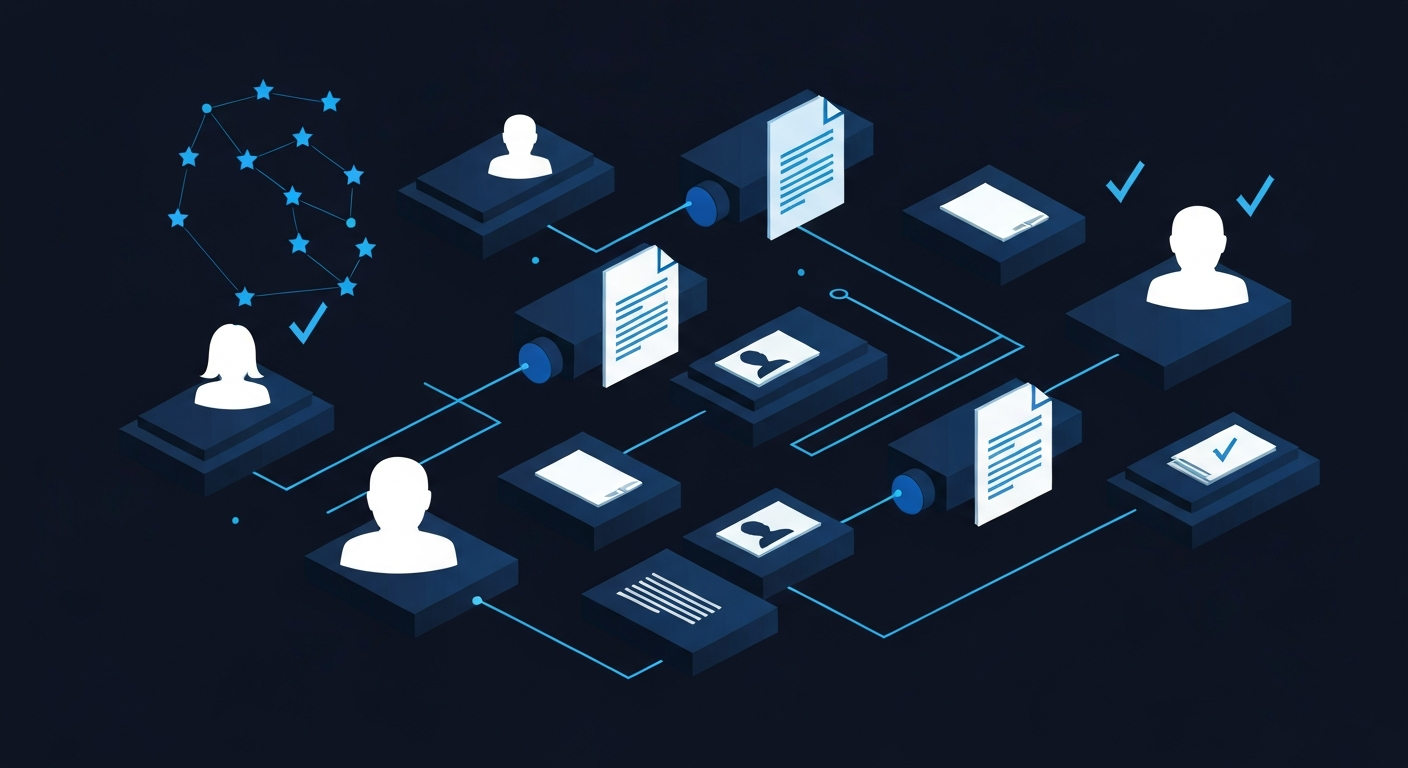
Human resources technology is one of the EU AI Act's most explicitly targeted sectors. If your HR SaaS product uses AI to screen CVs, rank candidates, score job interviews, allocate tasks, or monitor employee performance, you are building a high-risk AI system under Annex III of Regulation (EU) 2024/1689. With the August 2, 2026 enforcement deadline now 56 days away, HR-Tech teams that have not yet addressed conformity assessment, bias documentation, and human oversight obligations face significant legal and commercial exposure.
This guide covers what the EU AI Act specifically requires from HR-Tech SaaS providers, how Annex III Point 4 intersects with GDPR Art.22 automated decision rights, and what your engineering and compliance teams must have in place before August 2.
Why HR-Tech is Directly Named in Annex III
The EU AI Act's Annex III lists eight categories of high-risk AI systems. Point 4 is dedicated entirely to employment, workers management, and access to self-employment. Two sub-categories define the scope:
Annex III Point 4(a): Recruitment and Selection
AI systems intended to be used for recruitment or selection of natural persons, in particular for advertising vacancies, screening or filtering applications, evaluating candidates in the course of interviews or assessment tests.
This covers:
- CV parsing and ranking systems that automatically filter which applications reach human recruiters
- AI scoring tools that evaluate candidates during video interviews (speech analysis, facial expression scoring, keyword detection)
- Automated skills assessment platforms that rank candidates and recommend shortlists
- Vacancy targeting AI that determines which candidate pools see job advertisements
Annex III Point 4(b): Employment Management and Monitoring
AI systems intended to be used for making decisions affecting terms and conditions of work-related relationships, including promotion and termination, task allocation based on individual behaviour or personal characteristics, monitoring and evaluating the performance and behaviour of persons in such relationships.
This category is broader and covers:
- AI performance management tools that generate scores used in promotion and termination decisions
- Automated task allocation systems that assign work based on productivity metrics or personal characteristics
- Employee monitoring software that uses AI to analyse productivity patterns, attendance anomalies, or behavioural signals
- AI-assisted salary benchmarking systems that influence compensation decisions
The critical word in both sub-categories is intended. If your HR SaaS system is designed to be used for these purposes — even if a human is required to approve the final decision — it falls under Annex III Point 4.
High-Risk Obligations: What Your Engineering Team Must Build
High-risk AI systems under Chapter III of the EU AI Act carry substantial technical and documentation obligations. These apply to providers — the companies that develop and place the systems on the market — not just deployers (the HR departments that use them).
Risk Management System (Art.9)
You must design, document, and maintain a risk management system covering the full lifecycle of the AI system. For HR-Tech, the foreseeable risks that must be documented include:
- Discriminatory outputs: CV screening AI trained on historical hiring data may learn to deprioritise candidates from certain universities, postcodes, or demographic groups. If those historical patterns reflect past discriminatory practices, the AI perpetuates them at scale.
- Proxy discrimination: Even when protected characteristics (race, gender, age, disability) are not explicit input features, correlated variables (graduation year, extracurricular activities, name spellings) can function as proxies. This must be documented and tested.
- Misuse risk: An employer using a shortlisting AI as a final gating mechanism rather than as advisory input, effectively bypassing the human oversight the system was designed to support.
- Transparency failures: Candidates unaware that AI scored their application or interview have reduced ability to contest incorrect or biased assessments.
Risk management documentation must be updated whenever the model is significantly changed, retrained, or deployed in a new context.
Training Data and Bias Testing (Art.10)
Data governance obligations for HR-AI are particularly stringent because bias in recruitment data is well-documented. Your compliance documentation must address:
Dataset representativeness: Training data must be relevant to the intended use and representative of the population the system will evaluate. A CV ranking model trained on hiring decisions from a single company's 10-year history may reflect that company's historical biases rather than actual job performance predictors.
Bias examination: Before deployment, you must examine datasets for biases that could lead to discrimination based on protected characteristics. For HR-AI, this specifically means testing whether model outputs correlate with gender, age, nationality, disability status, or other characteristics protected under EU anti-discrimination law (Directive 2000/43/EC, Directive 2006/54/EC).
Documented mitigation measures: The steps taken to detect and reduce bias must be recorded. This includes which de-biasing techniques were applied, what evaluation metrics were used, and what residual bias levels were deemed acceptable after mitigation.
Ongoing monitoring: Post-deployment monitoring must detect demographic disparities in hiring outcomes that may indicate emerging bias not present in pre-deployment testing.
Technical Documentation (Art.11, Annex IV)
Before placing your HR-AI system on the EU market, you must prepare technical documentation covering:
- System description including intended purpose, version information, and the decision-making process the AI informs or automates
- Training methodology, datasets used, and validation procedures with results broken down by relevant demographic subgroups
- Human oversight measures: how the system is designed to be reviewed, overridden, and documented
- Performance metrics including accuracy, precision, and recall across demographic groups
- Risk management measures and residual risk assessment
- Post-market monitoring plan
This documentation is not a one-time exercise. It must be maintained and updated when the system changes, and it must be available to national competent authorities on request.
Conformity Assessment (Art.43)
For Annex III Point 4 systems, the conformity assessment procedure is typically internal control (Annex VI), unless the system uses real-time remote biometric identification, in which case third-party involvement may be required.
Internal control conformity assessment requires you to:
- Establish and maintain the quality management system required by Art.17
- Prepare the Annex IV technical documentation
- Review and update both at every significant change
- Draw up an EU declaration of conformity (Art.47) and affix the CE marking (Art.48)
The CE marking for AI systems must reference the AI Act regulation number and indicate the year of affixing. It cannot be applied until the conformity assessment is complete.
Human Oversight (Art.14)
High-risk AI systems must be designed to enable effective oversight by natural persons. For HR-Tech, this means your system cannot present AI outputs as final determinations. Instead:
- Recruitment: AI shortlisting scores must be presented as advisory inputs. The interface must make clear that a human recruiter is responsible for shortlisting decisions and must actively review AI-generated rankings.
- Performance management: AI performance scores that influence promotion or termination decisions must include a mechanism for the manager to review the underlying data, override the AI score, and document the reason for any override.
- Task allocation: Automated work assignment systems must allow supervisors to review, adjust, and override allocations without friction.
The oversight mechanism must be technically implemented — it is not sufficient to have a policy that humans review AI outputs if the user interface presents AI decisions as final and makes overriding them difficult.
Logging (Art.12)
Automatic logging must be enabled and retained for at least six months. For HR-AI:
- Logs must capture the inputs presented to the AI (candidate data, performance data)
- The AI output (score, ranking, recommendation) must be logged
- Any human override of the AI output must be logged
- Confidence or probability scores must be retained where available
This logging has practical legal significance: candidates have rights under GDPR to access information about automated decisions (Art.15 GDPR), and the logs enable you to respond to those requests accurately.
Quality Management System (Art.17)
Your QMS must document:
- How model development, testing, and deployment is controlled
- How changes to the model trigger revalidation
- How bias testing is incorporated into the development lifecycle
- Who is responsible for compliance decisions at each stage
- How post-market monitoring is integrated into your support and product processes
For most HR-Tech SaaS companies, this requires creating formal QMS documentation where none previously existed. The practical scope is similar to an ISO 9001 quality framework applied specifically to AI development processes.
GDPR Art.22: The Automated Decision Right in Employment Contexts
The EU AI Act intersects with GDPR Art.22 in HR contexts in a particularly significant way. Art.22(1) gives individuals the right not to be subject to decisions based solely on automated processing that produce legal or similarly significant effects.
Employment decisions — whether to be called for interview, offered a job, promoted, or dismissed — clearly qualify as "similarly significant effects." This means:
If your CV screening AI makes the sole determination of which candidates advance, without any human review of those not selected, your deployers (the employers using your system) are likely violating Art.22 GDPR. As the provider, you must design the system to support Art.22 compliance.
Practically, this means:
- The system must present rankings as recommendations, not final decisions
- There must be a feasible human review step for candidates affected by the AI output
- Your documentation and user interface must not encourage deployers to treat AI outputs as final
If your system's design makes Art.22-compliant use impossible or impractical, you may be contributing to your deployers' GDPR violations, which has its own legal exposure.
Art.22 vs. Art.14 EU AI Act: Same Goal, Different Legal Basis
Art.14 of the EU AI Act (human oversight) and Art.22 GDPR (no solely automated consequential decisions) both require human review of AI decisions affecting individuals. They are not identical — Art.14 is broader (applies even when a human is involved in the loop) — but for HR-AI they point to the same practical requirement: build genuine, functional human oversight into your system architecture.
Art.13: Transparency Obligations Towards Deployers
Unlike Art.50 transparency (which runs towards end users), Art.13 requires providers of high-risk AI systems to provide deployers (the companies using your HR-AI system) with information enabling them to use the system appropriately and in compliance with the law. This must include:
- The intended purpose and known limitations
- Expected accuracy rates and bias test results
- The level of accuracy the system achieved during testing, including across demographic subgroups
- Human oversight measures required for compliant use
- Maintenance and update requirements
Your sales and onboarding documentation must therefore include technical accuracy and fairness disclosures — not just feature descriptions. Enterprise HR buyers increasingly require this information as part of vendor due diligence.
Bias Testing: What the EU AI Act Actually Requires
Bias testing under Art.10 is required but the Regulation does not specify which testing methodology to use. Best practice for EU AI Act compliance in HR contexts includes:
Disparate impact testing: Compare selection rates across demographic groups. A four-fifths rule (if the selection rate for any group is less than 80% of the rate for the highest-selected group, adverse impact may exist) provides a widely recognised threshold.
Counterfactual fairness testing: Test whether changing a protected characteristic (while holding all other factors constant) changes the model's output. If changing a name associated with a particular ethnic background changes a CV's ranking, your system likely encodes proxy discrimination.
Intersectional bias testing: Bias often compounds at intersections (for example, women from certain backgrounds may face larger disparities than either group in isolation). Single-axis testing can miss these patterns.
Post-deployment monitoring: Bias testing on training data is necessary but insufficient. Deploy a monitoring pipeline that tracks demographic distributions in hiring outcomes and flags anomalies exceeding defined thresholds for human review.
Art.50 Transparency for AI Interview Tools
Where your HR-Tech product includes AI that directly interacts with candidates — AI-powered video interview analysis, conversational screening bots, or AI assessment chatbots — Art.50 transparency obligations apply in addition to the Annex III high-risk obligations.
Art.50(1) requires that candidates be informed they are interacting with an AI system before the interaction begins, in a clear and prominent manner. For a video interview scored by AI:
- Candidates must be told before they start that AI will analyse their responses
- The disclosure must be explicit — implied disclosure through generic privacy policies is not sufficient
- The disclosure must be in the candidate's language
This is independently enforceable from August 2, 2026, regardless of whether your system is considered high-risk under Annex III.
Practical Compliance Timeline for HR-Tech Teams
Days 1–14: Classification and Gap Assessment
- Map every AI feature against Annex III Point 4(a) and 4(b)
- Identify which features are high-risk versus Art.50 transparency-only
- Review existing bias testing documentation for adequacy
- Audit training datasets for demographic representativeness
Days 15–35: Technical Implementation
- Implement or strengthen human oversight interfaces (override capability, audit trail)
- Enable and test logging for all high-risk AI outputs (Art.12)
- Conduct or commission bias testing across demographic groups
- Implement Art.50 disclosures for any AI that directly interacts with candidates
Days 36–50: Documentation and Conformity
- Draft or complete Annex IV technical documentation
- Draft quality management system documentation (Art.17)
- Draft risk management system document (Art.9)
- Prepare EU declaration of conformity (Art.47)
- Apply CE marking (Art.48)
- Review Art.13 deployer-facing documentation and update as needed
Days 51–56: Deployer Communication and Monitoring
- Update customer documentation to reflect Art.13 compliance information
- Configure post-market monitoring pipeline for demographic disparity detection
- Establish incident reporting procedures (Art.73)
- Conduct final legal review
Infrastructure and the Data Sovereignty Question
HR-AI systems process highly sensitive personal data — CV content, interview recordings, performance histories, compensation information. For EU employers subject to Works Council notification rights (Germany, Netherlands, Austria) or data protection authority oversight, ensuring this data remains under EU legal jurisdiction is increasingly a procurement requirement.
AI systems running on US-headquartered cloud providers are subject to the US CLOUD Act, which allows compelled disclosure of data to US government agencies regardless of where the data is stored. For HR-AI, this creates a conflict with EU GDPR data protection obligations and with the emerging practice of requiring data sovereignty assurances in HR technology procurement.
EU-native hosting, such as sota.io (Hetzner infrastructure, German jurisdiction, outside US CLOUD Act reach), eliminates this conflict — allowing HR-Tech providers to offer their enterprise customers a data sovereignty guarantee that is legally coherent under both EU AI Act technical documentation requirements and GDPR.
32-Item EU AI Act Compliance Checklist for HR-Tech Developers
HIGH-RISK CLASSIFICATION
□ 1. All AI features audited against Annex III Point 4(a) and 4(b)
□ 2. High-risk features documented separately from Art.50-only features
□ 3. Real-time biometric features identified (may require third-party conformity)

RISK MANAGEMENT (Art.9)
□ 4. Risk management system document created and version-controlled
□ 5. Discriminatory output risks documented per demographic group
□ 6. Proxy discrimination risks documented and tested
□ 7. Misuse scenarios documented with mitigation
□ 8. Risk assessment updated at each model retrain or significant change

DATA GOVERNANCE (Art.10)
□ 9. Training dataset provenance documented
□ 10. Dataset representativeness analysis completed
□ 11. Disparate impact testing completed across gender, age, nationality, disability
□ 12. Counterfactual fairness testing completed
□ 13. Intersectional bias testing completed
□ 14. De-biasing measures documented with methodology and results
□ 15. Residual bias levels documented and justified

TECHNICAL DOCUMENTATION (Annex IV)
□ 16. System architecture and version documented
□ 17. Training methodology documented in detail
□ 18. Validation procedures and results documented per demographic subgroup
□ 19. Performance metrics (accuracy, precision, recall) documented per group
□ 20. Human oversight mechanism documented

LOGGING (Art.12)
□ 21. Logging enabled for all high-risk AI inputs and outputs
□ 22. Human override events are logged with timestamps
□ 23. Log retention set to minimum six months

HUMAN OVERSIGHT (Art.14)
□ 24. AI outputs presented as recommendations, not final decisions
□ 25. Human override capability implemented with no artificial friction
□ 26. Override audit trail maintained and accessible

ART.13 DEPLOYER TRANSPARENCY
□ 27. Deployer documentation includes accuracy and fairness test results
□ 28. Intended purpose and known limitations documented for deployers
□ 29. Human oversight requirements communicated to deployers

ART.50 CANDIDATE TRANSPARENCY
□ 30. AI interaction disclosure shown before any AI-driven candidate assessment
□ 31. Disclosure is explicit and in the candidate's language

CONFORMITY ASSESSMENT
□ 32. QMS document drafted (Art.17)
□ 33. EU Declaration of Conformity drafted (Art.47)
□ 34. CE marking applied (Art.48)
Commercial Implications: EU AI Act Compliance as a Sales Asset
Enterprise buyers in EMEA are increasingly adding EU AI Act compliance to vendor qualification criteria. HR-Tech vendors who cannot demonstrate conformity assessment completion, bias testing methodology, and human oversight implementation will face procurement blocklists from:
- EU public sector employers (subject to public procurement rules that now reference AI Act compliance)
- Listed companies under ESMA oversight for corporate governance disclosures
- Financial institutions subject to DORA, which extends to HR systems with AI components
- Any organisation subject to Works Council information rights in Germany, Austria, or the Netherlands
HR-Tech providers who complete their EU AI Act compliance now — and can produce the technical documentation, conformity declaration, and audit reports — will have a marketable differentiator in the second half of 2026. The compliance cost is real, but so is the commercial upside for vendors who complete it ahead of their competitors.
This is Post #2 of the sota.io EU AI Act Sector-Specific Developer Guide Series. Post #3 covers FinTech platforms and high-risk AI in credit scoring, loan decisions, and insurance underwriting.
EU-Native Hosting
Ready to move to EU-sovereign infrastructure?
sota.io is a German-hosted PaaS — no CLOUD Act exposure, no US jurisdiction, full GDPR compliance by design. Deploy your first app in minutes.