EU AI Act EUDB Post-Registration: Maintenance Obligations, Substantial Modifications, and Audit Readiness After August 2026
Post #1486 in the sota.io EU AI Act Compliance Series — EU-AI-ACT-EUDB-REGISTRATION-2026 #5/5 Finale
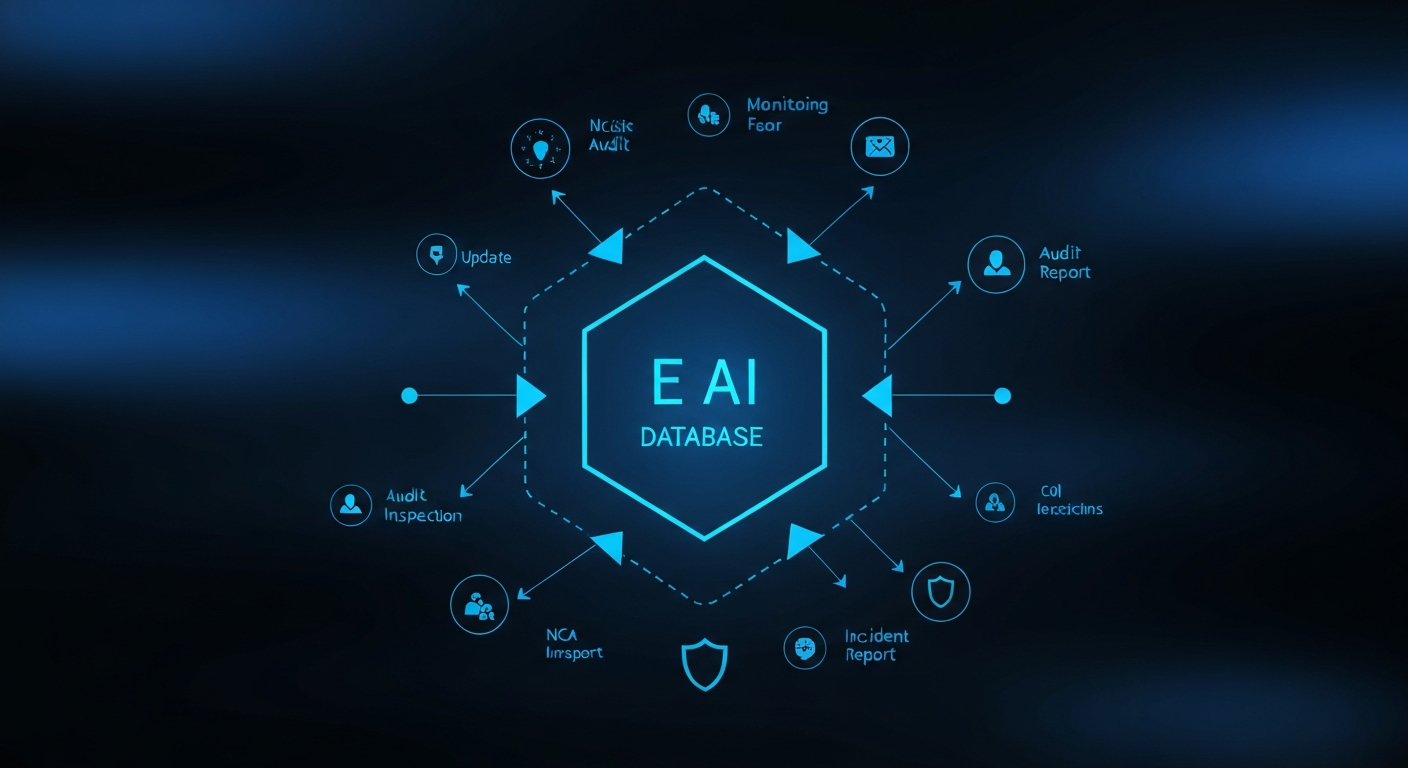
Most EU AI Act compliance guides end at registration. Submit your Art.51 EUDB entry, confirm receipt, and mark the August 2, 2026 task as complete. What they don't explain is what comes after.
Your EU AI database entry is a living record. It must stay current as your AI system evolves, as your conformity assessment is renewed, and as post-market monitoring generates findings. National Competent Authorities use EUDB entries as a starting point for surveillance activity — an outdated or incomplete entry is not just a compliance gap, it is an audit trigger.
This finale guide covers everything that happens after your initial registration: when the law requires you to update your entry, how post-market monitoring connects to the EUDB, what incident reporting means for your registration record, and how to structure your ongoing EUDB maintenance so that any NCA inquiry finds a clean, current record.
The EUDB Is Not a One-Time Filing
A common misconception is that EUDB registration works like filing a business registration — you submit once, receive a reference number, and move on. The EU AI Act creates a significantly more dynamic obligation.
Art.51(3) establishes the core update requirement: where a substantial modification occurs to a high-risk AI system that renders the system a new high-risk AI system, the provider must update the registration in the EU database accordingly.
This creates an ongoing compliance loop: every significant change to your system must be evaluated against the substantial modification threshold, and those that meet the threshold must trigger a EUDB update before the modified system is placed back on the market or put into service.
The EUDB entry is not your internal changelog. It is a public-facing regulatory record that tells NCAs — and, in many fields, the public — what AI system you are running, under what risk management framework, and with what conformity assessment backing. Keeping it current is not administrative housekeeping; it is a core obligation that continues for the operational life of your high-risk AI system.
When Must You Update Your EUDB Entry?
Substantial Modification: The Central Threshold
Art.51(3) connects to the broader definition of "substantial modification" that runs through the EU AI Act. While the Act does not define the term with a precise technical threshold, the operational framework for evaluating modifications follows from Art.9 (risk management system) and Art.43 (conformity assessment).
In practice, a modification is substantial — and triggers a EUDB update obligation — when it:
- Changes the intended purpose of the system in a way that affects the Annex III classification
- Alters the risk profile to an extent that the existing risk management documentation no longer accurately covers the system's operation
- Renders the existing conformity assessment obsolete, either because the assessment was done on a materially different version or because the modification affects an element the assessment specifically evaluated
- Changes the provider or operator information registered in the EUDB, such as a corporate restructuring, product acquisition, or change in the authorized representative
Changes that are unlikely to be substantial: routine model retraining on the same dataset distribution without changes to architecture or intended purpose; minor UI or configuration changes that do not affect AI decision logic; bug fixes that restore intended behavior without extending system capability.
The responsible approach is to build modification evaluation into your quality management system under Art.9 and Art.17. Every significant development sprint should include a checklist item: does this change require a EUDB update?
Other Mandatory Update Triggers
Beyond substantial modification, your EUDB entry may require updating for other reasons:
Conformity assessment renewal. If your initial conformity assessment was time-limited or was conducted under Art.43 for an AI system that has since undergone review, a renewed assessment means new notified body reference numbers and potentially new certification dates. These must be reflected in the EUDB entry.
Authorized representative changes. Art.51 requires providers established outside the EU to designate an EU authorized representative. If that representative changes — through a new contract, a company dissolution, or a change in your EU market structure — the EUDB entry must be updated before the change takes effect.
Provider information updates. If your company name, legal form, registered address, or contact information changes, the EUDB entry should be updated promptly. NCAs use these contact details for market surveillance communications.
System decommissioning. When a registered high-risk AI system is permanently withdrawn from the EU market or taken out of service, your registration should reflect that status. Active registration for a decommissioned system can lead to unnecessary NCA inquiry.
How Art.72 Post-Market Monitoring Connects to EUDB
Under Art.72, providers of high-risk AI systems must establish and document a post-market monitoring system that actively collects and reviews data about system performance across its operational lifetime. This monitoring must be proportionate to the nature of the AI system and its risks.
The connection to EUDB maintenance is direct and procedural:
Monitoring findings as update triggers. Your Art.72 monitoring system will, over time, produce findings: performance metrics that deviate from expected behavior, user feedback indicating unexpected outcomes, patterns in error rates or edge-case failures. Any finding that constitutes a substantial modification threshold — because the operational picture has materially diverged from the conformity assessment baseline — becomes a EUDB update trigger.
Post-market surveillance documentation as audit evidence. When an NCA queries your EUDB entry and decides to conduct further scrutiny, one of the first documents they will request is your post-market monitoring plan and its accumulated findings. Maintaining a clean, timestamped record of monitoring activity that connects to your EUDB entry demonstrates that your registration is not a stale snapshot but a living document backed by ongoing surveillance.
Build the monitoring-to-EUDB feedback loop. The practical implementation: your Art.72 monitoring system should have an explicit escalation path that triggers a EUDB update review when a monitoring finding meets predefined materiality criteria. This can be as simple as a quarterly review meeting that evaluates open monitoring findings against the substantial modification checklist.
Incident Reporting and EUDB Implications Under Art.73
Art.73 requires providers of high-risk AI systems to report serious incidents to the market surveillance authorities of the Member State where the incident occurred. A serious incident is defined as an incident — or near-miss — that results in death, serious harm to health, significant damage to property or the environment, or serious violations of fundamental rights.
Art.73 incident reports are formally separate from EUDB updates. They go to national market surveillance authorities rather than being submitted through the EUDB portal. However, the connection to your registration record is significant in practice:
Incident reports reference EUDB registration. When submitting an Art.73 report, you will identify your system by its EUDB reference number and registration details. An NCA receiving an incident report will immediately cross-reference your EUDB entry. If your entry is outdated — if the system description, risk management documentation, or conformity assessment reference no longer matches what was actually running when the incident occurred — that discrepancy becomes part of the incident investigation.
Incidents may trigger substantial modification reviews. If a serious incident reveals that the system's actual behavior diverged materially from the behavior described in your conformity assessment and technical documentation, and you modify the system in response, that modification must be evaluated against the substantial modification threshold. Post-incident system changes are among the highest-risk scenarios for EUDB update obligations, because the context of a serious incident places your maintenance record under heightened scrutiny.
NCA coordination. Following a serious incident, the NCA may conduct a market surveillance investigation under Art.74. One of the first steps in such an investigation is reviewing the EUDB registration to understand what the provider claimed about the system's risk management, conformity assessment, and intended purpose. A current, accurate, and detailed EUDB entry is your first line of defense in a post-incident investigation.
What NCA Auditors Look for in Your EUDB Entry
Understanding how National Competent Authorities use the EUDB changes how you think about maintaining your entry. NCAs conducting market surveillance under Art.74 do not rely on EUDB entries as proof of compliance — they treat them as a baseline description that they then test against documentation requests and, where warranted, on-site inspections.
Recency signals. An NCA reviewing your EUDB entry will note the last update date. A system that has been in service for two years with no updates to its EUDB record raises an immediate question: has this system had no changes in two years, or has the provider failed to evaluate changes against the substantial modification threshold? If your answer is the former, your post-market monitoring logs should confirm it. If it is the latter, the entry needs to be updated before you face that question.
Internal consistency. The information in your EUDB entry must be internally consistent with your technical documentation (Art.11), your risk management system documentation (Art.9), and your EU Declaration of Conformity (Art.47). An NCA will frequently compare your public EUDB record against the documentation it references. Inconsistencies — different system names, scope descriptions that do not match, conformity assessment references that have expired — flag your entry for follow-up.
Completeness of Annex VIII fields. The Annex VIII fields specify what information the EUDB entry must contain. Fields that are empty, contain placeholder text, or contain descriptions so vague they are functionally empty are audit red flags. NCAs expect Annex VIII entries to contain substantive, system-specific information — not boilerplate.
Authorized representative details. For non-EU providers, the authorized representative information in the EUDB entry must be current and the representative must be reachable. NCAs testing market surveillance readiness will contact the authorized representative. If that contact fails — because the address is outdated, the representative has changed, or the contact person no longer works there — the provider is immediately in a compliance deficit.
Building a EUDB Maintenance Program
Quarterly Review Cadence
The most practical implementation for most SaaS providers is a quarterly EUDB maintenance review, coordinated with your existing quality management system review cycle under Art.9 and Art.17.
Quarterly review checklist:
| Item | Check |
|---|---|
| Provider name and contact information current? | Verify against current corporate registration |
| Authorized representative (if applicable) still active and reachable? | Confirm contract validity and contact details |
| System description still accurately reflects the deployed version? | Compare against current technical documentation |
| Conformity assessment reference still valid? | Check notified body certificate expiry dates |
| Post-market monitoring findings reviewed for substantial modification implications? | Log review outcome |
| Any changes since last review evaluated against substantial modification threshold? | Document evaluation outcome |
| Any Art.73 incident reports filed since last review? | Link incident reports to EUDB entry review |
| Intended purpose statement still accurate? | Compare against current product scope |
Annual deep review:
At minimum once per year, conduct a full comparison of your EUDB entry against your current technical documentation package. Treat this as a pre-audit exercise: assume an NCA will request both documents next week, and verify that they tell a consistent story.
Change Management Integration
The most robust EUDB maintenance programs integrate the substantial modification evaluation into your software development change management process, rather than treating it as a separate compliance activity.
Pull request gate. Require a substantial modification evaluation for any change to the AI system's core decision logic, training pipeline, intended purpose specification, or risk management parameters. This evaluation does not need to be lengthy — a structured checklist that takes 20 minutes to complete is sufficient for most changes — but it must be documented and retained.
Change management log as audit trail. Every evaluated change, and the outcome of its substantial modification assessment, should be logged with a timestamp and the name of the reviewer. This log is your evidence that you have been systematically monitoring your obligations under Art.51(3).
Escalation path. When the evaluation determines that a substantial modification has occurred, the escalation path must be clear: registration update must be completed before the modified system is placed back on the market. Build this as a formal release gate, not a post-deployment checklist item.
The EUDB Entry as a Compliance Document
One reframe that significantly improves how teams maintain their EUDB entry: stop treating it as a registration form and start treating it as a compliance document.
A compliance document has an owner, a review schedule, version history, and change justification. It is audited against other compliance documents for consistency. It is updated when the underlying facts change, not when someone remembers to update it.
The practical difference: teams that treat EUDB registration as a one-time form submission tend to have entries that are accurate in August 2026 and gradually diverge from reality over the following years. Teams that treat it as a compliance document — one entry in a managed compliance document suite — maintain entries that stay current because their document management process requires it.
EUDB Registration Maintenance Checklist
| Obligation | Frequency | Evidence Required |
|---|---|---|
| Review entry for accuracy | Quarterly | Review log with date and reviewer |
| Evaluate changes for substantial modification | Per change | Substantial modification assessment form |
| Update entry for substantial modifications | Before re-deployment | Updated EUDB submission confirmation |
| Update authorized representative details | On change | New contract + EUDB update confirmation |
| Verify conformity assessment references are current | Annually | Certificate review log |
| Synchronize entry with updated technical documentation | Annually | Cross-reference review record |
| Review Art.72 monitoring findings for EUDB implications | Quarterly | Monitoring review log |
| Cross-reference any Art.73 incident reports | Per incident | Incident-to-EUDB link in incident log |
| Conduct pre-audit EUDB consistency review | Annually | Consistency review report |
Summary: The Post-Registration Compliance Loop
The EU AI Act EUDB registration is the culmination of your pre-market compliance work, but it is also the starting point for your ongoing post-market obligations. The compliance loop looks like this:
Register → Monitor (Art.72) → Evaluate changes (Art.51(3)) → Update entry when required → Repeat
Incident reporting under Art.73 feeds into this loop whenever a serious incident triggers a system modification. NCA surveillance under Art.74 tests the loop by comparing your EUDB entry against your actual documentation and operational reality.
SaaS providers who treat EUDB registration as a completed task after August 2026 will face an increasingly difficult audit position as their registered systems evolve and their entries do not. Those who build the post-registration maintenance loop into their quality management system will find that any NCA inquiry begins with a clean, current, and internally consistent registration record — which is the best possible starting position for any market surveillance interaction.
See Also
- EU AI Act Art.51: What High-Risk AI Providers Must Register in the EU Database Before August 2, 2026 — EUDB-REGISTRATION-2026 #1/5: The registration basics
- EU AI Act EUDB Registration Checklist: 28-Item Pre-Registration Package — EUDB-REGISTRATION-2026 #2/5: Pre-registration documentation
- EU AI Act EUDB Registration vs. Conformity Assessment: The Art.43-Art.51 Connection — EUDB-REGISTRATION-2026 #3/5: How conformity assessment feeds registration
- Provider vs. Deployer EUDB Registration: Who Must Register What Under Art.51 — EUDB-REGISTRATION-2026 #4/5: Role-specific registration obligations
- EU AI Act NCA Inspection Readiness: 60-Day Action Plan Before August 2026 — AUDIT-READINESS-SPRINT #5/5: Preparing for NCA scrutiny
EU-Native Hosting
Ready to move to EU-sovereign infrastructure?
sota.io is a German-hosted PaaS — no CLOUD Act exposure, no US jurisdiction, full GDPR compliance by design. Deploy your first app in minutes.