EU AI Act Art.50 Streaming LLM Disclosure: SSE, WebSocket & Real-Time AI Transparency for Backend Developers
Post #4 in the sota.io EU AI Act Art.50 Transparency Developer Guide Series
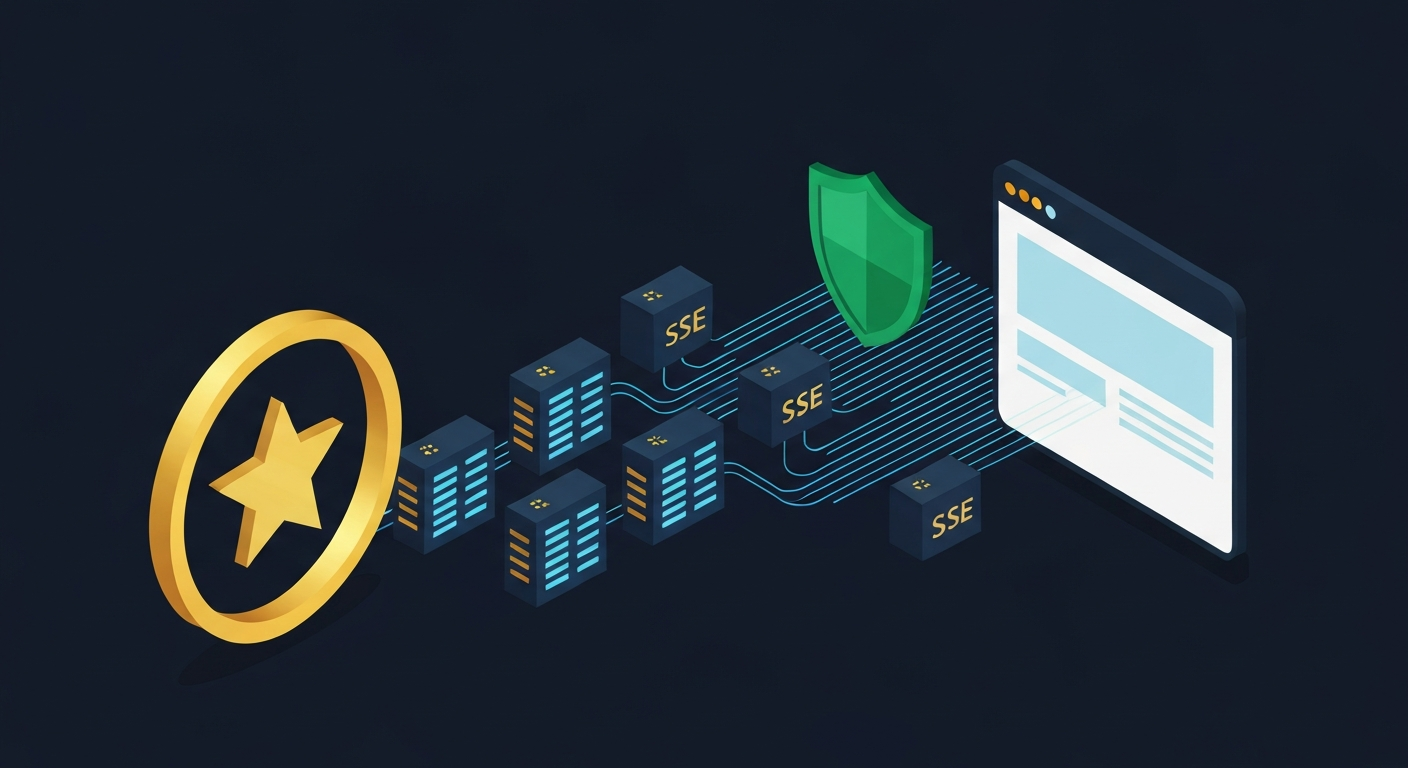
Most EU AI Act Art.50 compliance guides treat disclosure as a static UX problem — add a banner, show a footer, done. But if your SaaS serves LLM responses via Server-Sent Events (SSE) or WebSockets, you have a harder technical problem: you must disclose that the user is interacting with AI before the first token arrives, inside a streaming protocol that wasn't designed with regulatory labelling in mind.
This guide covers exactly that: how to implement Art.50-compliant disclosure at the transport layer for streaming AI APIs, with production-ready code patterns in TypeScript and Python.
August 2, 2026 deadline: Art.50 transparency obligations apply from this date. Any system where natural persons interact with AI must be compliant.
The Streaming Disclosure Problem
When a user submits a prompt to your LLM-powered chat interface and you stream the response back token by token, several things happen in quick succession:
- Your backend receives the prompt
- You forward it to your LLM provider (OpenAI, Anthropic, Mistral, etc.)
- The LLM starts streaming tokens
- You relay those tokens to the browser via SSE or WebSocket
- The user reads the response forming in real time
EU AI Act Art.50(1) requires deployers of AI systems intended to interact directly with natural persons to inform those persons that they are interacting with an AI system — unless this is obvious from context (e.g., a clearly labelled "AI assistant" product). The obligation applies to deployers, which means you — the SaaS developer embedding a third-party LLM API.
The challenge is timing: in a streaming scenario, when do you disclose? The disclosure must be effective — visible before the user reads AI-generated content. A banner added after the stream completes is arguably non-compliant.
Disclosure Strategies for Streaming APIs
There are four practical approaches, from simplest to most robust:
Strategy 1: HTTP Response Headers (Quickest)
Before the SSE stream opens, the HTTP handshake already happens. You can set custom headers on the streaming response:
// Express.js SSE endpoint — TypeScript
import express, { Request, Response } from 'express';

const router = express.Router();

router.post('/api/chat/stream', async (req: Request, res: Response) => {
  // Set Art.50 disclosure headers before the stream begins
  res.setHeader('Content-Type', 'text/event-stream');
  res.setHeader('Cache-Control', 'no-cache');
  res.setHeader('Connection', 'keep-alive');

  // EU AI Act Art.50 disclosure headers
  res.setHeader('X-AI-Generated', 'true');
  res.setHeader('X-AI-System', 'conversational-ai');
  res.setHeader('X-AI-Provider-Role', 'deployer');
  res.setHeader('X-EU-AI-Act-Art50', 'disclosed');

  res.flushHeaders(); // Send headers immediately before stream starts

  // Now stream the LLM response
  const stream = await llmClient.chat.completions.create({
    model: 'gpt-4o',
    messages: req.body.messages,
    stream: true,
  });

  for await (const chunk of stream) {
    const content = chunk.choices[0]?.delta?.content || '';
    if (content) {
      res.write(`data: ${JSON.stringify({ content })}\n\n`);
    }
  }

  res.write('data: [DONE]\n\n');
  res.end();
});
Limitation: HTTP headers are only machine-readable. They satisfy API-to-API integrations (your frontend can read them and show a badge), but a raw HTTP client that doesn't render the header won't see a human-readable disclosure. Combine with Strategy 2.
Strategy 2: Disclosure Event as First SSE Message
The cleanest SSE approach is to send a dedicated disclosure event type as the very first message in the stream, before any AI-generated tokens:
// Disclosure-first SSE stream
router.post('/api/chat/stream', async (req: Request, res: Response) => {
  res.setHeader('Content-Type', 'text/event-stream');
  res.setHeader('Cache-Control', 'no-cache');
  res.setHeader('Connection', 'keep-alive');
  res.flushHeaders();

  // ✅ Art.50 compliance: disclosure event BEFORE any AI content
  const disclosureEvent = {
    type: 'ai_disclosure',
    timestamp: new Date().toISOString(),
    message: 'This response is generated by an AI system.',
    regulation: 'EU AI Act Article 50',
    provider_role: 'deployer',
    model_class: 'large-language-model',
  };

  res.write(`event: disclosure\n`);
  res.write(`data: ${JSON.stringify(disclosureEvent)}\n\n`);

  // Then stream the actual LLM content
  const stream = await llmClient.chat.completions.create({
    model: 'gpt-4o',
    messages: req.body.messages,
    stream: true,
  });

  for await (const chunk of stream) {
    const content = chunk.choices[0]?.delta?.content || '';
    if (content) {
      res.write(`event: content\n`);
      res.write(`data: ${JSON.stringify({ content })}\n\n`);
    }
  }

  res.write(`event: done\n`);
  res.write(`data: ${JSON.stringify({ finished: true })}\n\n`);
  res.end();
});
On the frontend, listen for the disclosure event type:
// React frontend — EventSource listener
const EventSourceStream = ({ onContent }: { onContent: (text: string) => void }) => {
  useEffect(() => {
    const es = new EventSource('/api/chat/stream', { withCredentials: true });

    es.addEventListener('disclosure', (e) => {
      const disclosure = JSON.parse(e.data);
      // Show disclosure UI to the user IMMEDIATELY
      showAIDisclosureBanner(disclosure.message);
    });

    es.addEventListener('content', (e) => {
      const { content } = JSON.parse(e.data);
      onContent(content);
    });

    es.addEventListener('done', () => {
      es.close();
    });

    return () => es.close();
  }, []);
};
The disclosure banner renders before the first token renders. This satisfies the "inform before interacting" interpretation of Art.50(1).
Strategy 3: WebSocket Disclosure Frame
For WebSocket-based chat interfaces, the pattern is similar but uses a typed message protocol:
// WebSocket server — Node.js with ws library
import WebSocket, { WebSocketServer } from 'ws';
import { IncomingMessage } from 'http';

const wss = new WebSocketServer({ port: 8080 });

wss.on('connection', (ws: WebSocket, req: IncomingMessage) => {

  // Send disclosure frame immediately on connection — before any AI interaction
  const disclosureFrame = {
    type: 'EU_AI_ACT_ART50_DISCLOSURE',
    version: '1.0',
    timestamp: new Date().toISOString(),
    disclosure: {
      message: 'You are interacting with an AI assistant. Responses are generated by a large language model.',
      regulation: 'EU AI Act Article 50',
      provider_role: 'deployer',
      effective_date: '2026-08-02',
    },
  };

  ws.send(JSON.stringify(disclosureFrame));

  ws.on('message', async (rawMessage: Buffer) => {
    const { type, content } = JSON.parse(rawMessage.toString());

    if (type === 'user_message') {
      // Stream LLM response back
      const stream = await llmClient.chat.completions.create({
        model: 'gpt-4o',
        messages: [{ role: 'user', content }],
        stream: true,
      });

      for await (const chunk of stream) {
        const token = chunk.choices[0]?.delta?.content || '';
        if (token) {
          ws.send(JSON.stringify({
            type: 'ai_token',
            content: token,
            ai_generated: true, // Per-message label for downstream consumers
          }));
        }
      }

      ws.send(JSON.stringify({ type: 'stream_end' }));
    }
  });
});
Per-message AI labelling (the ai_generated: true field on each token frame) goes beyond what Art.50 strictly requires but is best practice for downstream integrations — your customers' frontends can use this to render AI-origin badges per response block.
Strategy 4: Prepended Disclosure Token (GPAI Providers)
If your system is acting as a GPAI provider (you offer a general-purpose AI API that other developers call), Art.50(3) and (4) apply to you: you must enable technical measures to label AI-generated content so that downstream deployers can fulfil their obligations.
One approach is to prepend a semantic disclosure token to your text output in a way that downstream systems can detect:
# Python — FastAPI streaming endpoint for a GPAI-style API
from fastapi import FastAPI
from fastapi.responses import StreamingResponse
from openai import AsyncOpenAI
import json

app = FastAPI()
client = AsyncOpenAI()

# GPAI disclosure metadata embedded in stream-start event
GPAI_DISCLOSURE_FRAME = {
    "event": "gpai_content_start",
    "metadata": {
        "ai_generated": True,
        "model_class": "large-language-model",
        "content_type": "text",
        "regulation": "EU AI Act Article 50",
        "role": "gpai_provider",
        "c2pa_manifest_uri": None,  # Set if you issue C2PA manifests
    }
}

async def stream_with_disclosure(prompt: str):
    # Always start with disclosure metadata
    yield f"data: {json.dumps(GPAI_DISCLOSURE_FRAME)}\n\n"

    # Stream LLM tokens
    stream = await client.chat.completions.create(
        model="gpt-4o",
        messages=[{"role": "user", "content": prompt}],
        stream=True,
    )

    async for chunk in stream:
        content = chunk.choices[0].delta.content or ""
        if content:
            yield f"data: {json.dumps({'event': 'token', 'content': content, 'ai_generated': True})}\n\n"

    yield f"data: {json.dumps({'event': 'gpai_content_end', 'ai_generated': True})}\n\n"

@app.post("/v1/chat/stream")
async def chat_stream(body: dict):
    return StreamingResponse(
        stream_with_disclosure(body["prompt"]),
        media_type="text/event-stream",
        headers={
            "X-AI-Generated": "true",
            "X-EU-AI-Act-Art50": "gpai-provider-disclosed",
        }
    )
Multi-Turn Conversations: Disclosure Cadence
Art.50 doesn't specify how often disclosure must be repeated in a multi-turn conversation. The practical interpretation is:
- Session-level disclosure: once per session (on WebSocket connection or first SSE stream open) is the minimum
- Re-disclosure on topic change: if your system switches between AI-generated and human-generated responses mid-conversation (hybrid human+AI agents), re-disclose when switching back to AI
- Persistent UI indicator: keep an always-visible "AI-powered" indicator throughout the conversation rather than relying on one-time disclosure
// Session management with disclosure tracking
interface ChatSession {
  sessionId: string;
  disclosedAt: Date | null;
  disclosureVersion: string;
}

const sessions = new Map<string, ChatSession>();

function ensureDisclosure(sessionId: string, ws: WebSocket): boolean {
  const session = sessions.get(sessionId);

  if (!session?.disclosedAt) {
    // First interaction — disclose
    ws.send(JSON.stringify({
      type: 'EU_AI_ACT_ART50_DISCLOSURE',
      message: 'AI-generated responses. EU AI Act Art.50 compliant.',
    }));

    sessions.set(sessionId, {
      sessionId,
      disclosedAt: new Date(),
      disclosureVersion: '2026-08-02',
    });
    return true;
  }

  return false; // Already disclosed this session
}
OpenAI-Compatible API Extensions
Many EU developers build OpenAI-compatible APIs (proxies, fine-tuned model endpoints, enterprise gateways). The OpenAI streaming format uses a specific SSE structure. You can extend it without breaking compatibility:
// Extend OpenAI-compatible streaming format with Art.50 disclosure
interface OpenAICompatibleChunk {
  id: string;
  object: string;
  created: number;
  model: string;
  choices: Array<{
    index: number;
    delta: { content?: string; role?: string };
    finish_reason: string | null;
  }>;
  // Extension fields (ignored by standard OpenAI clients)
  'x-eu-ai-act'?: {
    art50_disclosed: boolean;
    disclosure_message: string;
    provider_role: 'provider' | 'deployer';
  };
}

// The first chunk in your stream should carry the disclosure extension
const firstChunk: OpenAICompatibleChunk = {
  id: `chatcmpl-${generateId()}`,
  object: 'chat.completion.chunk',
  created: Math.floor(Date.now() / 1000),
  model: 'your-model-name',
  choices: [{ index: 0, delta: { role: 'assistant' }, finish_reason: null }],
  'x-eu-ai-act': {
    art50_disclosed: true,
    disclosure_message: 'AI-generated content. EU AI Act Article 50 compliant.',
    provider_role: 'deployer',
  },
};
Standard OpenAI client libraries ignore unknown fields, so adding x-eu-ai-act is backwards-compatible.
Testing Streaming Disclosure Compliance
Add these automated checks to your CI/CD pipeline:
// Jest/Vitest test — verify disclosure arrives before content
import { createServer } from 'http';
import { EventSource } from 'eventsource'; // npm i eventsource

describe('Art.50 Streaming Disclosure Compliance', () => {
  it('sends disclosure event before first content token', async () => {
    const events: string[] = [];

    await new Promise<void>((resolve, reject) => {
      const es = new EventSource('http://localhost:3000/api/chat/stream?test=true');
      const timeout = setTimeout(() => reject(new Error('Stream timeout')), 10_000);

      es.addEventListener('disclosure', (e) => {
        events.push('disclosure');
      });

      es.addEventListener('content', (e) => {
        events.push('content');

        // Verify disclosure came first
        const disclosureIndex = events.indexOf('disclosure');
        const firstContentIndex = events.indexOf('content');

        expect(disclosureIndex).toBeGreaterThanOrEqual(0);
        expect(disclosureIndex).toBeLessThan(firstContentIndex);

        clearTimeout(timeout);
        es.close();
        resolve();
      });

      es.onerror = (e) => reject(e);
    });
  });

  it('includes X-AI-Generated header', async () => {
    const res = await fetch('http://localhost:3000/api/chat/stream', {
      method: 'POST',
      headers: { 'Content-Type': 'application/json' },
      body: JSON.stringify({ messages: [{ role: 'user', content: 'Hello' }] }),
    });

    expect(res.headers.get('X-AI-Generated')).toBe('true');
    expect(res.headers.get('X-EU-AI-Act-Art50')).toBeDefined();
  });

  it('discloses within 500ms of connection', async () => {
    const start = Date.now();
    let disclosureMs: number | null = null;

    await new Promise<void>((resolve) => {
      const es = new EventSource('http://localhost:3000/api/chat/stream?test=true');

      es.addEventListener('disclosure', () => {
        disclosureMs = Date.now() - start;
        es.close();
        resolve();
      });
    });

    expect(disclosureMs).toBeLessThan(500); // Disclose within 500ms
  });
});
# Add to your CI pipeline (GitHub Actions, GitLab CI, etc.)
# .github/workflows/art50-compliance.yml
- name: Run Art.50 Disclosure Compliance Tests
  run: |
    npm run test:compliance -- --reporter=verbose
    # Fail if disclosure tests don't pass
Compliance Evidence for Audits
When documenting your Art.50(1) compliance for a potential NCA audit, collect:
| Evidence Item | What to Capture |
|---|---|
| HTTP header logs | Nginx/Caddy access logs showing X-AI-Generated: true on all AI endpoints |
| SSE event samples | Recorded stream samples showing disclosure event as first event |
| Frontend screenshots | UI showing AI disclosure badge visible during streaming |
| Test run reports | CI/CD Art.50 test results from each deployment |
| Contract with LLM provider | Your T&C with the GPAI provider (OpenAI, Anthropic etc.) stating who is provider vs. deployer |
Store these in your technical documentation package alongside the AI system description (required under Art.50(1) contractual obligations between providers and deployers).
The "Obvious From Context" Exemption
Art.50(1) allows an exception when it is "obvious from the context" that the user is interacting with an AI. This exemption is narrower than it sounds:
- A product explicitly named "AI Assistant" with an AI icon = likely exempt from real-time disclosure
- An embedded chatbot inside a human-facing support portal, where some agents are human = not exempt — disclosure required
- A code completion IDE plugin where the user specifically installed an "AI completion" feature = likely exempt
- A customer-facing chat widget that routes to either human agents or AI depending on availability = not exempt — disclosure required when AI is active
Recommendation: Don't rely on the exemption unless your product is exclusively AI-driven and visually branded as such throughout the user journey. The cost of over-disclosing (a small banner) is lower than the cost of an NCA fine for under-disclosing.
sota.io and EU-Hosted Streaming AI APIs
If you're running your streaming LLM API infrastructure in the EU, you can demonstrate data residency alongside Art.50 transparency — both for your own compliance and as a selling point to enterprise customers with strict data sovereignty requirements.
sota.io is a European PaaS that runs your containerised backends (including SSE/WebSocket streaming servers) exclusively on EU infrastructure. Your chat API never proxies data through US-based control planes, which matters for GDPR Art.46 transfer controls alongside AI Act compliance.
→ Deploy your Art.50-compliant streaming API on sota.io
Summary: Streaming Disclosure Implementation Checklist
Before August 2, 2026, verify for every streaming LLM endpoint:
- HTTP response headers include
X-AI-Generated: trueandX-EU-AI-Act-Art50: disclosed - First SSE event is
event: disclosurewith a human-readable message - WebSocket connections send a disclosure frame within the first 500ms
- Frontend renders a visible AI disclosure indicator before the first token appears
- Multi-turn conversations re-disclose when switching between human and AI agents
- CI/CD pipeline includes Art.50 streaming compliance tests
- Evidence logs captured and stored for potential NCA audit
- Contract with LLM API provider clarifies provider vs. deployer roles
Next in this series: Post #5/5 — August 2026 Art.50 Compliance Evidence Package: What to Document, Where to Store It, and How to Demonstrate Compliance to an NCA Inspector.
EU-Native Hosting
Ready to move to EU-sovereign infrastructure?
sota.io is a German-hosted PaaS — no CLOUD Act exposure, no US jurisdiction, full GDPR compliance by design. Deploy your first app in minutes.