DigitalOcean Kubernetes EU Alternative 2026: CLOUD Act Risk in Managed K8s
Post #3 in the sota.io EU Managed Kubernetes Series
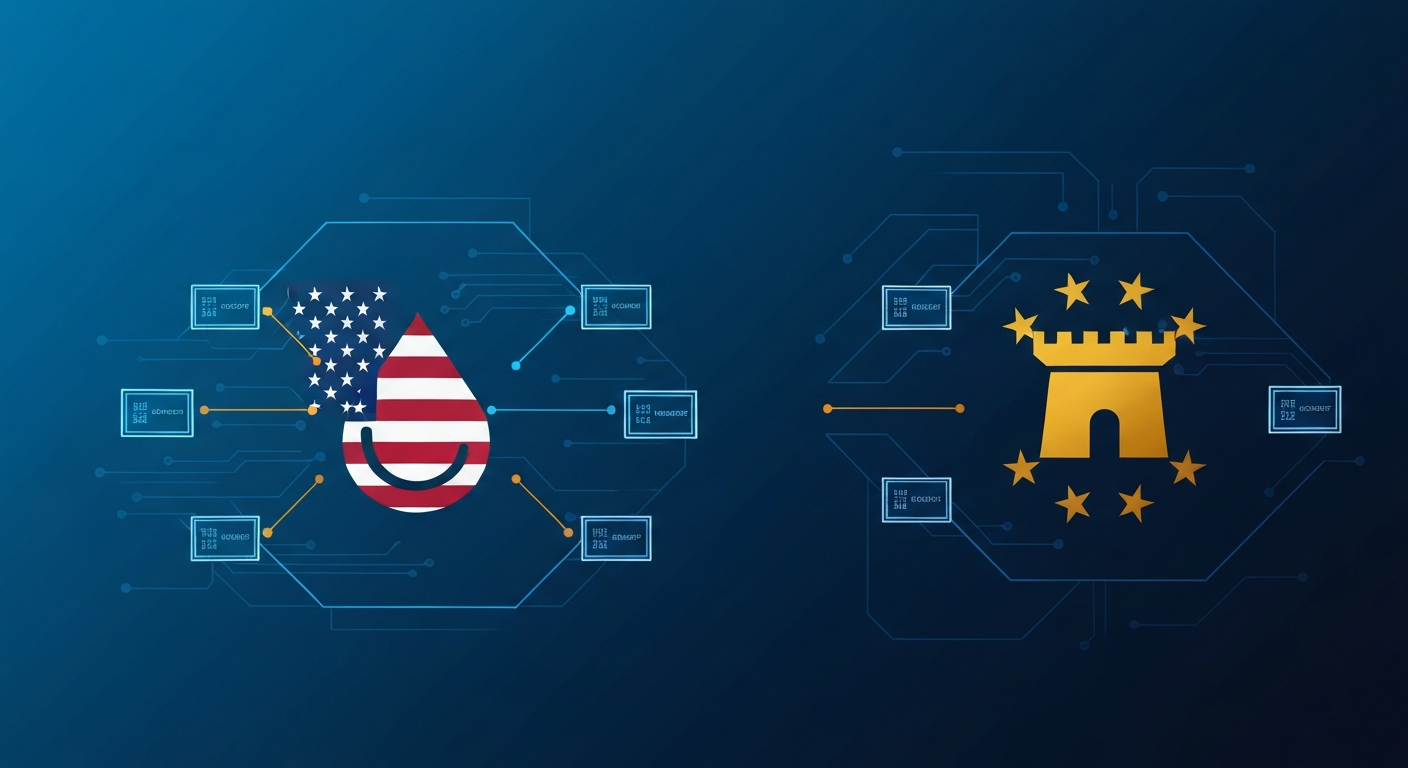
DigitalOcean's Kubernetes Service (DOKS) is often the first managed K8s platform that indie developers and startups reach for — affordable, simple, well-documented. DOKS offers EU data centers in Frankfurt (fra1) and Amsterdam (ams3), making it feel like a GDPR-safe choice compared to AWS or Azure.
But DigitalOcean Holdings, Inc. is incorporated in Delaware, listed on the NYSE (DOCN), and headquartered in New York City. That single fact carries significant legal weight for European companies handling personal data: the U.S. CLOUD Act (Clarifying Lawful Overseas Use of Data Act, 18 U.S.C. § 2523) gives U.S. authorities a legal path to compel DigitalOcean to disclose customer data — including Kubernetes Secrets, workload data, and control-plane metadata — regardless of where that data physically resides.
CLOUD Act Score: 17/25 (lower than GKE at 20/25 and AKS at 21/25, but still significant risk for regulated workloads)
DigitalOcean Holdings, Inc. — Corporate Background
| Attribute | Detail |
|---|---|
| Legal entity | DigitalOcean Holdings, Inc. |
| Incorporated | Delaware, USA |
| NYSE ticker | DOCN |
| HQ | New York City, NY |
| EU subsidiary | DigitalOcean, LLC (operating entity) |
| PRISM participation | Not publicly identified as PRISM participant |
| NSL/FISA exposure | Full exposure as U.S.-domiciled corporation |
DigitalOcean went public in March 2021. Unlike AWS or Azure, it is not a known participant in the NSA's PRISM surveillance program — which gives it a marginally lower CLOUD Act risk profile than the hyperscalers. However, the absence of PRISM participation does not provide legal protection: the CLOUD Act and National Security Letters (NSLs) apply to all U.S. corporations regardless of PRISM status.
CLOUD Act 5-Dimension Risk Matrix: 17/25
| Dimension | Score | Analysis |
|---|---|---|
| Corporate Jurisdiction | 5/5 | Delaware corporation, NYSE-listed — full U.S. corporate jurisdiction |
| PRISM Participation | 1/5 | No public evidence of PRISM participation — lower hyperscaler risk |
| FISA / NSL Exposure | 4/5 | U.S. company subject to 18 U.S.C. § 2709 NSLs and FISA Section 702 |
| Data Residency Gap | 4/5 | EU regions (fra1/ams3) exist; control plane managed by U.S. entity |
| Sub-processor Exposure | 3/5 | Internal infrastructure; Cloudflare CDN and AWS services as sub-processors |
| TOTAL | 17/25 | Moderate-high risk — significantly lower than GKE (20/25) or AKS (21/25) |
Comparison within the EU Managed Kubernetes Series:
- AWS EKS: 21/25 — Amazon.com Inc., PRISM participant, CIA/DoD contractor
- Azure AKS: 21/25 — Microsoft Corp., PRISM participant, EU Data Boundary carve-outs
- Google GKE: 20/25 — Google LLC, PRISM participant, etcd control plane jurisdiction
- DigitalOcean DOKS: 17/25 — Delaware corp., no known PRISM participation
How DOKS Works — And Where the Jurisdiction Risk Lives
DigitalOcean Kubernetes Service (DOKS) is a managed Kubernetes offering where DigitalOcean provisions and manages the control plane (API server, etcd, scheduler, controller manager) on your behalf. As a DOKS customer, you interact with kubectl against an API endpoint DigitalOcean controls.
DOKS Architecture
──────────────────────────────────────────────────────
CLOUD Act Jurisdiction
│
├── Control Plane (DigitalOcean-managed)
│   ├── Kubernetes API Server (DO infrastructure)
│   ├── etcd cluster (encrypted at rest — DO-controlled keys)
│   ├── kube-scheduler (DO infrastructure)
│   └── kube-controller-manager (DO infrastructure)
│                                           ↑
│                     U.S. law enforcement warrant → DO must comply
│
└── Worker Nodes (your Droplets)
    ├── fra1 (Frankfurt, Germany)
    └── ams3 (Amsterdam, Netherlands)
        ↑
        Physical location = EU, but control plane accessible from DO HQ
──────────────────────────────────────────────────────
What a CLOUD Act Warrant Reaches
When DigitalOcean receives a valid CLOUD Act warrant, the following Kubernetes data becomes legally compellable:
| Data Category | Risk Level | Notes |
|---|---|---|
| Kubernetes Secrets | Critical | API keys, DB passwords, TLS certs stored in etcd |
| etcd contents | Critical | Full cluster state accessible via control plane |
| ConfigMaps | High | Application configuration, feature flags |
| Pod/workload metadata | High | What's running, resource limits, labels |
| Ingress/service configs | Medium | Network topology, hostnames |
| Audit logs | High | Complete API server activity log |
| RBAC policies | Medium | Who has access to what |
DigitalOcean's "EU Regions" Don't Change Jurisdiction
DigitalOcean's Frankfurt (fra1) and Amsterdam (ams3) data centers are physically located in Germany and the Netherlands respectively. However:
- The management plane is U.S.-controlled: DigitalOcean's global operations center in NYC manages all infrastructure globally
- No EU-specific legal entity operates the managed K8s control plane — DigitalOcean LLC (the operating entity) is a U.S. company
- No "Data Residency Guarantee" product: Unlike Microsoft's EU Data Boundary (which has its own limitations), DigitalOcean does not offer contractual data residency protection for the control plane
This is fundamentally different from running your own k3s cluster on a Hetzner VPS in Germany: in that case, no U.S. entity has access to your cluster.
GDPR Compliance Risk Analysis
Article 28 — Data Processor Requirements
Under GDPR Art. 28, DigitalOcean acts as a data processor when processing personal data on your behalf (logs, user data in running workloads). The processor agreement must provide sufficient guarantees — but a U.S. entity subject to CLOUD Act warrants cannot provide the same guarantees as an EU-domiciled processor.
| GDPR Article | Risk | DigitalOcean Position |
|---|---|---|
| Art. 28 (Processor) | High | DPA available; U.S. CLOUD Act can override contractual guarantees |
| Art. 32 (Security) | Medium | SOC 2 Type II, ISO 27001 certified; encryption at rest and transit |
| Art. 44 (Transfer basis) | High | EU-U.S. Data Privacy Framework (DPF); Schrems III risk if framework invalidated |
| Art. 48 (Transfers to 3rd countries) | Critical | U.S. court orders = "transfer" not covered by DPF under EDPB guidance |
| Art. 83 (Fines) | Significant | Controller (you) bears primary fine risk for insufficient processor assessment |
The Data Privacy Framework Risk
DigitalOcean relies on the EU-U.S. Data Privacy Framework (DPF) for transatlantic data transfers. The DPF replaced Privacy Shield in July 2023 following the Schrems II ruling. However:
- Schrems III is actively litigated: NOYB has already filed challenges to the DPF
- CLOUD Act transfers are not DPF-covered: When U.S. law enforcement compels data disclosure, that transfer happens under a U.S. court order — not under the DPF framework
- EDPB Opinion 2023: The European Data Protection Board has indicated that secret disclosure orders to U.S. companies fall outside the DPF's transfer mechanisms
Pricing Comparison: DOKS vs EU-Native Kubernetes
All prices for a standard 3-node production cluster with comparable specs (4 vCPU / 8 GB RAM per node):
| Provider | Monthly Cost | CLOUD Act | Control | Notes |
|---|---|---|---|---|
| DigitalOcean DOKS | €130/mo | 17/25 | U.S. | Free control plane; g-2vcpu-8gb nodes |
| AWS EKS | €185/mo | 21/25 | U.S. | $0.10/hr cluster fee + t3.xlarge nodes |
| Azure AKS | €175/mo | 21/25 | U.S. | Free tier for DEV; Standard tier charged |
| Google GKE | €160/mo | 20/25 | U.S. | $0.10/hr Autopilot or Standard management fee |
| Scaleway Kapsule | €72/mo | 0/25 | EU (FR) | French SAS; GP1-S nodes; free control plane |
| OVHcloud Kubernetes | €66/mo | 1/25 | EU (FR) | OVH SAS; d2-4 nodes; managed etcd EU |
| Civo Kubernetes | €85/mo | 2/25 | UK/EU | UK Ltd; EU cluster option; k3s-based |
| Hetzner k3s | €25/mo | 0/25 | EU (DE) | CX31 nodes; self-managed but EU-native |
DigitalOcean is 5.2× more expensive than Hetzner k3s for comparable compute, with a CLOUD Act score of 17/25 vs 0/25.
Key pricing insight: DOKS charges no control-plane fee (unlike AWS EKS at $0.10/hr = $73/mo just for the cluster). For small teams, this makes DOKS appear cheaper than AWS/Azure/GKE — but the worker node costs quickly dominate, and EU-native alternatives offer comparable managed experiences at lower prices.
EU-Native Alternatives: Managed Kubernetes Without CLOUD Act Risk
Scaleway Kapsule — Best Overall (0/25 CLOUD Act)
Scaleway is owned by Iliad SA (Paris), a French telecommunications group. Scaleway SAS is a French simplified joint-stock company incorporated under French law.
Why it matters for GDPR:
- French corporate law, not U.S. corporate law
- No CLOUD Act jurisdiction (France is not party to CLOUD Act bilateral agreements in 2026)
- EU data centers only (Paris, Amsterdam)
- Control plane operated by Scaleway SAS (EU entity)
# Scaleway Kapsule cluster creation (EU region)
scw k8s cluster create \
  name=my-cluster \
  version=1.30 \
  region=fr-par \
  pools.0.node-type=GP1-S \
  pools.0.size=3
Limitations vs DOKS: Smaller ecosystem, fewer marketplace apps, less community documentation.
OVHcloud Managed Kubernetes — Enterprise EU Option (1/25 CLOUD Act)
OVH SAS (OVHcloud) is incorporated in France, HQ in Roubaix. Score 1/25 due to Akamai CDN sub-processor (U.S. entity, limited exposure).
Strengths for enterprise:
- ISO 27001, HDS (French health data hosting certification), SecNumCloud-compliant
- Dedicated managed Kubernetes control plane per cluster (not shared)
- 24/7 EU-based support
- GDPR DPA available, French law governing
Hetzner + k3s — Lowest Cost, EU-Native (0/25 CLOUD Act)
Hetzner Online GmbH is incorporated in Germany (Gunzenhausen). German GmbH = German corporate law = no CLOUD Act exposure.
# k3s on Hetzner — 3 nodes, €24.63/mo total
hcloud server create --name master --type cx31 --image ubuntu-22.04 --location nbg1
hcloud server create --name worker-1 --type cx31 --image ubuntu-22.04 --location nbg1
hcloud server create --name worker-2 --type cx31 --image ubuntu-22.04 --location nbg1

# k3s install (master)
curl -sfL https://get.k3s.io | sh -

# k3s install (workers)
K3S_URL=https://<master-ip>:6443 K3S_TOKEN=<token> curl -sfL https://get.k3s.io | sh -
Tradeoff: Not a fully managed service — you manage upgrades, control-plane HA, and etcd backups yourself.
Migration Guide: DOKS → Scaleway Kapsule
Phase 1: Inventory Your DOKS Cluster
# Export all workloads from DOKS
kubectl get all --all-namespaces -o yaml > doks-workloads-export.yaml

# Export Secrets (encrypt immediately — these contain sensitive data)
kubectl get secrets --all-namespaces -o yaml > doks-secrets-export.yaml

# Export ConfigMaps
kubectl get configmaps --all-namespaces -o yaml > doks-configmaps-export.yaml

# Export PersistentVolumeClaims
kubectl get pvc --all-namespaces -o yaml > doks-pvc-export.yaml

# List all Helm releases
helm list --all-namespaces
Phase 2: Create Scaleway Kapsule Cluster
# Install Scaleway CLI
curl -fsSL https://www.scaleway.com/en/docs/developer-tools/scaleway-cli/quickstart/ | sh

# Authenticate
scw init

# Create cluster in Paris region (eu-west-1 equivalent)
scw k8s cluster create \
  name=prod-cluster \
  version=1.30 \
  region=fr-par \
  description="Production cluster - GDPR compliant, 0/25 CLOUD Act" \
  pools.0.name=default \
  pools.0.node-type=GP1-S \
  pools.0.size=3 \
  pools.0.autoscaling=true \
  pools.0.min-size=3 \
  pools.0.max-size=10

# Get kubeconfig
scw k8s kubeconfig install <cluster-id> region=fr-par
Phase 3: Migrate Stateless Workloads
# Apply workloads to Scaleway cluster
kubectl --context=<scaleway-context> apply -f doks-workloads-export.yaml

# Migrate Secrets (re-apply with new encryption)
kubectl --context=<scaleway-context> apply -f doks-secrets-export.yaml

# Deploy Helm charts
helm --kube-context=<scaleway-context> repo add ingress-nginx \
  https://kubernetes.github.io/ingress-nginx
helm --kube-context=<scaleway-context> install ingress-nginx \
  ingress-nginx/ingress-nginx
Phase 4: DNS Cutover and DOKS Decommission
# Update DNS A records to Scaleway Load Balancer IP
# (Scaleway creates LB automatically when you deploy a LoadBalancer Service)
SCW_LB_IP=$(kubectl --context=<scaleway-context> get svc ingress-nginx-controller \
  -o jsonpath='{.status.loadBalancer.ingress[0].ip}')
echo "New LB IP: $SCW_LB_IP"

# After DNS propagation (TTL), verify all traffic on Scaleway
# Then delete DOKS cluster to stop billing
doctl kubernetes cluster delete <doks-cluster-id>
Migration timeline estimate:
- Simple stateless apps (≤5 services): 2-4 hours
- Complex apps with stateful sets: 1-2 days (data migration)
- Apps with DigitalOcean Managed Databases: Add 4-8 hours for DB migration
GDPR Compliance Checklist for DOKS Users
Before deciding to stay on DOKS or migrate, assess these items:
- Conduct a Transfer Impact Assessment (TIA): Document why your chosen transfer mechanism (DPF) provides adequate protection for your use case
- Audit Kubernetes Secrets content: If Secrets contain personal data (OAuth tokens, session keys), the CLOUD Act risk directly affects data subjects
- Check DPA clauses: DigitalOcean's DPA includes limitation of liability clauses — verify they meet your Art. 28 requirements
- Assess sub-processor chain: DigitalOcean uses sub-processors including Cloudflare (U.S.) and various AWS services — each adds CLOUD Act exposure
- Schrems III readiness: Plan for DPF invalidation scenario — what is your fallback transfer mechanism?
- Sector-specific regulations: Healthcare (HIPAA/EHDS), financial services (DORA), or public sector workloads have stricter processor requirements
- Document DPO sign-off: Your Data Protection Officer should formally review and approve the processor assessment
- Annual review: Add DOKS compliance review to your annual GDPR audit calendar
When DOKS Is Still Acceptable
Despite the CLOUD Act risk, DOKS may be an acceptable choice in certain scenarios:
Low-risk use cases:
- Non-personal-data workloads (static site rendering, pure compute jobs)
- Internal development/staging environments (not handling production personal data)
- Publicly available content serving (no PII in cluster)
When DOKS is NOT acceptable:
- Running databases containing personal data (user profiles, health records, financial data)
- Storing session tokens, auth credentials, or API keys for systems processing personal data
- Regulated sectors: healthcare (EHDS compliance), finance (DORA), government
- Companies requiring EUCS High certification for their cloud stack
Summary: The DOKS CLOUD Act Risk vs EU Alternatives
DigitalOcean Kubernetes (DOKS) scores 17/25 on our CLOUD Act matrix — meaningfully lower than the hyperscalers (GKE 20/25, AKS 21/25, EKS 21/25) because DigitalOcean is not a known PRISM participant and has a simpler sub-processor chain.
However, 17/25 still represents significant risk for regulated European workloads:
- DigitalOcean Holdings, Inc. is a Delaware corporation subject to U.S. law
- The CLOUD Act applies regardless of where worker nodes are physically located
- No EU-specific legal entity manages the DOKS control plane
If your Kubernetes cluster processes personal data of EU residents, the 5.2× cost difference between DOKS and Hetzner k3s (€130/mo vs €25/mo) and the significant CLOUD Act risk difference (17/25 vs 0/25) make a strong case for EU-native alternatives.
Next in the series:
- Post #4: Scaleway Kapsule vs OVHcloud Kubernetes — EU-Native Managed K8s Compared
- Post #5: EU Managed Kubernetes Comparison 2026 — Full Finale (All Providers)
Previous in the series:
- AWS EKS EU Alternative 2026 — CLOUD Act 21/25
- Google GKE EU Alternative 2026 — CLOUD Act 20/25
- Azure AKS EU Alternative 2026 — CLOUD Act 21/25
EU CLOUD Act risk scores use sota.io's 5-dimension framework: Corporate Jurisdiction (0–5), PRISM Participation (0–5), FISA/NSL Exposure (0–5), Data Residency Gap (0–5), Sub-processor Exposure (0–5). Scores reflect publicly available information as of May 2026.
EU-Native Hosting
Ready to move to EU-sovereign infrastructure?
sota.io is a German-hosted PaaS — no CLOUD Act exposure, no US jurisdiction, full GDPR compliance by design. Deploy your first app in minutes.