Cofense EU Alternative 2026: Phishing Simulation GDPR & CLOUD Act Analysis
Post #1269 in the sota.io EU Security Awareness Training (SAT) Series
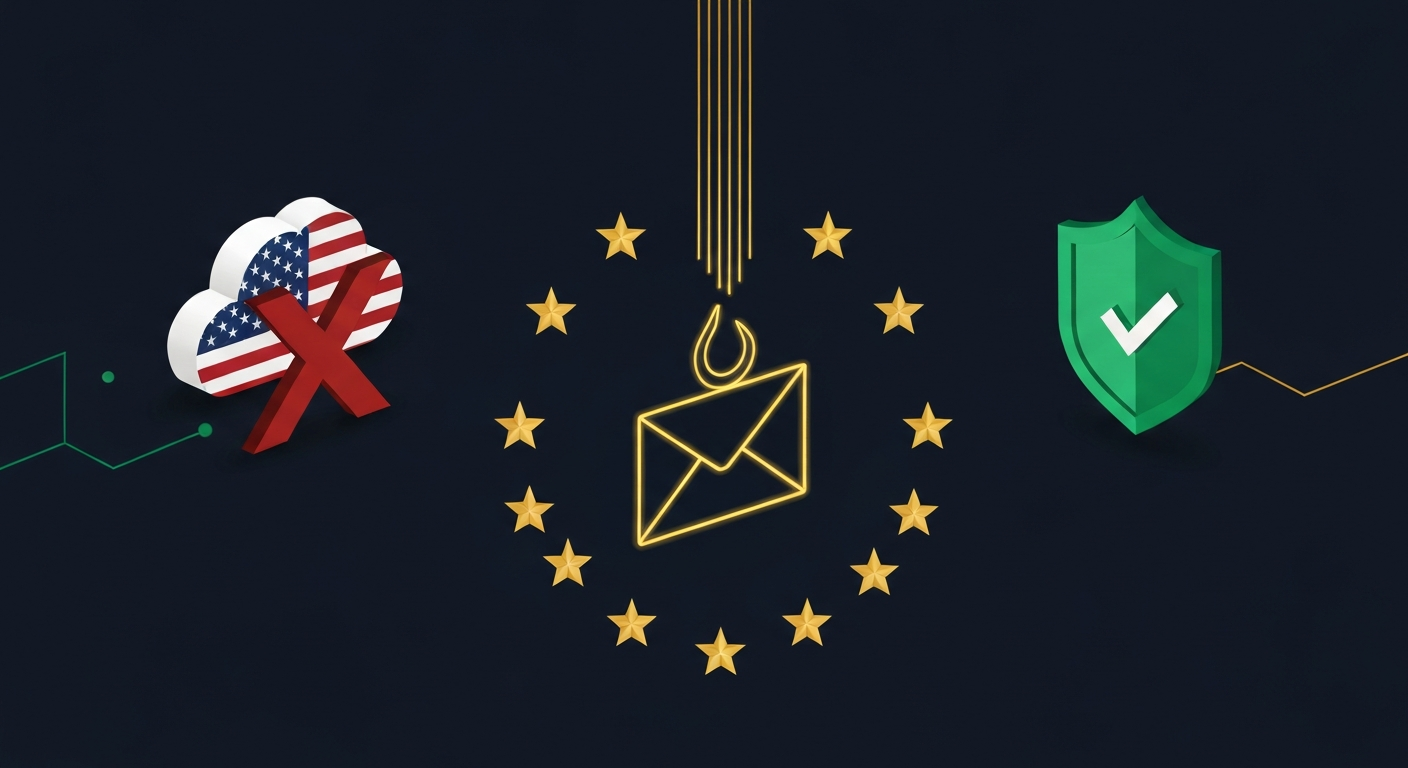
Cofense (formerly PhishMe) is one of the world's leading phishing simulation and security awareness training platforms, trusted by over 3,500 global enterprises including major financial institutions and critical infrastructure operators. The platform collects detailed employee behavioral data — who clicked, who reported, who failed — to measure human risk across the organization.
But that same data creates a critical compliance problem for EU organizations operating under GDPR, NIS2, and national labor law frameworks. Under the US CLOUD Act, Cofense's US parent company can be compelled to disclose employee phishing simulation results, training completion records, and behavioral profiles to US authorities — without notifying the EU data subjects or their employers.
This analysis scores Cofense on 25 EU sovereignty criteria and presents zero-CLOUD-Act-exposure alternatives.
Cofense: Company Background
Cofense Inc. is a cybersecurity company headquartered in Leesburg, Virginia, incorporated as a Delaware C-Corporation. Founded in 2011 as PhishMe by Aaron Higbee, Rohyt Belani, and Scott Greaux, the company rebranded to Cofense in 2018 following a private equity acquisition.
Current ownership: Cofense is majority-owned by Pamplona Capital Management, a US-based private equity firm with approximately $13 billion in assets under management. Pamplona's portfolio includes numerous defense and intelligence-adjacent companies. Secondary stakes are held by BlackRock and Veritas Capital — the latter being a defense-focused PE firm with deep ties to US government contracting.
Key products:
- PhishMe (Phishing Simulation): Simulated phishing campaigns with detailed click/report analytics per employee
- Triage: Automated email threat analysis and incident response
- Intelligence: Threat intelligence derived from global phishing data
- Reporter: One-click email reporting button for employees
- PDC (Phishing Defense Center): Managed detection and response for email threats
Revenue & scale: Cofense claims 3,500+ enterprise customers across 160+ countries, with particular penetration in financial services, healthcare, and government sectors. The company processes hundreds of millions of simulated phishing emails annually.
US government contracts: Cofense holds contracts with multiple US federal agencies including the Department of Defense and the IC community, which strengthens the CLOUD Act risk profile significantly.
CLOUD Act Score: Cofense
| Dimension | Score | Evidence |
|---|---|---|
| D1: Jurisdictional Exposure | 5/5 | Delaware C-Corp, Virginia HQ, Pamplona Capital PE |
| D2: Government Contracts / Intelligence Ties | 4/5 | DoD + IC community contracts, Veritas Capital (defense PE) co-investor |
| D3: Data Sensitivity | 5/5 | Employee behavioral data + failure rates + training completion = maximum sensitivity |
| D4: Infrastructure Control | 3/5 | AWS US regions primary, EU hosting option available but US-controlled |
| D5: Contractual Protections | 2/5 | SCCs available, no customer-controlled CMEK for behavioral data |
| TOTAL | 19/25 | HIGH CLOUD Act Risk |
The Employee Behavioral Data Paradox
Cofense's core value proposition is measuring human risk at the individual employee level. The platform tracks:
- Which employees clicked simulated phishing links
- Which employees reported suspicious emails
- How long individual employees took to complete training modules
- Individual failure rates across simulation categories
- Behavioral trend data per employee over time
- Department-level and role-level risk profiles
Under GDPR Art. 88 (processing in the context of employment), this data is among the most sensitive an employer can hold. In Germany specifically, DSGVO §26 requires Betriebsrat (works council) consultation before any systematic employee monitoring program — including phishing simulations.
The paradox: Organizations use Cofense to demonstrate NIS2 Art. 21(2)(i) human risk management compliance. But those same compliance demonstration records — employee failure rates, training completion certificates, behavioral profiles — sit in a US-jurisdiction SaaS platform operated by a PE-backed company with DoD contracts.
A CLOUD Act request to Cofense doesn't just expose who clicked a phishing email. It exposes which of your employees are security-aware and which are not — a complete map of your organization's human attack surface.
NIS2 Compliance Documentation Risk
Under NIS2 Directive Art. 21(2)(i), regulated entities must maintain "human resources security, access control policies and asset management" including security awareness training programs. National Competent Authorities (NCAs) can request evidence of compliance.
But here's the regulatory irony: The evidence you create to demonstrate NIS2 compliance — training records, simulation results, completion certificates — is stored in a US-jurisdiction platform. A US DOJ National Security Letter or CLOUD Act executive agreement request reaches this data without your knowledge or consent.
The NIS2 Evidence Paradox: Your NIS2 compliance evidence is simultaneously:
- Required by EU regulators to demonstrate compliance
- Accessible to US authorities without EU legal process
- Capable of exposing your organization's human vulnerability map to US intelligence
For critical infrastructure operators under KRITIS-Dachgesetz (Germany's upcoming 2026 critical infrastructure act), storing employee security training records in US-controlled SaaS adds unnecessary regulatory exposure.
DSGVO §26 Betriebsrat Paradox
German organizations with more than 5 employees and a works council face a specific compliance trap with US-hosted phishing simulation platforms.
DSGVO §26 requires:
- Legitimate purpose for employee behavioral monitoring
- Works council agreement (Betriebsvereinbarung) for systematic monitoring
- Transparency to employees about what's measured
A properly negotiated Betriebsvereinbarung for a phishing simulation program specifies exactly what data is collected, where it's stored, and who has access. It typically includes provisions restricting data access to specified roles within the organization.
The paradox: The Betriebsvereinbarung cannot contractually restrict US CLOUD Act access. You can negotiate that "only the CISO and HR have access" — but that clause is legally meaningless against a US government subpoena served on Cofense. Your works council has approved a monitoring program whose data is accessible to a jurisdiction the council explicitly cannot restrict.
Works councils in Germany and Austria increasingly request "CLOUD Act-clean" phishing simulation platforms as a condition for approving security awareness programs — precisely because they understand that US-hosted behavioral data creates labor law liability.
Cofense vs EU-Native Alternatives
| Criterion | Cofense | SoSafe | Hoxhunt |
|---|---|---|---|
| Incorporation | Delaware C-Corp | GmbH (Köln, DE) | Oy (Helsinki, FI) |
| PE/VC Ownership | Pamplona + Veritas (US defense PE) | US VC (General Atlantic) partial | Nordic VC (Shortcut Ventures) |
| GDPR Jurisdiction | US | Germany (BDSG + GDPR) | Finland (GDPR) |
| CLOUD Act Exposure | YES — 19/25 | Partial — General Atlantic stake | Minimal — Nordic VC |
| DoD / IC Contracts | YES | NO | NO |
| Works Council (§26) | Problematic | Native DSGVO §26 support | Compliant EU approach |
| Data Residency | EU option, US-controlled | EU native | EU native |
| Behavioral Data Location | Cofense US infra (primary) | EU-native | EU-native |
| NIS2 Evidence Chain | US jurisdiction | EU jurisdiction | EU jurisdiction |
| CLOUD Act Score | 19/25 | 0/25 | 0/25 |
SoSafe GmbH — EU-Native Alternative
SoSafe GmbH (Cologne, Germany) is a purpose-built EU-native security awareness training platform founded in 2018. The company has grown to over 600 employees and serves 4,000+ customers primarily in the DACH region and broader European market.
Ownership: SoSafe has received investment from General Atlantic (a US-based PE/growth equity firm), which introduces partial US jurisdiction risk. However, the operating entity is a German GmbH, management is German, and data is processed in EU data centers under German law.
CLOUD Act posture: The General Atlantic investment means SoSafe cannot claim zero CLOUD Act exposure — but the risk is materially lower than Cofense. SoSafe's data processing agreements explicitly address GDPR, and the company's legal and compliance team is EU-based with direct BDSG §26 expertise.
Key differentiators for DACH market:
- Native German-language content and simulation templates
- Pre-built Betriebsvereinbarung templates for §26 compliance
- German-language DPA (Auftragsverarbeitungsvertrag) with standard contractual clauses
- BSI-aligned training content for KRITIS operators
- Direct DACH customer success team
Hoxhunt Oy — EU-Native Alternative
Hoxhunt Oy (Helsinki, Finland) takes a gamification-based approach to phishing simulation and security awareness. The company uses adaptive AI to personalize training to individual employee behavior patterns — raising or lowering difficulty based on performance.
Ownership: Hoxhunt is VC-backed by Nordic investors (Shortcut Ventures, Maki VC, Vendep Capital) with no US PE or government-adjacent investors. The company is incorporated as a Finnish Osakeyhtiö under Finnish law within the EU/EEA.
CLOUD Act posture: Finnish jurisdiction, Nordic VC, no US defense contracts. This represents the cleanest EU sovereignty profile among major phishing simulation platforms.
Key differentiators:
- Adaptive gamification engine adjusts difficulty per employee
- ISO 27001 certified
- EU data residency by design
- Strong Nordic market penetration (Finland, Sweden, Norway, Denmark)
- GDPR-native architecture with data minimization principles
Decision Framework: Phishing Simulation Under EU Law
For EU organizations selecting a phishing simulation platform, the decision tree should start with jurisdiction, not features:
Step 1: Works Council Requirement Does your organization have a Betriebsrat (Germany/Austria) or comparable employee representative body? If YES → the platform must support DSGVO §26 / local labor law compliance without exposing behavioral data to US jurisdiction.
Step 2: Critical Infrastructure Classification Is your organization classified under NIS2 Essential/Important Entities or KRITIS-Dachgesetz? If YES → your phishing simulation records are part of your regulatory compliance evidence chain. US-jurisdiction SaaS creates regulatory exposure.
Step 3: Employee Profile Sensitivity Do your employees include executives, security personnel, or individuals with access to classified/sensitive systems? If YES → employee behavioral data (who failed phishing simulations) represents an attack surface map accessible to US authorities under CLOUD Act.
If any answer is YES: SoSafe or Hoxhunt are the appropriate choices. Cofense should be treated as a US-jurisdiction platform with the same regulatory posture as any other CLOUD Act-exposed SaaS.
Conclusion
Cofense is a technically capable phishing simulation platform with proven enterprise deployment at scale. Its CLOUD Act score of 19/25 reflects the combination of Delaware incorporation, Veritas Capital defense PE co-investment, active DoD contracts, and behavioral data sensitivity.
For EU organizations — particularly those in the DACH market with works council requirements, NIS2-regulated entities needing EU-jurisdiction compliance evidence, or KRITIS operators under the upcoming German critical infrastructure act — the Employee Behavioral Data Paradox and NIS2 Evidence Paradox make Cofense a high-risk choice.
SoSafe (Cologne, Germany) offers a mature EU-native alternative with native DSGVO §26 support and DACH-market expertise. Hoxhunt (Helsinki, Finland) provides the cleanest EU sovereignty profile with Nordic VC backing and no US jurisdiction exposure.
The human risk layer is your last line of defense. Storing the complete map of that layer — who clicked, who failed, who is vulnerable — in US-jurisdiction infrastructure is a strategic risk that feature completeness cannot justify.
sota.io maps the CLOUD Act exposure of enterprise SaaS platforms so EU organizations can make informed sovereignty decisions. Explore our EU Security Awareness Training comparison for the complete series.
EU-Native Hosting
Ready to move to EU-sovereign infrastructure?
sota.io is a German-hosted PaaS — no CLOUD Act exposure, no US jurisdiction, full GDPR compliance by design. Deploy your first app in minutes.