BigID EU Alternative 2026 — The Privacy Intelligence Paradox
Post #1281 in the sota.io EU Data Governance Series
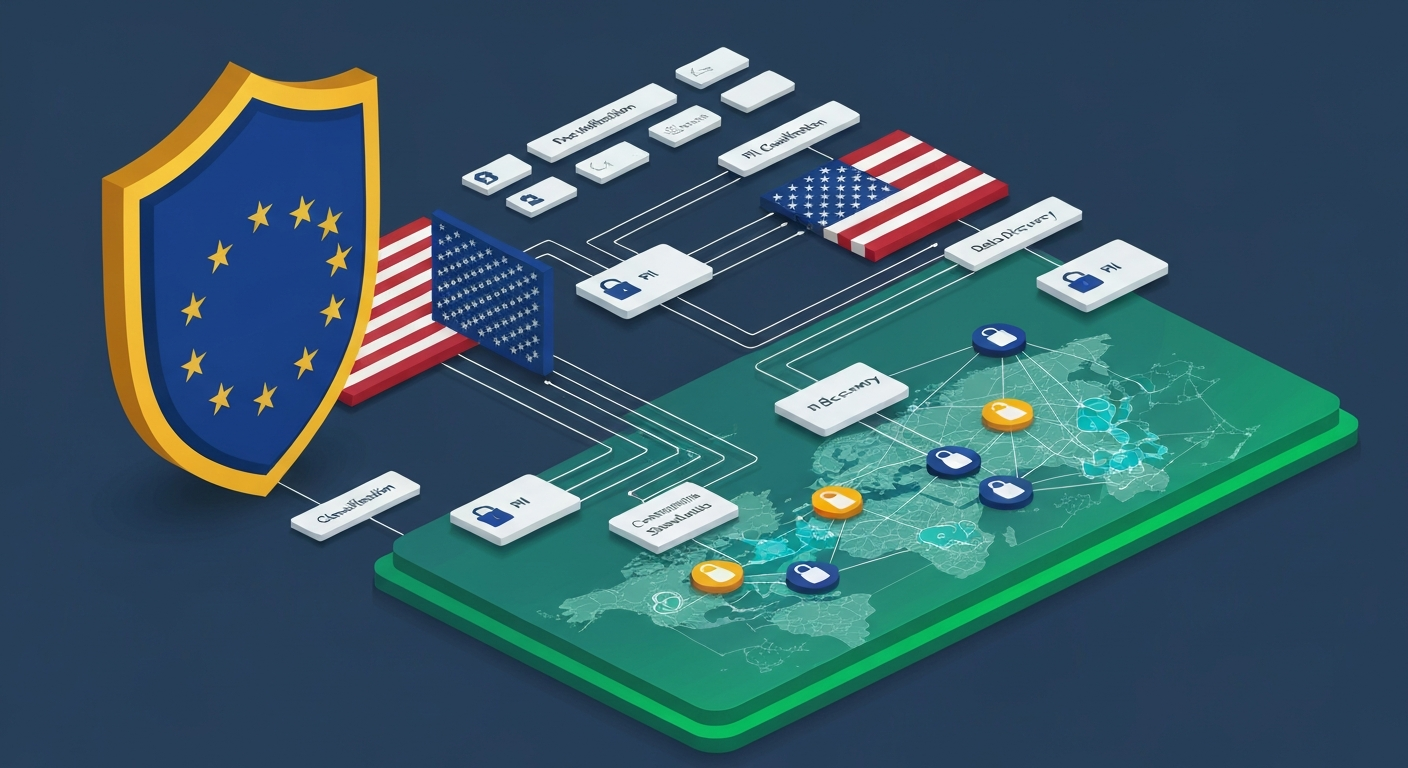
There is a particular category of enterprise software that deserves special scrutiny in EU sovereignty analysis: tools that do not merely process personal data, but tools whose entire purpose is to discover, classify, and map personal data across an entire organisation's infrastructure. BigID is the defining product in this category — and it presents a contradiction that goes deeper than the standard CLOUD Act exposure discussion.
BigID's value proposition is straightforward: EU enterprises face GDPR Article 30 obligations to maintain Records of Processing Activities, GDPR Article 17 obligations to fulfil Data Subject Access Requests and erasure demands, and GDPR Article 25 Privacy by Design requirements. BigID automates all of this. It connects to your data sources, finds every piece of personally identifiable information across your estate, classifies it, maps its lineage, and maintains a continuously updated intelligence layer that proves your GDPR compliance.
The paradox is structural: BigID is a Delaware C-Corporation headquartered in New York City, backed by Goldman Sachs Growth Equity, and subject to the US CLOUD Act in its entirety. BigID's platform — the system that holds your complete PII fingerprint, your data subject records, your erasure verification trails — sits under the same jurisdictional exposure that GDPR Article 25 requires you to defend against. The tool you chose to prove your privacy compliance is itself a privacy compliance exposure.
This is the Privacy Intelligence Paradox: using a US-controlled PII intelligence platform to implement EU privacy law creates a structural contradiction at the infrastructure level.
BigID Inc. — Corporate Anatomy
BigID was founded in 2016 by Dimitar Dobrev and Nimrod Vax, with engineering roots in Israel and commercial operations headquartered in New York City. The company is incorporated as a Delaware C-Corporation, placing it squarely under US federal jurisdiction for CLOUD Act purposes from its founding date.
BigID has raised over USD 345 million in venture and growth equity financing:
- Series A (2018): USD 14.8M — Bessemer Venture Partners (Menlo Park, CA), SAP.iO
- Series B (2019): USD 30M — Bessemer Venture Partners, SAP.iO, Comcast Ventures
- Series C (2020): USD 70M — Tiger Global Management (New York, NY), Bessemer Venture Partners
- Series D (2021): USD 70M — Advent International, Bessemer Venture Partners, Salesforce Ventures
- Series E (2022): USD 60M — Goldman Sachs Growth Equity (New York, NY), Bessemer Venture Partners, Salesforce Ventures, SAP.iO
The Goldman Sachs Growth Equity participation at Series E is the element of BigID's capital structure that warrants the most attention in EU sovereignty analysis — and it receives the least.
What BigID Actually Does
BigID positions itself as an "AI-native data intelligence platform." In operational terms, this means the following capabilities:
PII Discovery: BigID connects to structured databases (PostgreSQL, MySQL, Oracle, Snowflake, Redshift), semi-structured stores (S3, Azure Blob, Google Cloud Storage), unstructured data (SharePoint, Box, Slack, email), and SaaS applications. It scans these sources using ML classification models to identify personally identifiable information — names, national identity numbers, health records, financial data, biometric references — and maps every instance to its location in your infrastructure.
Data Classification and Labelling: Every discovered PII element is classified by type, sensitivity, and regulatory relevance. BigID maintains classification taxonomies aligned to GDPR categories, CCPA categories, HIPAA categories, and sector-specific frameworks. The classification database is BigID's central product asset — a continuously updated map of exactly what personal data your organisation holds, where it lives, and how it is categorised.
GDPR Article 30 — Record of Processing Activities Automation: BigID can generate and maintain your RoPA automatically by inferring processing activities from data discovery results. The RoPA that your DPO presents to regulators is assembled by BigID from the intelligence it accumulates.
GDPR Article 17 — Right to Erasure Automation: When a data subject submits a deletion request, BigID can query its intelligence layer to identify every instance of that subject's data across your estate and automate the deletion workflow across connected systems. The verification record proving erasure — the evidence you would produce in a regulatory investigation — is stored in BigID's platform.
DSAR Management: BigID automates Data Subject Access Request fulfilment by querying its discovery index and assembling the complete picture of what data your organisation holds for a given data subject.
Data Risk Scoring: BigID continuously assesses risk scores for data assets based on sensitivity, access patterns, and regulatory exposure.
Each of these capabilities is genuinely valuable for GDPR compliance operations. Each of these capabilities also means that BigID accumulates a more comprehensive intelligence picture of your personal data processing than any other single system in your infrastructure — including, typically, your own internal data governance tooling.
The Privacy Intelligence Paradox: Four Structural Contradictions
The CLOUD Act exposure from BigID is not equivalent to cloud storage or SaaS productivity tool exposure. When the US government requests data from Dropbox under CLOUD Act, the exposure is the documents and files your organisation stored. When the US government requests data from BigID under CLOUD Act, the exposure is your organisation's complete operational map of every EU citizen's personal data — the intelligence layer that took years and significant expense to build, and that represents the foundation of your GDPR compliance programme.
This distinction generates four specific contradictions.
Paradox 1: The RoPA Contradiction (GDPR Article 30)
GDPR Article 30 requires data controllers to maintain Records of Processing Activities documenting what personal data they hold, how it is processed, and the legal basis for that processing. BigID automates this obligation. The RoPA that a data controller maintains as evidence of GDPR compliance is assembled and stored by BigID.
The contradiction: BigID's RoPA database, containing the complete map of your organisation's personal data processing, is held by a US-controlled platform under CLOUD Act jurisdiction. A US government demand for BigID's customer data could produce your Article 30 records — the regulatory document designed to demonstrate compliance with EU data protection law — for US government review.
GDPR Article 30(4) requires the record to be "made available to the supervisory authority on request." The EU data protection supervisory authority can request this. Under CLOUD Act, US government authorities can potentially access the same records through BigID's platform.
Paradox 2: The Erasure Verification Contradiction (GDPR Article 17)
GDPR Article 17 establishes the right to erasure — the "right to be forgotten." When a data subject requests deletion of their personal data, the controller must delete it and maintain verification records proving the deletion was executed across all systems.
BigID automates erasure verification. The evidence that deletion occurred — the audit trail you would produce to a supervisory authority or in litigation — is stored in BigID's platform.
The contradiction: the record proving that you respected a data subject's GDPR Article 17 erasure right sits in a US-controlled system that could itself be accessed by US authorities under CLOUD Act. The privacy-protective act (erasure) is documented in a jurisdiction-exposed system.
Paradox 3: The Privacy by Design Contradiction (GDPR Article 25)
GDPR Article 25 requires Privacy by Design and Privacy by Default — controllers must implement technical and organisational measures that embody data protection principles from the outset of system design. Privacy by Design requires that privacy controls are baked into infrastructure, not bolted on afterward.
BigID is frequently positioned as a Privacy by Design implementation tool — the system that scans infrastructure to verify that privacy protections are in place. But implementing GDPR Article 25 compliance using a US-controlled PII intelligence platform is itself a Privacy by Design failure: the system responsible for enforcing privacy is subject to a jurisdictional exposure that GDPR Article 25 exists to prevent.
The controller that uses BigID to implement Privacy by Design has designed privacy compliance into their infrastructure using a tool that sits outside the privacy protection boundary that GDPR Article 25 establishes.
Paradox 4: The Intelligence Concentration Problem
Standard CLOUD Act analysis focuses on the data held by a given SaaS platform — which is typically the data the customer explicitly stores there. BigID inverts this model. BigID's discovery mechanism pulls data from your infrastructure. Its classification layer derives intelligence from that data. Its risk scoring layer synthesises that intelligence into assessments.
The BigID platform holds not what you chose to give it, but what it inferred from everything across your estate. A CLOUD Act demand for BigID customer data does not retrieve the PII itself (which remains in your infrastructure). It retrieves the map of the PII: where it is, what it contains, how sensitive it is, who it relates to, and what your compliance exposure looks like at any given moment.
For intelligence agencies and government actors, a map of PII is more operationally valuable than the PII itself. BigID's platform is, by design, the highest-value intelligence target in a GDPR-compliant organisation's data stack.
Goldman Sachs Growth Equity: Beyond Typical VC Risk
The standard CLOUD Act investor analysis looks at venture capital firms: whether they are US-incorporated, whether they hold board seats, and whether their governance authority over the portfolio company creates jurisdictional anchoring under US law.
Goldman Sachs Growth Equity is not a standard venture capital firm.
Goldman Sachs Group, Inc. is a Delaware-incorporated bank holding company supervised by the Federal Reserve Board as a systemically important financial institution (SIFI) under the Dodd-Frank Wall Street Reform and Consumer Protection Act. As a SIFI, Goldman Sachs operates under enhanced prudential standards, annual stress testing requirements, living will obligations, and supervisory relationships with US federal regulators — including the Federal Reserve, the SEC, and the FDIC — that are qualitatively different from the regulatory relationships that govern ordinary US venture capital firms.
Goldman Sachs Growth Equity (GSGE), the growth investing arm of Goldman Sachs, deployed capital from Goldman Sachs's balance sheet and affiliated funds into BigID's Series E. GSGE investment decisions are made by Goldman Sachs professionals in New York who are subject to Goldman Sachs's internal governance, US securities regulations, and the compliance obligations of a federally supervised financial institution.
This creates a D2 risk profile for BigID that is categorically different from Bessemer Venture Partners or Salesforce Ventures. When a US intelligence or law enforcement agency interacts with Goldman Sachs Group — as a SIFI subject to federal supervision — the institutional relationship is materially different from an interaction with a standard venture fund.
The analysis is not that Goldman Sachs is more likely to respond to government data requests. The analysis is that Goldman Sachs's institutional relationship with US federal authorities is structurally closer than the relationship that characterises standard VC investors, and that this proximity amplifies the CLOUD Act risk profile of BigID's investor governance structure.
For EU enterprises evaluating privacy-critical infrastructure, the distinction matters.
The OpenText Acquisition Attempt: What USD 375 Million Tells Us
In 2023, OpenText Corporation — the Canadian enterprise content management firm — made an acquisition offer valuing BigID at approximately USD 375 million. BigID's board rejected the offer.
The rejected acquisition is relevant to EU sovereignty analysis for two reasons.
First, it validates the strategic value of PII intelligence. OpenText's offer was not for BigID's engineering team or its go-to-market infrastructure. It was for BigID's classification technology, its trained ML models, its PII discovery capabilities, and the recurring revenue attached to enterprise customers whose compliance programmes had become dependent on BigID's intelligence layer. A USD 375M offer for a data intelligence platform signals that PII intelligence — the map of an organisation's personal data — carries strategic enterprise value well beyond the immediate subscription revenue.
Second, it reveals the acquisition surface. OpenText bid USD 375M and was rebuffed. A different acquirer — one with more strategic capital, or one where regulatory review was less of a concern — could have acquired BigID and its customer data intelligence at a comparable or higher price. The fact that BigID rejected one acquisition does not mean BigID is immune to acquisition. It means BigID's board judged that OpenText's offer did not meet its price expectations.
Any future acquirer of BigID would inherit its customer relationships, its intelligence databases, and its contractual access to EU enterprises' complete PII maps. EU enterprises evaluating BigID as a long-term compliance infrastructure investment must assess whether they are comfortable with that acquisition scenario.
CLOUD Act Score Matrix — BigID Inc.
| Dimension | Score | Rationale |
|---|---|---|
| D1: US Corporate Jurisdiction | 5/5 | Delaware C-Corp, NYC HQ. US jurisdiction is unambiguous and permanent. |
| D2: US Investor Control | 5/5 | Goldman Sachs Growth Equity (SIFI-supervised), Bessemer Venture Partners, Salesforce Ventures, SAP.iO. Goldman Sachs's SIFI status amplifies standard VC risk. |
| D3: Data Sensitivity | 5/5 | The Privacy Intelligence Paradox. BigID holds the complete PII map of your organisation — discovery results, classification labels, RoPA records, erasure verification trails, DSAR fulfilment evidence. This is the highest-sensitivity data category in a GDPR-compliant enterprise. |
| D4: Engineering & Operations | 3/5 | Engineering teams in Israel and US. SaaS-native architecture with global cloud infrastructure. |
| D5: Cloud Dependency | 4/5 | Cloud-first SaaS delivery. Limited on-premises options available only in Enterprise tier, with significant deployment complexity. |
| Total | 22/25 | Very High — among the highest CLOUD Act exposure profiles in the EU data governance tools category. |
A score of 22/25 places BigID in the same risk tier as Lacework (post-Fortinet) and above Alation (19/25), Collibra (17/25), and Atlan (21/25). The D3 score of 5/5 reflects a categorical distinction: BigID is not a platform that happens to process some personal data. BigID is a platform whose product value is derived entirely from accumulating intelligence about personal data — making it the maximum-sensitivity CLOUD Act exposure in the data governance tooling category.
EU-Native Alternatives: Migration Path
The functional requirements that BigID meets — PII discovery, data classification, RoPA automation, erasure management, DSAR fulfilment — can be addressed through EU-native or sovereignty-compatible alternatives. The migration is technically feasible, though operationally non-trivial.
OpenMetadata (Apache 2.0, Open Source, Self-Hosted)
CLOUD Act Score: 0/25
OpenMetadata is an open-source data catalog and metadata management platform governed by the Apache Software Foundation. The project has no US corporate parent, no US VC investors, and no SaaS delivery model that creates jurisdictional exposure.
Sovereignty profile: Deploying OpenMetadata on EU-sovereign infrastructure — IONOS Cloud (Germany), Hetzner (Germany), OVHcloud (France), or on-premises — produces zero CLOUD Act exposure. The EU enterprise controls the deployment environment, the data, and the software.
Functional comparison:
- Data cataloguing: Strong. OpenMetadata's metadata discovery and cataloguing capabilities match Collibra and Alation at the catalog layer.
- PII classification: Available but less sophisticated than BigID's ML-native classification. Requires custom tagging rules and policies rather than automated ML discovery.
- RoPA automation: Manual. OpenMetadata does not automatically generate GDPR Article 30 records — this requires custom workflow integration.
- DSAR/erasure automation: Not natively supported. Integration with data deletion workflows requires custom development.
OpenMetadata is the appropriate choice for EU enterprises whose primary requirement is data cataloguing and lineage, where PII classification is a secondary workflow rather than the primary compliance mechanism.
DataGalaxy (Paris, France)
CLOUD Act Score: 0/25
DataGalaxy is a French enterprise data governance platform incorporated and headquartered in Paris. It is subject to French and EU law, GDPR-compliant by jurisdiction, and carries no US corporate governance exposure.
Sovereignty profile: Full EU sovereignty. French incorporation, EU investor base, EU-only operations.
Functional comparison:
- Data catalog and business glossary: Strong. DataGalaxy's business glossary and data lineage capabilities are enterprise-grade.
- PII classification: Available through data classification policies. Less automated than BigID's ML discovery.
- GDPR Article 30 support: DataGalaxy supports RoPA documentation workflows and is explicitly positioned for GDPR compliance use cases.
- Pricing: Enterprise SaaS model with pricing comparable to Collibra mid-tier.
DataGalaxy is the most functionally comparable EU-native alternative to BigID at the catalog and governance layer, particularly for organisations that already operate their data governance through a business glossary and policy framework rather than automated ML discovery.
Castor (Amsterdam, Netherlands)
CLOUD Act Score: 0/25
Castor is a Dutch data catalog company headquartered in Amsterdam, incorporated under Dutch law, and subject to EU jurisdiction and GDPR by default.
Sovereignty profile: Full EU sovereignty. Dutch incorporation, no US VC governance exposure.
Functional comparison:
- Modern data stack integration: Castor is particularly strong for dbt, Snowflake, BigQuery, and Looker environments — the modern analytics stack.
- PII classification: Supports data classification through tags and policies.
- GDPR documentation: Supports data inventory workflows that map to GDPR Article 30 requirements.
- Pricing: More accessible than DataGalaxy for mid-market organisations.
Castor is the appropriate choice for EU data teams operating modern analytics stacks who need sovereignty-compatible cataloguing and governance without the full enterprise governance overhead of DataGalaxy or Collibra.
On-Premises Privacera — Not an EU-Native Alternative
Privacera, sometimes cited as a BigID alternative, is headquartered in Seattle, Washington — a US C-Corporation. Its on-premises deployment mode reduces data transmission exposure but does not eliminate CLOUD Act jurisdiction over Privacera Inc. as a US entity. Privacera is not a sovereignty-compatible alternative for EU enterprises seeking to exit US CLOUD Act exposure.
Decision Framework for EU Organisations
The appropriate response to BigID's CLOUD Act exposure depends on the maturity of your current PII intelligence programme and your compliance obligations.
If you have not yet deployed a PII intelligence platform, the decision is straightforward: evaluate OpenMetadata, DataGalaxy, and Castor before evaluating BigID. The CLOUD Act exposure associated with BigID's Goldman Sachs-backed PII intelligence platform is a known and avoidable risk. EU-native alternatives exist. Deploying BigID when EU-native alternatives are available is a governance choice that will require justification to supervisory authorities.
If you are currently operating BigID, the migration calculus is more complex. BigID's intelligence layer — its trained classifiers, its discovery results, its erasure verification trails — represents accumulated operational value that is difficult to migrate in bulk. The migration path involves:
- Export discovery results before migration: BigID's data inventory and classification results can be exported to neutral formats that inform the migration target's configuration.
- Parallel deployment: Run OpenMetadata or DataGalaxy in parallel with BigID during transition, building classification policies in the EU-native platform while BigID continues to handle operational workflows.
- RoPA reconstruction: GDPR Article 30 records must be reconstructed in the migration target. This is the highest-effort migration component.
- Erasure verification migration: New erasure workflows must be established in the EU-native platform. Historical BigID erasure records should be exported and retained under EU-controlled storage.
The migration timeline for a mid-to-large enterprise is typically 9 to 18 months. The cost is non-trivial. The risk of not migrating — maintaining a US-controlled platform as the intelligence foundation of your GDPR compliance programme — should be weighed against migration cost in the context of regulatory scrutiny that is intensifying across the EU.
Sector-specific priority: Regulated sectors — financial services (DORA), healthcare, telecommunications, energy — face elevated supervisory expectations under NIS2 and sector-specific regulation. For organisations in these sectors, maintaining a US-controlled PII intelligence platform as core compliance infrastructure is a material regulatory risk, not merely a theoretical sovereignty concern.
Conclusion
BigID solves a real problem. GDPR compliance at scale requires automated PII discovery, classification, and records management that cannot be achieved through manual processes. BigID's platform is functionally excellent for this purpose — and that functional excellence is precisely what makes its CLOUD Act exposure structurally significant.
The Privacy Intelligence Paradox is not a marketing critique. It is a structural analysis: the platform that holds your organisation's complete PII map — your GDPR Article 30 records, your erasure verification trails, your DSAR fulfilment evidence — is controlled by a Delaware C-Corporation backed by Goldman Sachs Growth Equity, under the jurisdiction of the United States CLOUD Act. The intelligence you built to prove your EU privacy compliance sits in a system that US authorities could access under lawful order.
EU-native alternatives — OpenMetadata for open-source sovereignty, DataGalaxy for enterprise governance, Castor for modern data stack teams — provide functionally sufficient coverage for most GDPR compliance requirements without the jurisdictional exposure that BigID introduces at the heart of your compliance infrastructure.
The choice is not between BigID's capabilities and the EU alternatives' limitations. It is between building your privacy compliance programme on EU-sovereign infrastructure or on a US-controlled intelligence platform. For EU organisations operating under GDPR, NIS2, DORA, and the broader EU digital governance framework, that distinction is increasingly a compliance decision, not merely a philosophical preference.
Frequently Asked Questions
Does BigID offer EU data residency that addresses GDPR concerns?
BigID offers EU data residency options for enterprise customers, allowing PII discovery data to be stored in AWS Frankfurt or similar EU cloud regions. Data residency reduces geographic data transfer risk but does not eliminate CLOUD Act jurisdiction. The CLOUD Act applies to US-incorporated entities regardless of where data is physically stored — BigID Inc., as a Delaware C-Corp, must comply with valid US government orders for data it controls, even data stored in EU regions. Data residency is a contractual and operational control; it is not a jurisdictional defence.
What is the OpenText acquisition attempt's relevance to current BigID customers?
OpenText's rejected 2023 bid at approximately USD 375M confirms that BigID's PII intelligence platform has established acquisition value in the enterprise software market. Current BigID customers should assess whether their contract terms address data handling in acquisition scenarios, and whether their GDPR Data Processing Agreement with BigID includes adequate provisions for corporate structure changes. A future acquisition of BigID by any entity would require a new GDPR impact assessment of the resulting corporate structure.
How does Goldman Sachs Growth Equity differ from standard VC investors in CLOUD Act risk terms?
Standard venture capital firms are US-incorporated investment vehicles subject to US securities law. Goldman Sachs Growth Equity operates within Goldman Sachs Group, Inc. — a bank holding company supervised by the Federal Reserve as a systemically important financial institution (SIFI). SIFIs operate under enhanced federal supervision, annual stress testing, and living will obligations. Goldman Sachs's institutional relationship with US federal regulators is structurally more intensive than the relationship that governs standard VC firms. This does not mean Goldman Sachs receives more government data requests — it means the institutional governance context of its BigID investment is categorically different from a Sequoia or Bessemer investment.
Is BigID replaceable for GDPR Article 17 (Right to Erasure) automation?
GDPR Article 17 erasure automation — the most technically demanding BigID use case — can be achieved through EU-native tooling, but requires integration work that BigID's out-of-the-box connectors simplify. OpenMetadata does not provide native erasure automation; this requires custom workflow development. DataGalaxy and Castor support policy-driven data governance that can feed erasure workflows, but the erasure execution layer must be built on top of the catalog. For organisations whose primary BigID dependency is Article 17 automation, a migration to EU-native tooling requires 3-6 months of integration development for each connected data source.
EU-Native Hosting
Ready to move to EU-sovereign infrastructure?
sota.io is a German-hosted PaaS — no CLOUD Act exposure, no US jurisdiction, full GDPR compliance by design. Deploy your first app in minutes.