Arthur AI EU Alternative 2026 — ML Monitoring Platform Under CLOUD Act
Post #1284 in the sota.io EU Cyber Compliance Series
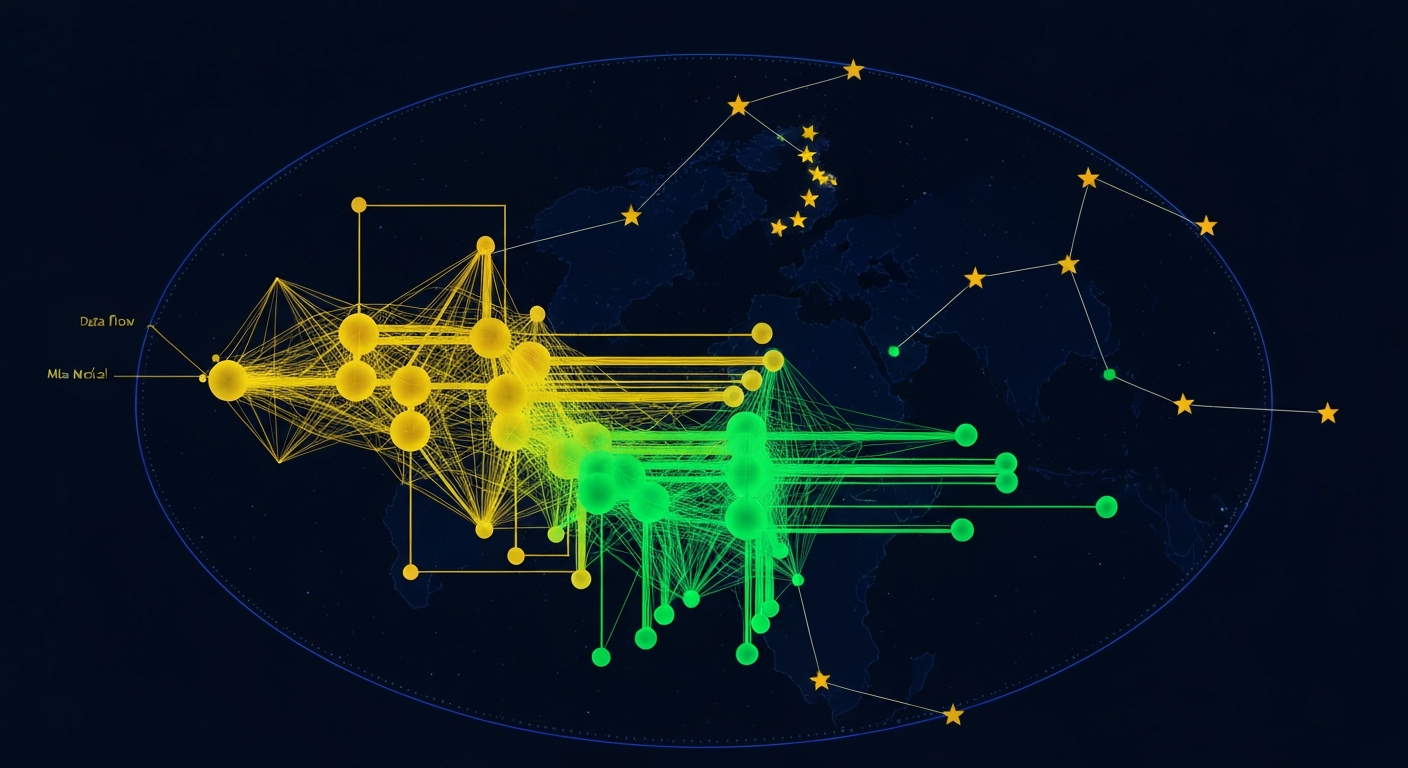
European enterprises deploying AI systems under the EU AI Act face a structural paradox when choosing Arthur AI for production monitoring. The platform captures the most sensitive data any AI-deploying organisation holds: real-time model outputs, demographic fairness metrics, LLM conversation streams, and post-market compliance evidence. All of it sits in a Delaware C-Corp's US-jurisdiction infrastructure — directly exposed to CLOUD Act compelled disclosure with no requirement to notify EU customers, regulators, or data subjects.
Arthur AI has positioned itself as the enterprise solution for operationalising responsible AI. For European organisations navigating EU AI Act Art.9 risk management and Art.72 post-market monitoring requirements, that proposition is compelling. But the US intelligence community adjacency of its founding team, combined with the structural CLOUD Act exposure of every US-incorporated SaaS company, creates three distinct and serious paradoxes for EU compliance officers.
Company Profile: Arthur AI Inc.
Arthur AI was founded in 2019 by Adam Wenchel (CEO) and Charles Frisbie (CTO), headquartered in New York, New York. The company is incorporated as a Delaware C-Corp and has raised over $42 million in venture funding across multiple rounds.
Founding team and intelligence community adjacency:
Adam Wenchel, Arthur AI's CEO, served as Director of Innovation at In-Q-Tel — the CIA's venture capital arm — before co-founding Arthur. In-Q-Tel's mandate is to identify and accelerate technology adoption for the US intelligence community. In-Q-Tel portfolio companies receive US government funding and maintain ongoing relationships with the intelligence community. While Adam Wenchel left In-Q-Tel to found Arthur AI, the professional network and institutional knowledge of US government technology requirements that he brings creates an intelligence-adjacent founding context that European enterprises should weigh carefully.
Funding and investor structure:
- TQ Ventures — New York, NY; US VC with portfolio spanning enterprise software and AI infrastructure
- Index Ventures — registered in Jersey (Channel Islands) with offices in San Francisco, CA and London, UK; significant US operations and fund structures governed by US securities law
- Accel — Palo Alto, CA; traditional US venture capital firm with extensive enterprise software portfolio
- Homebrew Capital — San Francisco, CA; seed-stage US VC
All entities with material equity stakes operate under US jurisdiction. Index Ventures' US fund vehicles specifically are subject to US subpoena and court order processes, making the investor structure fully exposed to CLOUD Act upstream disclosure requirements.
Product suite:
- Arthur Scope: Production ML model monitoring for classical machine learning. Tracks data drift, model performance degradation, feature distribution shift, and data quality anomalies across tabular, computer vision, and NLP models.
- Arthur Bench: Open-source LLM evaluation framework for comparing and benchmarking large language model outputs against ground truth or human preference ratings.
- Arthur Shield: Real-time LLM safety guardrails. Monitors live LLM conversations for hallucinations, PII leakage, toxicity, prompt injection attempts, and off-topic responses.
The EU AI Act Post-Market Monitoring Paradox
The EU AI Act (Regulation (EU) 2024/1689) creates specific monitoring obligations that Arthur AI's product suite is designed to address. High-risk AI system operators must maintain:
- Article 9: A risk management system with documented risk identification, estimation, evaluation, and mitigation throughout the AI system lifecycle
- Article 72: Post-market monitoring plans capturing performance, incidents, and compliance deviations in production
- Article 10(2): Bias monitoring to ensure training and operational data remain free from discriminatory patterns
- Article 13: Transparency documentation for deployers including performance envelopes and known limitations
Arthur Scope implements exactly this monitoring infrastructure. For a European bank using AI-driven credit scoring, or a healthcare provider using diagnostic AI, Arthur Scope becomes the system of record for EU AI Act compliance evidence. And this is precisely where the structural exposure concentrates.
The Post-Market Monitoring Sovereignty Paradox:
Under EU AI Act Art.72, high-risk AI system operators must establish post-market monitoring plans that capture real-world performance data and report serious incidents within 15 days (Art.73). Arthur Scope is the operational implementation of this requirement for organisations using the platform.
When Arthur Scope detects that a EU healthcare AI system's performance has degraded — perhaps a diagnostic model drifting toward lower sensitivity on specific demographic groups — it generates an alert. This alert, and the underlying drift data, is stored in Arthur AI's US-jurisdiction cloud infrastructure. The drift signal, which may constitute evidence of an EU AI Act Art.72 reportable incident, can be accessed by US law enforcement via CLOUD Act without notification to the EU healthcare operator.
The paradox is structural: the EU AI Act requires operators to monitor and document AI system performance. Arthur AI provides the monitoring. But the monitoring data itself — the regulatory compliance evidence — is exposed to a legal jurisdiction that operates outside GDPR and EU AI Act notification requirements.
CLOUD Act Score Analysis: Arthur AI
Dimension 1 — Legal Incorporation: 5/25
Arthur AI Inc. is a Delaware C-Corp with principal operations in New York, NY. There is no EU-incorporated subsidiary, no separate EU data processing entity, and no structural separation of EU customer data from US jurisdiction.
Delaware C-Corp incorporation creates full CLOUD Act exposure: US law enforcement can compel Arthur AI to produce customer data, including production monitoring telemetry from EU AI systems, under 18 U.S.C. § 2713.
Score: 5/5 (maximum CLOUD Act exposure)
Dimension 2 — Investor and Ownership Structure: 4/25
All material equity holders — TQ Ventures, Index Ventures US funds, Accel, Homebrew — are subject to US legal process. The founding CEO's In-Q-Tel background creates an intelligence community adjacency that, while not a direct legal exposure, represents an elevated institutional risk factor for EU enterprises deploying high-risk AI systems.
Critically, investor exposure means that any US court order directed at Arthur AI's investors can create secondary disclosure pathways independent of a direct subpoena to the company itself.
Score: 4/5 (high investor exposure, In-Q-Tel adjacency)
Dimension 3 — Data Sensitivity: 5/25
Arthur AI's three product lines collectively capture the most sensitive operational AI data any enterprise holds:
Arthur Scope captures:
- Model input features, including any personal data flowing through production AI systems
- Model output scores and decisions, including credit scores, medical diagnostics, HR assessments
- Feature importance rankings revealing which personal data attributes drive AI decisions
- Performance metrics segmented by demographic groups (fairness monitoring)
- Data drift alerts indicating when operational data deviates from training distribution
Arthur Shield captures:
- Complete LLM conversation transcripts, including user inputs containing PII
- Detected PII instances and their categories (names, addresses, financial data)
- Prompt injection attempts and their content
- Hallucination detection metadata
Under GDPR Art.4(1), personal data processed through Arthur-monitored AI systems that flows into monitoring telemetry constitutes personal data. Under GDPR Art.9, demographic segmentation data used for fairness monitoring may constitute special category data. Under EU AI Act Art.10(2)(f), bias monitoring evidence is specifically required to be retained.
Score: 5/5 (maximum data sensitivity — captures production AI telemetry and LLM conversations)
Dimension 4 — Cloud Infrastructure: 3/25
Arthur AI operates primarily on AWS infrastructure with US East region deployments. There is no publicly documented EU data residency option, EU-specific data processing agreement with dedicated EU infrastructure, or SOC 2 Type II certification explicitly scoping EU customer data to EU AWS regions.
Enterprise deployments may negotiate data residency terms, but without contractual EU isolation, CLOUD Act exposure applies to all customer data regardless of AWS region — since the compelled disclosure obligation runs to Arthur AI Inc. as a US entity, not to AWS's physical infrastructure.
Score: 3/5 (US-primary cloud, no documented EU isolation)
Dimension 5 — EU-Native Alternative Availability: 3/25
The EU-native ML monitoring market is less developed than other enterprise software categories, but credible alternatives exist — primarily in open-source form with enterprise support:
Open-source / self-hosted alternatives (0/25 CLOUD Act exposure):
- Evidently AI (evidently.ai) — Python-based ML monitoring library with dashboards, drift detection, and data quality testing. Open-source, deployable entirely within EU infrastructure. Widely adopted.
- Alibi Detect (Seldon) — UK-based open-source anomaly and drift detection library for ML models. Seldon is a UK company with EU operations.
- NannyML — Belgian startup (Brussels) building ML model performance monitoring for dark data. EU-incorporated.
- MLflow (open-source, Apache Foundation) — Experiment tracking and model registry deployable on EU infrastructure.
Commercial alternatives with EU characteristics:
- Aporia — Israeli company; outside CLOUD Act jurisdiction but also outside EU data sovereignty. EU data processing agreements available.
- Arize AI — US-based (San Francisco), similar CLOUD Act exposure to Arthur AI.
The availability of capable open-source alternatives (Evidently AI, Alibi Detect) deployable within EU infrastructure means enterprises can achieve EU AI Act monitoring requirements without CLOUD Act exposure, albeit with higher internal engineering overhead.
Score: 3/5 (viable open-source alternatives exist; limited EU-native commercial options)
Total CLOUD Act Score: 20/25 — Critical Exposure
| Dimension | Score | Rationale |
|---|---|---|
| D1 — Legal entity | 5/5 | Delaware C-Corp, NYC HQ |
| D2 — Investors | 4/5 | US VCs + In-Q-Tel-adjacent founder |
| D3 — Data sensitivity | 5/5 | Production AI telemetry, LLM conversations, fairness data |
| D4 — Infrastructure | 3/5 | AWS US-primary, no documented EU isolation |
| D5 — EU alternatives | 3/5 | Open-source alternatives viable but commercially thin |
| Total | 20/25 | Critical — unsuitable for EU high-risk AI monitoring without contractual safeguards |
Three EU AI Act Paradoxes
Paradox 1: The Post-Market Monitoring Sovereignty Paradox
EU AI Act Art.72 requires operators of high-risk AI systems to collect and analyse post-market data to verify continued compliance with requirements. This data must be provided to national market surveillance authorities upon request (Art.74). The monitoring data is, by definition, regulatory compliance evidence.
Arthur Scope is the operational system collecting and storing this compliance evidence. When a European autonomous vehicle system shows performance degradation on winter road conditions, Arthur Scope's drift detection fires — generating a potential Art.72 reportable incident signal. When a European recruitment AI shows performance disparities across gender groups, Arthur Scope's fairness monitoring captures the evidence.
The paradox: EU AI Act requires this monitoring data to exist. It is simultaneously GDPR-regulated data (personal data in AI outputs), EU AI Act compliance evidence (required by regulation), and CLOUD Act-accessible data (stored in a US company's cloud). A US court order can compel disclosure of EU AI Act compliance evidence without the EU market surveillance authority — the entity entitled to that evidence under EU law — being notified.
This creates a regulatory evidence sovereignty gap: the US government could obtain proof of EU AI Act compliance or violation before the EU regulator.
Paradox 2: The LLM Guardrail Intelligence Paradox
Arthur Shield is designed to protect LLM deployments — detecting and blocking harmful outputs, PII leakage, and prompt injection attacks. For EU enterprises deploying LLMs in customer-facing applications, Arthur Shield represents a GDPR Art.32 technical and organisational measure: a security control preventing personal data exposure through AI systems.
The paradox emerges from what Arthur Shield must do to protect against PII leakage: it must detect PII in LLM conversations. To detect PII, it must process and log the conversation content. To block prompt injection, it must analyse and store the injected prompts. Arthur Shield becomes a secondary processor of exactly the personal data it is intended to protect.
Under GDPR Art.28, Arthur Shield operating as a data processor requires a data processing agreement with EU GDPR-compliant terms. But Arthur AI Inc.'s US incorporation means that DPA is simultaneously valid under GDPR and subject to override by CLOUD Act compelled disclosure. A US government request for all conversations flagged as containing PII leakage would provide a curated database of EU personal data exposures — the opposite of what GDPR Art.32 intends.
The security tool designed to prevent personal data exposure in AI systems is itself a CLOUD Act-accessible repository of evidence that personal data was exposed.
Paradox 3: The Fairness Audit Evidence Paradox
EU AI Act Art.10(2)(f) requires that training data for high-risk AI systems be "subject to appropriate data governance and management practices" including statistical analysis of relevant characteristics "with a view to identifying possible biases." Arthur Scope's fairness monitoring fulfils this requirement in production: continuous monitoring of model outputs segmented by protected characteristics.
This fairness data is uniquely sensitive for three intersecting legal reasons:
First, GDPR Art.9 exposure: Demographic segmentation in fairness monitoring means the monitoring system must either directly process special category data (race, gender, health status) or infer it from proxy variables. Either way, the resulting fairness metrics are derived from GDPR Art.9 special category data.
Second, regulatory enforcement evidence: A European financial regulator investigating AI-driven credit discrimination would seek exactly the fairness metrics Arthur Scope generates. This evidence — showing historical performance disparities across demographic groups — is the documentary foundation for enforcement action. Storing it in a US-jurisdiction cloud means US law enforcement can access it before or independently of EU regulators.
Third, litigation asymmetry: EU consumers affected by discriminatory AI decisions have rights under EU AI Act Art.85 (right to explanation) and GDPR Art.22 (automated decision-making). The fairness data proving or disproving discrimination against them is held in a US company's cloud. US discovery proceedings could access this evidence in ways that GDPR subject access requests cannot compel from a US-incorporated company.
The regulation designed to prevent algorithmic discrimination generates evidence that is structurally exposed to a legal jurisdiction outside the EU's fundamental rights framework.
EU-Native Alternatives: CLOUD Act Score 0/25
The EU-native ML monitoring stack is primarily open-source, but viable for EU AI Act compliance:
| Solution | Type | Jurisdiction | EU AI Act Coverage |
|---|---|---|---|
| Evidently AI | Open-source (deploy on EU infra) | International (US-founded, OSS) | Data drift, model performance, data quality, fairness metrics — comprehensive |
| NannyML | Commercial (Belgian startup) | Belgium (EU) | Dark data performance monitoring, CBPE estimator |
| Alibi Detect | Open-source (Seldon) | UK | Drift detection, outlier detection, adversarial detection |
| MLflow | Open-source (Apache) | Community-governed | Experiment tracking, model registry |
| Grafana + Prometheus | Open-source | Community-governed | Custom metrics, dashboards — requires ML instrumentation |
For EU high-risk AI system operators, the recommended architecture is:
- Evidently AI for drift and fairness monitoring, deployed on EU-hosted infrastructure (self-managed or EU cloud provider)
- NannyML for production monitoring when ground truth labels are unavailable
- MLflow for experiment tracking and model registry
- EU-hosted logging (Grafana/Loki on Hetzner, OVHcloud, or Scaleway) for LLM conversation monitoring
This open-source stack achieves EU AI Act Art.72 post-market monitoring requirements with zero CLOUD Act exposure. The trade-off is engineering overhead: there is no managed SaaS equivalent that is both EU-native and as feature-complete as Arthur AI's commercial platform.
Practical Recommendations for EU Enterprises
Risk stratification by use case:
| AI System Type | Arthur AI Risk | Recommended Action |
|---|---|---|
| High-risk AI (EU AI Act Annex III) — credit, HR, medical | Critical | Migrate to EU-hosted open-source stack |
| LLM customer-facing with PII exposure | Critical | Replace Arthur Shield with self-hosted guardrails |
| Non-personal-data ML monitoring | Medium | Negotiate EU data residency DPA + SCCs |
| Internal productivity tools | Low-Medium | Contractual safeguards + DPIA |
Data Processing Agreement minimum requirements for EU compliance:
- Explicit EU data residency clause with named EU AWS/Azure/GCP regions
- Sub-processor list restricted to EU entities for EU customer data
- CLOUD Act notification clause obligating Arthur AI to notify EU customers before complying with US court orders (note: Arthur AI cannot legally guarantee this under US law)
- GDPR Art.28 compliant DPA with standard contractual clauses (SCCs) per Commission Implementing Decision (EU) 2021/914
For EU AI Act Art.72 compliance:
- Any AI system classified as high-risk under EU AI Act Annex III should not use US-jurisdiction monitoring infrastructure for post-market monitoring data
- Compliance evidence (drift alerts, fairness metrics, incident logs) should be stored in EU-jurisdiction systems from which CLOUD Act compelled disclosure cannot occur
- Consider the NannyML + Evidently AI open-source stack deployed on Hetzner (German company) as the reference EU-compliant monitoring architecture
Conclusion
Arthur AI's monitoring platform delivers genuine value for enterprise ML observability. The founders' technical depth and the product's coverage across classical ML, LLM evaluation, and safety guardrails reflect a well-built enterprise tool. But for European enterprises deploying high-risk AI systems under the EU AI Act, the structural CLOUD Act exposure is not a configuration issue — it is intrinsic to Arthur AI's Delaware C-Corp existence.
The 20/25 CLOUD Act score reflects maximum data sensitivity (production AI telemetry + LLM conversations + demographic fairness data) combined with a US-primary legal and infrastructure footprint. For high-risk AI system operators who must maintain EU AI Act Art.72 compliance evidence and GDPR-compliant processing, this exposure is incompatible with EU regulatory requirements as currently structured.
The EU-native alternative stack — Evidently AI + NannyML + MLflow on EU-hosted infrastructure — achieves EU AI Act post-market monitoring compliance with zero CLOUD Act exposure. The engineering cost of self-hosting is real but manageable. For enterprises where the compliance risk of US-jurisdiction AI monitoring data is unacceptable, it is the only viable path.
CLOUD Act Score methodology: Five dimensions (D1: Legal entity, D2: Investor structure, D3: Data sensitivity, D4: Cloud infrastructure, D5: EU-native alternative availability), each scored 1-5. Score of 20/25 indicates critical CLOUD Act exposure. Scores above 15/25 indicate the platform requires substantial contractual safeguards before use in EU high-risk AI deployments. EU-native alternatives listed score 0/25 when deployed on EU-hosted infrastructure.
EU-Native Hosting
Ready to move to EU-sovereign infrastructure?
sota.io is a German-hosted PaaS — no CLOUD Act exposure, no US jurisdiction, full GDPR compliance by design. Deploy your first app in minutes.