AppDynamics EU Alternative 2026: Cisco's CLOUD Act Problem with APM and Application Performance Data
Post #4 in the sota.io EU Monitoring Tools Series — EU-Native Observability for GDPR-Compliant Teams
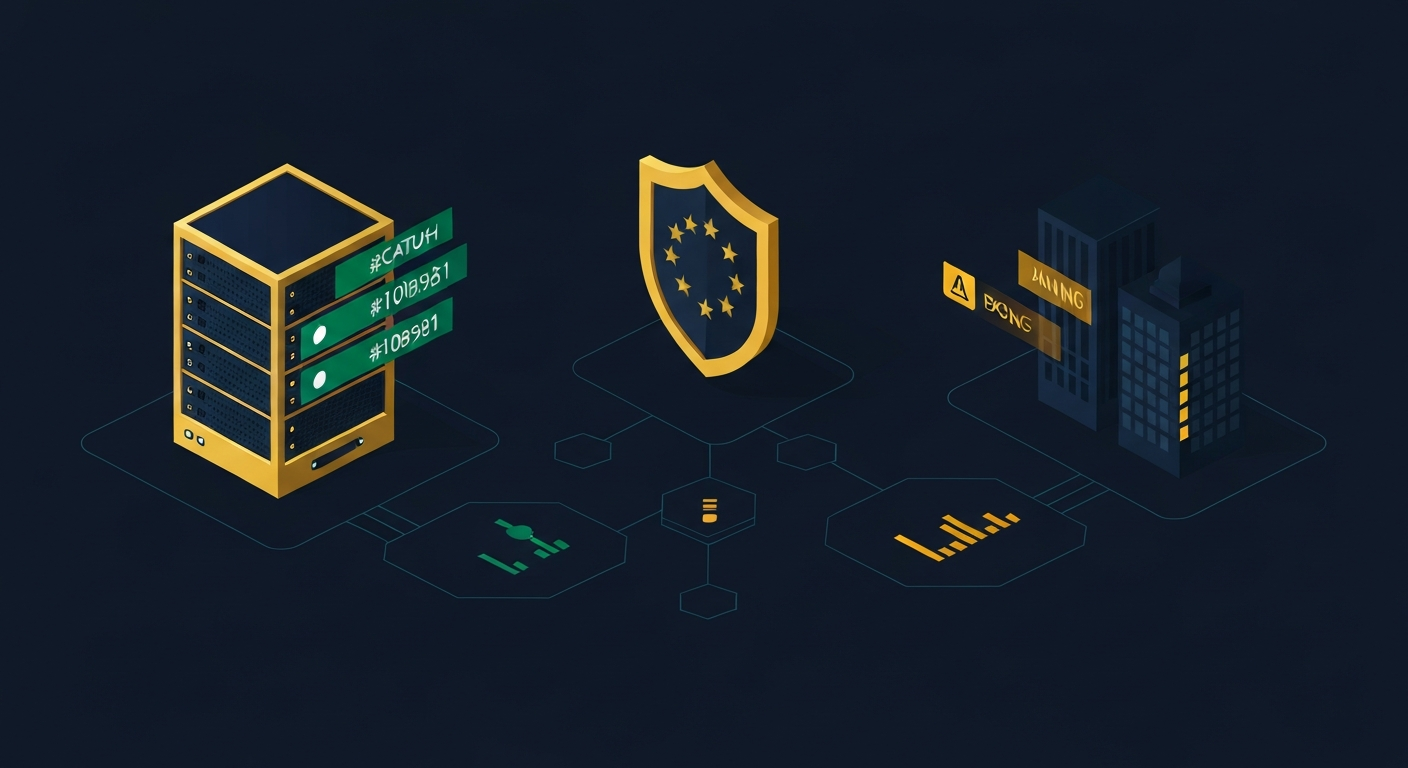
AppDynamics is one of the dominant application performance monitoring (APM) platforms, widely deployed in financial services, healthcare, and enterprise SaaS environments across Europe. But since January 2017, AppDynamics has been wholly owned by Cisco Systems — a US corporation headquartered in San Jose, California.
This ownership structure creates a concrete GDPR compliance problem that EU legal and security teams increasingly flag in vendor assessments: Cisco is subject to the US CLOUD Act, which means US federal authorities can compel Cisco — and its subsidiary AppDynamics — to hand over data stored in AppDynamics Cloud regardless of where that data physically resides.
This guide covers the Cisco acquisition structure, why APM data qualifies as personal data under GDPR, what Cisco's data residency options do and do not protect against, and which EU-native or self-hosted alternatives eliminate the jurisdictional risk entirely.
The Cisco Acquisition: AppDynamics Since January 2017
AppDynamics was founded in 2008 by Jyoti Bansal and had filed for an IPO by early 2017. On the eve of the IPO — literally the day before the roadshow would have commenced — Cisco Systems acquired AppDynamics for $3.7 billion in an all-cash transaction that closed January 24, 2017.
The acquisition made AppDynamics a wholly owned subsidiary of Cisco. Today AppDynamics is marketed as part of Cisco's Full-Stack Observability (FSO) platform, alongside Cisco Meraki, Cisco ThousandEyes, and other monitoring products acquired through Cisco's M&A strategy.
Cisco Systems Inc. is incorporated and headquartered in the United States. It is listed on NASDAQ (CSCO) and subject to all US federal laws, including the Clarifying Lawful Overseas Use of Data Act — the CLOUD Act.
Why Cisco + CLOUD Act = Structural GDPR Risk
The CLOUD Act (18 U.S.C. § 2713) requires US electronic communications providers and their subsidiaries to produce data stored anywhere in the world in response to a valid US court order, National Security Letter, or FISA request. The provider cannot refuse on the basis that the data is stored in an EU data center.
Key structural facts:
- Cisco is the data controller/processor parent. AppDynamics data flows through Cisco's infrastructure and Cisco's legal entity bears ultimate compliance obligations.
- EU data centers do not help. Cisco offers AppDynamics data hosting in EU regions (Frankfurt, Dublin). But CLOUD Act jurisdiction attaches to the provider, not the storage location. A US DOJ subpoena to Cisco covers EU-stored data just as fully as US-stored data.
- Data Transfer Impact Assessment (DTIA) obligation. Under Schrems II (C-311/18) and EDPB Recommendations 01/2020, EU data exporters must assess whether a third country's laws allow law enforcement access that goes beyond what is necessary in a democratic society. The CLOUD Act consistently fails this assessment for high-sensitivity data categories.
- AppDynamics SaaS is not a separate legal entity. Unlike some carve-out structures (separate EU GmbH with ring-fenced operations), AppDynamics operates as a Cisco business division — its data processing is inseparable from Cisco's US legal obligations.
APM Data Is Personal Data Under GDPR
This is the point many organisations underestimate when evaluating APM tools. Application performance monitoring instruments production applications at a very deep level, and the data it captures is frequently GDPR-relevant personal data under Article 4(1).
What AppDynamics Captures
HTTP request tracing:
- Full URL paths including query parameters (
/api/users?email=user@company.com) - POST request body snapshots (configurable, but often captures form fields)
- HTTP headers including cookies and Authorization tokens
- Response times correlated with specific user sessions
Database query snapshots:
- SQL query text including WHERE clauses that may contain user identifiers
SELECT * FROM users WHERE email = 'jane@example.com'is not anonymised- ORM-generated queries from user-triggered operations
Transaction snapshots and call graphs:
- Business transaction flows correlated to individual user sessions
- Error snapshots that include the state of application memory at the point of failure
- Stack traces that may include method parameters containing user data
Session and user tracking:
- Browser real user monitoring (RUM) correlates frontend sessions to backend traces
- Session IDs, user agent strings, IP addresses are GDPR personal data
- Browser Agent captures JavaScript errors and user interactions
GDPR Articles Triggered
| Data Type | GDPR Article | Risk |
|---|---|---|
| Email in SQL query | Art. 4(1) personal data | CLOUD Act disclosure = data breach Art. 33 |
| Session/IP correlation | Art. 4(1) + Recital 30 | Cross-border transfer without legal basis |
| Health data in API traces | Art. 9 special category | Prohibited without explicit consent |
| Authentication tokens | Art. 5(1)(f) integrity | Exposure = security incident |
If Cisco receives a CLOUD Act order covering AppDynamics data, and that data contains query parameters with user emails, session tokens, or health data from a healthcare application, EU organisations face an Art. 33 mandatory breach notification obligation — even if the disclosure was "lawful" under US law.
What Cisco's Data Residency Offers — And What It Doesn't
Cisco has invested in EU data residency for several of its cloud products, including AppDynamics. Here is what is available as of 2026 and where the limits lie:
What Cisco offers:
- AppDynamics SaaS hosted in AWS Frankfurt (eu-central-1) and/or AWS Dublin (eu-west-1) for EU customers who request EU data residency configuration
- Data Processing Agreements (DPAs) under GDPR Art. 28 with Standard Contractual Clauses (SCCs)
- Cisco participates in the EU-US Data Privacy Framework (DPF) for transatlantic transfers
What it doesn't protect against:
- CLOUD Act override of SCCs: SCCs are a contractual mechanism between private parties. A US court order or NSL does not require Cisco to breach its SCCs — it compels Cisco directly, regardless of private contracts
- DPF limitations: The EU-US DPF was negotiated post-Schrems II and covers commercial data transfers. It does not restrict national security access or CLOUD Act orders
- Cisco's own internal data access: Engineering, operations, and support teams in the US may have access to EU customer data for operational purposes, creating additional transfer risks
For most GDPR compliance use cases, EU data residency combined with SCCs reduces incidental transfer risk. It does not eliminate the risk of compelled government access under the CLOUD Act.
NIS2 and DORA: Why APM Jurisdiction Matters for Regulated Entities
NIS2 Directive (EU 2022/2555): NIS2 requires essential and important entities to implement technical and organisational measures for incident detection and response. APM tools are core to incident detection. NIS2 Article 21(2)(b) requires "incident handling" capabilities — but if your APM data is under US CLOUD Act jurisdiction, a law enforcement access event (an "intelligence request") to your APM provider may itself constitute a security incident you are legally required to report to your national CSIRT.
DORA (EU 2022/2554): Financial entities under DORA must maintain ICT risk management frameworks that include detailed logging and monitoring. DORA Article 10 requires detection capabilities for anomalous activities. Crucially, DORA Article 28 sets out the general principles for managing ICT third-party risk (including APM vendors), and DORA Article 30 ("Key contractual provisions") requires specific contractual terms — including audit, access, and inspection rights ensuring no regulatory obstacle prevents the financial entity from auditing and controlling its data. CLOUD Act exposure is increasingly flagged by EU financial regulators (EBA, EIOPA, ESMA) as a DORA third-party risk.
EU-Native and Self-Hosted AppDynamics Alternatives for 2026
Option 1: Self-Hosted OpenTelemetry Stack (Full EU Sovereignty)
Architecture: OpenTelemetry SDK (instrumentation) → Jaeger (distributed tracing) → Prometheus (metrics) → Grafana (dashboards) → Loki (logs)
- Jurisdiction: Your EU infrastructure. No US parent. No CLOUD Act.
- Cost: Infrastructure costs only (Hetzner, Scaleway, OVHcloud — from €20-€200/month depending on scale)
- OpenTelemetry is a CNCF (Linux Foundation) project with Apache 2.0 / Apache 2.0 licensing. The Foundation is US-based but the software is open source — self-hosting means no cloud provider relationship.
- Jaeger is a CNCF graduated project originally developed by Uber Engineering. Apache 2.0. Self-hosted.
- Prometheus is a CNCF graduated project. Apache 2.0. Self-hosted.
- Suitable for: Teams with DevOps capability, NIS2 essential entities, financial institutions under DORA
Option 2: SigNoz (Open Source APM, APM-Focused Alternative)
- URL: https://signoz.io — open source, self-hostable, cloud option (US-incorporated but self-hosted = no jurisdiction issue)
- Jurisdiction (self-hosted): Your EU infrastructure
- What it provides: Full-stack APM including distributed tracing, metrics, logs, and exception tracking in a single pane — closest to AppDynamics experience in open-source form
- Backend: ClickHouse (open source, can self-host) for time-series data
- License: AGPL-3.0 (open source core) + Enterprise
- GDPR: Self-hosted SigNoz on EU infrastructure = no US data transfer. SigNoz Cloud would introduce US-incorporated provider relationship.
- Suitable for: Teams migrating from AppDynamics who want a similar UX without self-managing the full OTel stack
Option 3: Highlight.io (Open Source Session Replay + APM)
- URL: https://github.com/highlight/highlight — Apache 2.0 open source
- Jurisdiction (self-hosted): Your EU infrastructure
- What it provides: Session replay (frontend), error monitoring, distributed tracing — a Datadog/AppDynamics-lite with strong developer experience
- Self-host: Docker Compose or Kubernetes deployment. EU hosting on Hetzner/Scaleway.
- Suitable for: Product teams that combine RUM (Real User Monitoring) with backend APM
Option 4: Grafana Cloud (EU Region, OSS Core)
- Jurisdiction concern: Grafana Labs Inc. is a Delaware C-Corp (covered in Grafana Cloud EU Alternative). Self-hosted Grafana eliminates the US-parent relationship.
- Self-hosted Grafana + Alloy + Tempo: Full EU-sovereign distributed tracing stack
Option 5: Elastic APM (EU Self-Hosted)
- Jurisdiction concern: Elastic NV is Dutch but Elasticsearch Inc. is a Delaware C-Corp (covered in Elastic Observability EU Alternative). Self-hosted removes the cloud jurisdiction issue.
- Elastic APM + Elasticsearch on EU infra: Strong full-text search on trace data, SIEM integration
Decision Matrix: AppDynamics vs EU Alternatives
| Criterion | AppDynamics (Cisco SaaS) | Self-Hosted OTel Stack | SigNoz (Self-Hosted) | Highlight.io (Self-Hosted) |
|---|---|---|---|---|
| CLOUD Act risk | HIGH (Cisco US Corp) | None | None | None |
| GDPR Art. 28 DPA available | Yes (SCCs) | N/A (own infra) | N/A | N/A |
| EU data residency | Optional (AWS EU) | Your choice | Your choice | Your choice |
| NIS2/DORA vendor risk | HIGH | Low | Low | Low |
| Distributed tracing | Full APM | OTel + Jaeger | Full APM | Partial |
| Infrastructure cost | SaaS pricing | Low (self-managed) | Low (self-managed) | Low (self-managed) |
| Operational overhead | Low | High | Medium | Medium |
| Cisco dependency | Yes | None | None | None |
Practical Migration Path from AppDynamics
Step 1: Instrument with OpenTelemetry first
AppDynamics supports OpenTelemetry correlation. Start by adding OTel SDK instrumentation alongside AppDynamics — this gives you a migration path without a flag day:
# Java example — add OTel agent alongside AppDynamics
java -javaagent:opentelemetry-javaagent.jar \
     -Dotel.exporter.otlp.endpoint=https://your-collector.eu \
     -Dotel.service.name=my-service \
     -jar myapp.jar
Step 2: Deploy EU-hosted OTel Collector
# docker-compose.yml — EU collector (Hetzner/Scaleway)
services:
  otel-collector:
    image: otel/opentelemetry-collector-contrib:latest
    ports:
      - "4317:4317"   # gRPC
      - "4318:4318"   # HTTP
    volumes:
      - ./otel-config.yaml:/etc/otelcol/config.yaml

  jaeger:
    image: jaegertracing/all-in-one:latest
    ports:
      - "16686:16686"  # UI
Step 3: Validate trace completeness before cutting over
Run both AppDynamics and OTel in parallel for one sprint. Compare transaction coverage, latency P99 values, and error rates. Cut over when OTel matches AppDynamics coverage.
Step 4: DPIA update
Update your Data Protection Impact Assessment (DPIA) to reflect the new architecture. The shift from Cisco SaaS to self-hosted OTel is a significant change to your processing activities (GDPR Art. 35) — it reduces risk, but it must be documented.
Conclusion
AppDynamics delivers strong APM capabilities, but its Cisco ownership structure means EU organisations face a persistent CLOUD Act risk that cannot be contractually eliminated. For every HTTP trace that contains a user email in a query parameter, every SQL snapshot that captures a WHERE clause with personal data, and every session recording that ties a user identity to a performance event — that data is one US court order away from compelled disclosure to US federal authorities, regardless of where it is physically stored.
The EU-native path is self-managed: OpenTelemetry for instrumentation (open standard), Jaeger or SigNoz for trace storage and querying, Prometheus + Grafana for metrics, all running on EU infrastructure under EU jurisdiction. For teams that cannot manage self-hosted infrastructure, the lack of a credible, large-scale EU-incorporated APM SaaS vendor remains a gap in the EU cloud ecosystem — one that EU-native infrastructure providers like sota.io are well-positioned to help close through managed hosting of the open-source stack.
Recommended for GDPR-compliant EU teams: Self-hosted OpenTelemetry + SigNoz on Hetzner, Scaleway, or OVHcloud. Full data sovereignty. No US parent. No CLOUD Act exposure.
Part of the sota.io EU Monitoring Tools Series — comprehensive guides to EU-sovereign observability for teams operating under GDPR, NIS2, and DORA.
EU-Native Hosting
Ready to move to EU-sovereign infrastructure?
sota.io is a German-hosted PaaS — no CLOUD Act exposure, no US jurisdiction, full GDPR compliance by design. Deploy your first app in minutes.