Alation EU Alternative 2026: The Data Intelligence Platform Under US Jurisdiction — The Metadata Paradox
Post #1279 in the sota.io EU Data Governance Series
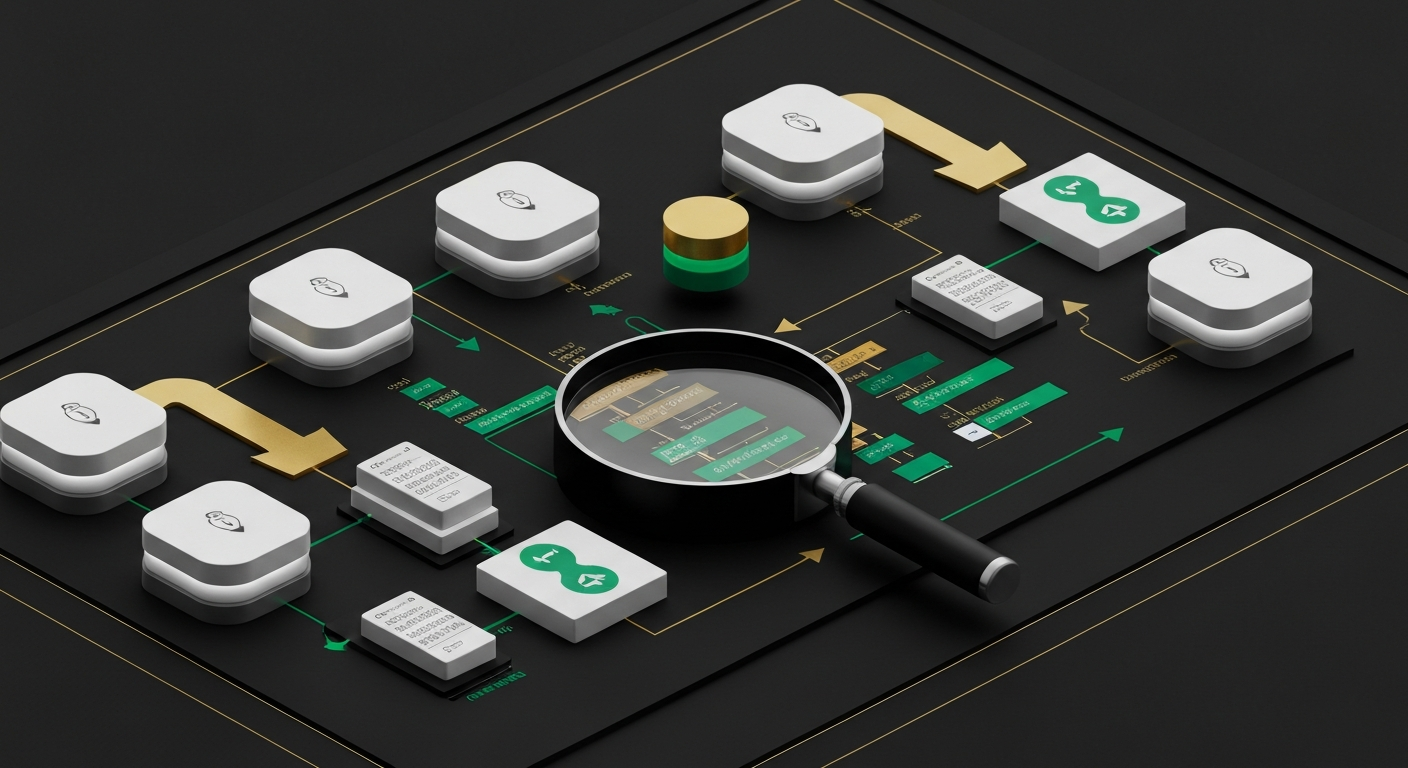
"We don't store your data. We store metadata about your data." It is Alation's most common response to data sovereignty questions. The answer is technically accurate and functionally misleading. When Alation catalogues your enterprise data estate — your GDPR Article 30 Register of Processing Activities architecture, your PII classification labels, your query behavioral analytics, your data lineage maps, your stewardship assignments — it accumulates what intelligence agencies call pattern of life analysis: a detailed map of how your organisation interacts with sensitive information.
That map sits in a US-incorporated cloud platform. Under 18 U.S.C. § 2703(a), the Stored Communications Act predecessor to what became the CLOUD Act framework, the US government does not need your data to understand your compliance posture, your sensitive data locations, or your data governance strategy. It needs Alation.
This is the Metadata Paradox: the more intelligence Alation accumulates about your data estate to make it useful, the more intelligence about your data estate becomes subject to US jurisdiction.
Alation Inc. — Corporate Anatomy
Alation was founded in 2012 by Satyen Sangani and Aaron Kalb. Both founders were Berkeley graduates with prior experience at Oracle and Palantir respectively. The company is incorporated as Alation Inc., a Delaware C-Corporation, headquartered at 3080 Olcott Street, Suite B110, Santa Clara, California 95054. There is no EU holding structure, no European subsidiary with meaningful data control authority, and no data processor entity incorporated under EU law.
The company has raised approximately USD 340 million across multiple funding rounds:
- Series A (2014): USD 9M — Costanoa VC, American Family Ventures
- Series B (2017): USD 23M — Costanoa VC, Hewlett Packard Pathfinder
- Series C (2019): USD 50M — Icon Ventures, Costanoa VC
- Series D (2020): USD 110M — Riverwood Capital, ISAI (Paris, FR), Sanabil Investments (Saudi Arabia PIF)
- Series E (2021): USD 110M — Snowflake Ventures, Salesforce Ventures, Databricks Ventures, Thrive Capital, Icon Ventures, Costanoa VC
The Series E is significant. Two of Alation's most prominent investors are Snowflake Ventures (Snowflake Inc., NASDAQ: SNOW) and Databricks Ventures (Databricks Inc., San Francisco, CA — valuation ~USD 62B). Both are major US technology platforms with their own CLOUD Act exposure profiles. We return to the Snowflake dimension below.
Alation has filed for a Nasdaq IPO multiple times, most recently discussed for 2024. The IPO has been repeatedly postponed, most recently due to market conditions in SaaS multiples compression. This creates its own governance dimension explored in the D2 analysis below.
Why "Data Intelligence" Changes the Sovereignty Calculus
Alation coined the term "data intelligence platform" to differentiate itself from conventional data catalog tools. The distinction matters for sovereignty analysis.
A conventional data catalog stores: table names, column names, data types, row counts. Static metadata about database structure. Low sensitivity.
A data intelligence platform stores something categorically different:
Behavioural Analytics: Alation tracks who queries which tables, at what frequency, from which applications. It builds user-centric profiles: "this analyst accesses GDPR-sensitive customer tables 47 times per week, primarily through Business Intelligence tools, with elevated access patterns around quarter-end reporting." For EU enterprises, this behavioral log is a map of who in your organisation handles personal data and when.
Stewardship Intelligence: Alation assigns data stewardship roles — who is the responsible owner for each sensitive data domain, which teams certify data quality for DORA-reportable financial metrics, which data assets are flagged as in-scope for NIS2 incident reporting. This organisational intelligence reveals your compliance governance structure.
Data Trust Scores: Alation's machine learning engine generates trust scores for datasets — indicating which tables are certified, which are stale, which are high-confidence for regulatory reporting. For a financial services firm, trust score metadata reveals which datasets underpin regulated calculations.
PII and Sensitive Data Classification Labels: Alation integrates with data classification tools (Immuta, Privacera, BigID) to annotate catalog entries with sensitivity classifications. Column customer_email tagged PII_GDPR_ART9_CATEGORY. Table clinical_trial_results tagged PHI_HIPAA_SPECIAL. These classification labels, stored in Alation's catalog, are a complete map of where your most sensitive data lives.
None of this is "just metadata." It is operational intelligence about your compliance architecture.
CLOUD Act Exposure Score: 19/25
We apply the five-dimension CLOUD Act exposure framework developed across this series.
Dimension 1: US Corporate Structure — 5/5
Alation Inc. is incorporated in Delaware. There is no EU holding entity, no data controller incorporated under EU Member State law, and no structural firewall between Alation's US parent and EU customer data. The maximum score applies: all data processing agreements are with a US entity that falls under CLOUD Act jurisdiction.
The absence of an EU subsidiary with genuine data control authority means that GDPR-compliant DPAs signed by EU customers do not change the jurisdictional reality: the underlying legal entity processing and storing data is subject to US law.
Dimension 2: Investor and Institutional Dependencies — 4/5
The Series E investor composition creates the highest-risk institutional exposure in Alation's history. Snowflake Ventures holds board observer rights as part of its investment. Snowflake Inc. is a US public company (NYSE: SNOW) subject to SEC reporting, US tax law, and CLOUD Act jurisdiction. Its investment in Alation creates a governance dependency: Snowflake's shareholder obligations mean that US regulatory or law enforcement inquiries directed at Snowflake-adjacent companies (including portfolio investments) receive institutional support.
Databricks Ventures presents similar exposure. Databricks is a US-incorporated company (San Francisco) with significant US government cloud contracts through its Databricks Government Cloud offering. Databricks' enterprise clients include US federal agencies. This institutional proximity to US federal data infrastructure increases the probability that Databricks-adjacent companies have pre-existing relationships with US intelligence consumers.
The one mitigating factor in the Series D is ISAI, a Paris-based venture capital firm (Isai SAS, Paris, FR). ISAI is EU-incorporated with no US reporting obligations. However, ISAI holds a minority position, and EU minority positions do not override the governance authority of a US-majority investor syndicate.
The IPO postponement creates an additional dynamic. Alation has repeatedly prepared SEC Form S-1 filings for public market listing. SEC registration would subject Alation to the full scope of US securities law, Exchange Act reporting requirements, and enhanced exposure to shareholder derivative actions that could require disclosure of sensitive business information. The ongoing IPO preparation — even without final filing — means Alation's legal and compliance infrastructure is oriented toward US capital markets compliance, not EU data sovereignty architecture.
Score: 4/5.
Dimension 3: Data Content Sensitivity — 4/5
This dimension scores higher for Alation than for Collibra (which scored 3/5), for a structural reason.
Collibra's primary exposure was through GDPR Article 30 Register of Processing Activities stored in its policy management modules. A CLOUD Act compelled disclosure of Collibra data would reveal your data processing map.
Alation stores something additionally sensitive: behavioral intelligence about data access patterns. Query logs are operational records of who accessed what sensitive data when. For a financial services firm under DORA, query logs to trading systems tables reveal market position management patterns. For a healthcare enterprise under GDPR Article 9, query logs to clinical data tables reveal research and patient management workflows. For a company under NIS2, query logs to security-critical operational technology metadata reveal the architecture of critical system monitoring.
The classification label exposure is equally significant. Alation's integrations with BigID, Privacera, and Immuta mean that classification annotations from these external tools are imported into Alation's catalog. A single Alation data store therefore aggregates classification labels from multiple compliance tools — creating a comprehensive sensitivity map that goes beyond what any single tool would contain alone.
The residual factor preventing 5/5 is that Alation does not store the underlying data itself. A CLOUD Act order targeting Alation yields the intelligence layer, not the production database content. For most adversarial scenarios, the intelligence layer is sufficient. For some high-sensitivity scenarios (content of classified documents, exact financial transaction records), the production database remains shielded.
Score: 4/5.
Dimension 4: US Personnel and Operational Control — 3/5
Alation's operational control is US-based. The CEO (Satyen Sangani), CTO, and executive leadership team are all located in the United States, primarily the San Francisco Bay Area. Strategic and operational decisions about data architecture, security policies, and legal compliance responses are made from US-based leadership.
The mitigating factor is Alation's engineering structure. Alation has a significant engineering presence in Bengaluru, India — approximately 35-40% of the engineering organisation by headcount. This non-US engineering concentration is larger than many comparable US SaaS platforms. While it does not reduce the US legal exposure (India is not party to CLOUD Act protections from EU perspective), it does mean that the daily operational decisions about data architecture are distributed across multiple jurisdictions.
EU customers also have the option to engage Alation's European account teams (primarily in the UK and Germany), though these are sales and customer success organisations without data control authority.
Score: 3/5.
Dimension 5: Cloud Infrastructure and Data Residency — 3/5
Alation's cloud-native deployment runs primarily on AWS us-east-1 and us-west-2 regions. EU customers on the standard cloud offering have their catalog data processed in US AWS regions. Alation has not published an EU data residency commitment comparable to Salesforce's EU Data Hosting or SAP's EU Access program.
The mitigating factor is Alation's Connected Sheets and on-premises connector architecture. Alation's Open Connector Framework (OCF) supports on-premises deployment of crawl agents. Enterprises can deploy OCF agents within their own network perimeter, meaning that source system credentials and initial metadata extraction occur locally. However, the aggregated catalog data — including the behavioral analytics, trust scores, and classification labels — is transmitted to and stored in Alation's cloud infrastructure.
For EU enterprises with on-premises data infrastructure, this creates a partial mitigation: the initial extraction occurs locally, but the intelligence product is cloud-resident and US-subject.
Alation also offers a self-managed deployment option (formerly "on-premises Alation") for large enterprise customers. Under this model, the entire Alation platform runs within the customer's infrastructure. This configuration removes the cloud-based CLOUD Act exposure entirely — but eliminates the ML-powered features (Connected Data Intelligence, query fingerprinting at scale, behavioral analytics) that constitute Alation's core differentiation. Self-managed Alation is effectively a different product.
Score: 3/5.
Total CLOUD Act Score: 19/25
| Dimension | Score | Driver |
|---|---|---|
| D1 Corporate Structure | 5/5 | Delaware C-Corp, no EU entity |
| D2 Investor Dependencies | 4/5 | Snowflake Ventures + Databricks Ventures Series E |
| D3 Data Sensitivity | 4/5 | Query behavioral analytics + PII classification labels |
| D4 US Personnel Control | 3/5 | US leadership, India engineering partially mitigates |
| D5 Cloud Infrastructure | 3/5 | AWS US-primary, on-prem option loses ML features |
| Total | 19/25 | High CLOUD Act Exposure |
The Snowflake Double Exposure
The Snowflake Ventures investment creates a governance dimension worth examining in isolation. In May 2024, Snowflake confirmed a significant security breach affecting 165+ enterprise customers, including AT&T (data affecting approximately 110 million Americans), Ticketmaster, Advance Auto Parts, and Santander Bank. The breach was attributed to credential-based attacks facilitated by the absence of mandatory multi-factor authentication on Snowflake customer accounts.
EU enterprises that use both Snowflake as a data warehouse and Alation as a data intelligence layer are exposed to what we term the Double Exposure Architecture: their production data lives in Snowflake (CLOUD Act exposure via Snowflake Inc., NYSE: SNOW), while their intelligence about that data — catalog entries, query patterns, lineage maps, stewardship assignments — lives in Alation (CLOUD Act exposure via Alation Inc., Delaware). A single compelled disclosure targeting either platform yields a significant portion of the combined picture.
The institutional relationship reinforces this: Snowflake Ventures' board observer rights at Alation mean that a US legal proceeding targeting Snowflake-adjacent platforms would include Alation within its orbit of institutional cooperation.
This is not a theoretical risk. The 2024 Snowflake breach demonstrated that enterprise-grade US cloud platforms are valid targets for credential-based extraction. The CLOUD Act provides a legal mechanism for the same extraction with government authorization rather than adversarial exploitation.
The IPO Governance Question
Alation's repeated IPO preparations create a structural governance uncertainty that EU Chief Data Officers should understand.
An IPO-stage company files a Form S-1 registration statement with the SEC. S-1 filings include: a description of the business, material risk factors (which must include information about significant customers and enterprise sales patterns), legal proceedings (which can reveal government cooperation obligations), and management discussion of operational infrastructure. S-1 filings are public documents.
For EU enterprises considering multi-year data governance vendor relationships — the norm for data intelligence platforms where catalog population is a multi-year project — an IPO creates specific risks:
Customer Concentration Disclosure: If an EU enterprise represents more than 10% of Alation's revenue, US securities law may require disclosure of that customer relationship in S-1 filings and subsequent 10-K reports. Customer relationship disclosures in public securities filings cannot be qualified by GDPR Article 89 exceptions.
Government Inquiry Disclosure: S-1 filings require disclosure of material government inquiries. If Alation has received CLOUD Act orders, the existence (though not necessarily the content) of material legal proceedings must be disclosed once Alation is a public reporting company.
Valuation-Driven Decision-Making: Post-IPO SaaS companies face quarterly earnings pressure from US public markets. This can lead to vendor decisions — feature prioritisation, EU market investment, data residency programme funding — that prioritise US market requirements over EU customer sovereignty needs.
Alation has not yet gone public. But the infrastructure, legal team, and investor expectations are oriented toward public markets. EU enterprises should include IPO governance risk in vendor assessment.
EU-Native Alternatives Without the CLOUD Act Exposure
Several EU-native data intelligence platforms provide comparable capabilities to Alation without US jurisdictional exposure.
DataGalaxy — Bordeaux, France
DataGalaxy SAS is incorporated in Bordeaux, France. The company is VC-backed by French and European funds (Bpifrance, Revaia) with no US investor board representation. DataGalaxy operates its cloud platform on OVHcloud (FR) and AWS EU-West regions under a French data controller entity. CLOUD Act score: 0/25 by corporate structure (no US incorporation, no US investor control).
DataGalaxy covers data catalog (with OCF-style connector architecture), business glossary, data lineage, and data quality dimensions. Its stewardship module is less developed than Alation's behavioural analytics layer, but for GDPR Article 30 compliance use cases (the primary EU driver), it provides full coverage.
Castor — Amsterdam, Netherlands
Castor (Castor B.V.) is incorporated in Amsterdam under Dutch law. Founded 2020, Castor provides a modern data catalog focused on cloud-native data stacks (Snowflake, BigQuery, dbt, Fivetran). Investment: European funds primarily. CLOUD Act score: 0/25.
Castor's differentiation is ease of deployment — the catalog auto-populates from cloud data warehouse metadata, reducing the typical multi-month deployment timeline. For organisations primarily on Snowflake, this is particularly relevant (though it means data catalog metadata about a CLOUD Act-exposed warehouse still exists in a EU-native tool).
OpenMetadata — Open Source (Apache License 2.0)
OpenMetadata is an Apache 2.0 open-source data catalog framework. The project is governed by the OpenMetadata Foundation, a US-incorporated nonprofit (which creates a nominal corporate structure, though nonprofit foundations have different CLOUD Act exposure profiles than commercial entities). The software itself can be self-hosted within EU infrastructure with no cloud dependency.
For EU enterprises with engineering capacity, self-hosted OpenMetadata represents zero CLOUD Act exposure: all catalog data, query analytics, and classification labels remain within EU-controlled infrastructure. The trade-off is operational complexity and absence of vendor SLA commitments.
Ataccama — Prague, Czech Republic
Ataccama s.r.o. is incorporated in Prague, Czech Republic. Ataccama specialises in data quality and data governance, with a catalog module added in recent releases. US operations exist (Ataccama has a US sales entity), but the data controller and primary engineering entity is Czech. CLOUD Act score: 2/25 (D4 partial for US personnel in sales/pre-sales roles).
Ataccama's strength is data quality automation — DQ rules that feed catalog trust scores. For financial services firms under DORA where data quality certification underpins regulatory reporting, Ataccama's DQ-first approach can be superior to catalog-first approaches like Alation.
What EU Data Teams Should Demand
The Metadata Paradox creates a checklist for EU enterprises evaluating data intelligence platforms.
Ask about behavioral analytics data location. Query logs and behavioral analytics are the highest-sensitivity Alation data. Where are these logs stored? On which cloud provider, in which region, under which legal entity? If the answer is "AWS us-east-1 under Alation Inc.," the behavioral map of your data access patterns is US-jurisdiction.
Audit the classification label aggregation. If you use a third-party classification tool (BigID, Privacera, Immuta) that exports labels to Alation, you have concentration risk: your sensitivity classification map now exists in multiple CLOUD Act-exposed platforms. Request contractual commitments about classification label handling.
Evaluate on-premises and the feature tradeoff. Alation's self-managed deployment eliminates cloud exposure but removes the ML-driven behavioural analytics and trust score features. Understand which features your team actually uses before committing to a deployment model.
Request EU data residency roadmap. Alation does not currently offer EU data residency guarantees comparable to Salesforce EU or SAP EU Access. Ask for a contractual commitment or a product roadmap item. Absence of EU data residency from a vendor's roadmap is a signal about EU market investment priority.
Consider the Snowflake integration pattern. If your data warehouse is Snowflake and your data intelligence platform is Alation, both platforms are US-incorporated, Snowflake-investor-linked, and AWS-primary. Diversifying either layer reduces exposure concentration.
Series Context: EU Data Governance Tools 2026
This post is the second in the five-part EU Data Governance Series examining major enterprise data governance platforms under CLOUD Act and EU Digital Sovereignty law:
- Collibra (17/25): The Belgian Paradox — Founded Brussels, Incorporated Delaware
- Alation (19/25): The Metadata Paradox — Data Intelligence Under US Jurisdiction — this post
- Atlan (coming): Active Metadata Platform, Singapore/US dual structure — Lauf 1367
- BigID (coming): Data Intelligence with Israel-US dual HQ — Lauf 1368
- Comparison Finale (coming): Side-by-side scoring + EU-native vendor matrix — Lauf 1369
The series addresses a gap in EU enterprise guidance: most GDPR and NIS2 compliance guidance focuses on data processors and cloud providers. Enterprise data governance platforms occupy a distinct position — they hold not data, but data intelligence. That distinction does not reduce CLOUD Act exposure; in some scenarios it increases it.
Decision Framework
| Platform | CLOUD Act Score | Key Risk | Best For |
|---|---|---|---|
| Alation | 19/25 | Behavioral analytics + Snowflake investor link | — |
| Collibra | 17/25 | Belgian HQ paradox, RoPA storage | — |
| DataGalaxy | 0/25 | None (EU-native) | GDPR Article 30, EU data teams |
| Castor | 0/25 | None (EU-native) | Cloud-native stacks, Snowflake |
| OpenMetadata | 0/25 (self-hosted) | Operational complexity | Engineering-capable EU orgs |
| Ataccama | 2/25 | Minor US sales presence | Data quality + governance |
For EU enterprises under GDPR, NIS2, or DORA where data catalog metadata includes classification labels, stewardship records, and behavioral analytics: the 19-point gap between Alation and DataGalaxy is not abstract. It is the difference between intelligence about your data governance architecture being subject to US compelled disclosure and that intelligence remaining exclusively within EU jurisdiction.
The Metadata Paradox resolves simply: if the intelligence is valuable enough to buy a platform for, it is valuable enough to protect with EU-native infrastructure.
sota.io is EU-native managed PaaS — 100% GDPR compliant, no CLOUD Act exposure, hosted on Hetzner Germany. No US parent. No CLOUD Act. Deploy your data governance tooling on EU infrastructure →
EU-Native Hosting
Ready to move to EU-sovereign infrastructure?
sota.io is a German-hosted PaaS — no CLOUD Act exposure, no US jurisdiction, full GDPR compliance by design. Deploy your first app in minutes.