Acronis EU Alternative 2026: CLOUD Act Risk, GDPR Compliance, and Bareos vs Restic
Post #1157 in the sota.io EU Cloud Sovereignty Series — EU Backup & Recovery Series #2/5
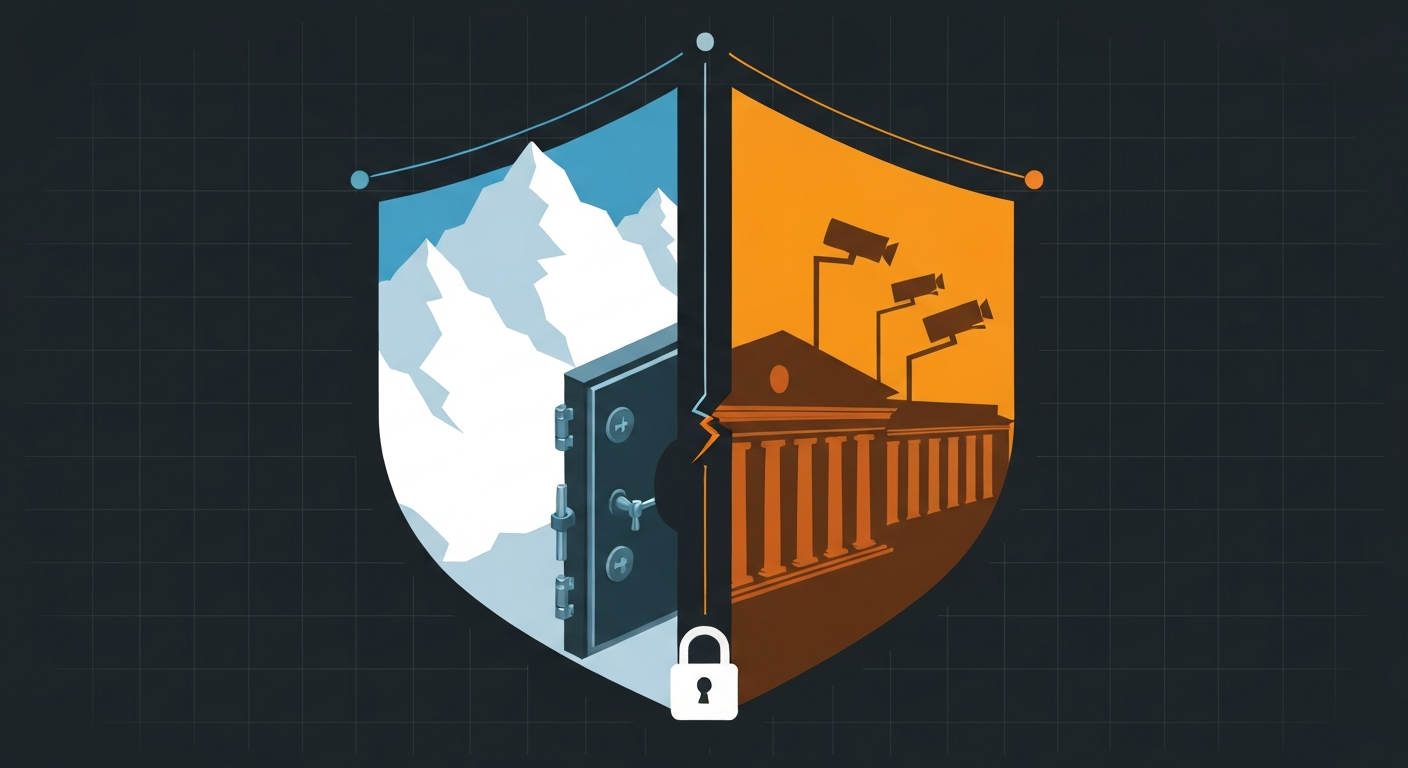
Acronis presents one of the most carefully constructed corporate narratives in enterprise software: a Swiss headquarters, a privacy-first brand position, and marketing that emphasises European data sovereignty. Yet beneath that narrative sits a US operational subsidiary, a dedicated US federal government contractor entity, and a Goldman Sachs investment — each of which creates CLOUD Act exposure for the backup data of EU organisations.
Backup data is uniquely sensitive under GDPR. It contains a complete, point-in-time copy of everything your organisation holds: databases, emails, credentials, personal records, system configurations. When that backup infrastructure has any US-jurisdictional link, it creates a direct pathway for US surveillance law to reach EU personal data — regardless of where the actual backup files are stored.
This post scores Acronis on our 25-point CLOUD Act exposure methodology, maps the five specific GDPR Article 44 transfer risks, and presents EU-native alternatives: Bareos (Germany), SEP sesam (Germany), BorgBackup, and Restic on Hetzner — all at 0/25 CLOUD Act exposure.
Acronis: The Swiss Brand with US Operational Roots
Acronis was founded in 2003 and built its reputation on backup and disk imaging software. Today it markets Acronis Cyber Protect Cloud as a unified cybersecurity and backup platform for managed service providers (MSPs).
The Swiss Holding (Partially Positive): Acronis AG is incorporated in Schaffhausen, Switzerland. Swiss data protection law (the revised Federal Act on Data Protection, nFADP, in force since September 2023) is largely aligned with GDPR principles and includes transfer restrictions similar to Chapter V. A Swiss corporate parent is a stronger privacy shield than a Cayman Islands or Delaware holding company. Switzerland is not an EU Member State, but it has adequacy status under GDPR (Commission Decision 2000/518/EC), which was reconfirmed pending a formal reassessment under the new Swiss nFADP.
The US Operational Reality: Beneath the Swiss parent, Acronis operates substantial US infrastructure. Acronis, Inc. is a US-based entity headquartered in Burlington, Massachusetts (some sources list Woburn or Waltham — the Burlington MA area). This entity employs hundreds of US-based engineers, sales staff, and support personnel. Under the CLOUD Act (18 U.S.C. § 2713), any US entity can be compelled to produce data "regardless of where such data is stored." The Swiss parent's structure does not eliminate this risk when a US subsidiary conducts substantial business activities.
Acronis SCS LLC — The Federal Risk: Acronis has a dedicated US Federal Government division: Acronis SCS LLC, based in Woburn, Massachusetts. Acronis SCS holds US federal contracts to provide cybersecurity solutions to US government agencies. This entity is explicitly designed to operate under US Government procurement rules, which require full compliance with US intelligence requirements. The existence of a federal contractor entity within the Acronis corporate family creates a significantly elevated risk profile for EU customers — US intelligence agencies have established legal pathways to data held by or accessible to federal contractors.
The Goldman Sachs Investment: In November 2022, Acronis raised $250 million in a growth equity round led by Goldman Sachs Asset Management. Goldman Sachs Asset Management (GSAM) is a division of The Goldman Sachs Group, Inc., a US financial institution incorporated in Delaware and headquartered in New York City. As a significant investor with board representation and management agreements, Goldman Sachs creates an additional US-jurisdictional hook. US authorities can subpoena US financial institutions to produce documents and communications related to their portfolio companies — including information about corporate operations, data handling practices, and customer relationships.
Earlier Investment: CVC Capital Partners: Acronis raised earlier funding from CVC Capital Partners, a Luxembourg-headquartered private equity firm. CVC is incorporated in the EU and is not subject to US CLOUD Act compulsion in the same way as a US entity. This is a mitigating factor compared to Veeam's Insight Venture Partners (pure US PE, Delaware). However, CVC's international operations and LP relationships with US pension funds and endowments introduce indirect exposure.
CLOUD Act Exposure Score: 14/25
| Dimension | Score | Rationale |
|---|---|---|
| Corporate jurisdiction | 2/5 | Swiss AG parent (strong positive) but US subsidiary Acronis Inc. and Acronis SCS LLC are direct US-jurisdiction entities |
| Data flows | 3/5 | US-region cloud data centers available; agent telemetry, threat intelligence (Acronis Active Protection), and support routing through US infrastructure |
| Investor/PE exposure | 2/5 | Goldman Sachs GSAM (US, significant) + CVC Capital (Luxembourg, lower risk) — mixed profile, better than pure US PE |
| CLOUD Act direct | 4/5 | Acronis Inc. (Burlington MA) and Acronis SCS LLC (Woburn MA) are directly subject; statutory obligations cannot be contractually waived |
| Intelligence links | 3/5 | Acronis SCS LLC holds US federal government contracts — elevated intelligence risk compared to typical enterprise software vendors |
Total: 14/25 — Moderate-High CLOUD Act Exposure
For comparison: Veeam scores 15/25 (higher due to Insight VP's pure-US PE structure), but Acronis SCS's federal contractor role creates a more direct intelligence pathway than Veeam's Kasten acquisition.
Five GDPR Article 44 Transfer Risks
GDPR Article 44 prohibits transfers of personal data to third countries unless an appropriate safeguard exists. When Acronis processes backup data and that processing involves a US entity, each of the following creates a potential Article 44 violation:
Risk 1: Acronis Cloud Data Centers in US Regions
Acronis Cyber Protect Cloud offers customers the choice of data center region. However, the default configuration, the global management plane, and multi-region redundancy features can all result in backup metadata — and in some configurations, backup data itself — flowing to US-based infrastructure.
What gets transferred: Backup job metadata (timestamps, file hashes, deduplication indices), restore point catalogues, agent status telemetry. In some configurations, actual backup data depending on selected cloud region.
GDPR exposure: If EU personal data is included in backups (and for business applications, it always is), routing that data through US infrastructure without a valid transfer mechanism violates Article 44. Standard Contractual Clauses under Acronis's DPA do not override US surveillance law obligations — the Schrems II ruling (C-311/18) established that SCCs cannot override Chapter V-equivalent surveillance frameworks.
Mitigation: Use Acronis on-premises (Acronis Backup Advanced, self-hosted) with EU-based storage targets only. Disable all cloud-connected features. This eliminates most data transfer risks but requires on-premises infrastructure investment.
Risk 2: Acronis SCS LLC — Federal Contractor Jurisdiction
Acronis SCS LLC is a US federal government contractor based in Woburn, Massachusetts. Its existence creates a structural risk that goes beyond typical corporate subsidiary exposure.
The mechanism: Federal contractors operate under US Government procurement rules including the Federal Acquisition Regulation (FAR) and Defense Federal Acquisition Regulation Supplement (DFARS). These rules require contractors to cooperate with US Government investigations and to notify the government of cyber incidents. They can also impose obligations to provide US agencies with access to contractor systems and data.
The EU impact: Acronis SCS LLC shares the Acronis brand, technology platform, and corporate parent with the EU-facing Acronis AG. If US intelligence agencies access Acronis SCS systems, they gain access to the shared technology stack — which includes components deployed globally. Even if EU customer data is technically isolated in Acronis AG systems, shared infrastructure creates potential cross-contamination.
GDPR exposure: Any processing of EU personal data using shared infrastructure or shared software components that are accessible to a federal contractor entity creates a potential Article 44 violation. The risk is structural and cannot be addressed by contractual agreements alone.
Risk 3: Goldman Sachs Investor Access
Goldman Sachs Asset Management's $250M investment in Acronis creates an ongoing US-jurisdictional link through investor rights and board representation.
Standard investor agreements provide:
- Board seat(s) or board observer rights
- Access to financial records, management reports, and operational data
- Information rights covering material business developments
- Due diligence rights for subsequent transactions
The CLOUD Act pathway: Under US law, Goldman Sachs as a US financial institution can be served with a subpoena or national security letter requiring it to produce any documents in its possession relating to Acronis — including information obtained through its investor rights. A subpoena served on Goldman Sachs in New York does not require any action by Acronis AG in Switzerland.
GDPR exposure: If Goldman Sachs's investor information rights cover operational data that includes details of EU customer backup operations (customer names, sectors, backup volumes, system topologies), the information sharing between Acronis AG and Goldman Sachs constitutes a transfer to a US entity without an Article 44 safeguard.
Risk 4: Acronis Agent Telemetry and Active Protection
Every Acronis Cyber Protect installation includes an agent that runs on protected systems. By default, these agents transmit telemetry to Acronis-operated infrastructure.
What the agent transmits:
- License validation: Hardware fingerprints, installed software catalogues, system identifiers sent to Acronis licensing servers
- Active Protection threat intelligence: File behaviour patterns, process signatures, threat detection events sent to Acronis threat intelligence cloud for analysis and sharing
- Crash reports and diagnostics: Full or partial memory dumps, stack traces, system configuration data transmitted on agent failures
- Backup job performance metrics: Deduplication ratios, transfer speeds, error rates aggregated at Acronis cloud analytics
GDPR exposure: Hardware fingerprints and system configuration data from EU infrastructure constitute personal data relating to identified natural persons (system administrators, data subjects whose data the protected system holds). Transmitting this data to US-hosted Acronis infrastructure creates an Article 44 transfer. The Active Protection threat intelligence feature is particularly problematic: it shares file behaviour patterns from protected systems with Acronis's global threat intelligence network, which includes US-operated nodes.
Mitigation: Acronis allows disabling of telemetry and cloud-connected threat intelligence features in enterprise configurations. However, disabling these features requires manual configuration and is not the default. Many MSPs and enterprise customers deploy Acronis without modifying these defaults.
Risk 5: Cyber Protect Cloud MSP Portal and Support Infrastructure
Acronis Cyber Protect Cloud is primarily sold through managed service providers (MSPs). The MSP management portal, billing infrastructure, and technical support system are operated by Acronis at the group level — with significant US infrastructure involvement.
What flows through US infrastructure:
- MSP portal access: Tenant management, billing records, customer subscription data processed through Acronis's global cloud platform
- Support ticket system: Technical support interactions, including diagnostic files, log uploads, and system information shared with Acronis support engineers (some US-based)
- Training and certification platform: Acronis Academy operates on third-party US cloud infrastructure
- Partner portal and licensing: Global partner management system includes US-based operations
GDPR exposure: MSP customers manage EU end-customer data through the Acronis portal. If the portal itself routes data through US infrastructure, or if support interactions involve US-based engineers accessing EU customer data, this creates an Article 44 violation. The DPA between Acronis and the MSP does not resolve the underlying jurisdictional issue.
EU-Native Alternatives: 0/25 CLOUD Act Exposure
The following alternatives are incorporated in EU member states or with EU-only ownership and operations, and score 0/25 on our CLOUD Act exposure methodology.
Bareos — Open Source Enterprise Backup from Cologne
What it is: Bareos (Backup Archiving REcovery Open Sourced) is a fork of Bacula Enterprise, developed and maintained by Bareos GmbH in Cologne, Germany. It is released under GPL2 and provides enterprise-grade backup for heterogeneous environments.
CLOUD Act exposure: 0/25
- Incorporated: Bareos GmbH, Cologne, Germany (EU)
- No US subsidiaries, no US investors, no US infrastructure
- Self-hosted: all data remains on infrastructure you control
- No telemetry by default, no cloud connectivity required
Technical capabilities:
- Director-client-storage daemon architecture (similar to Bacula)
- Supports disk, tape, and cloud storage backends
- File-level, bare-metal, and database backup (PostgreSQL, MySQL, SAP HANA, Oracle with appropriate plugins)
- Encryption: client-side AES-256 with PKI key management
- Deduplication: volume-level, configurable
- Web-based management UI (Bareos WebUI)
Cost comparison:
- Bareos Community (GPL2): Free
- Bareos Subscription (enterprise features + support): Contact for pricing, typically €5,000–€25,000/year depending on scale
- Acronis Cyber Protect Cloud (per-GB pricing): €0.10–€0.15/GB/month for cloud storage = €1,200–€1,800/TB/year
- Annual saving vs Acronis (10TB scale): €10,000–€18,000/year + CLOUD Act exposure eliminated
Limitations: Configuration is more complex than Acronis's unified platform. Requires dedicated infrastructure investment. No integrated EDR/antivirus (unlike Acronis Cyber Protect's unified approach). GUI is functional but less polished than commercial alternatives.
SEP sesam — Enterprise Backup from Waldorf
What it is: SEP sesam is a commercial backup and disaster recovery platform developed by SEP AG, headquartered in Waldorf, Germany. It is targeted at medium-to-large enterprises and supports heterogeneous environments.
CLOUD Act exposure: 0/25
- Incorporated: SEP AG, Waldorf, Germany (EU)
- Founded 1992, privately held by European shareholders
- No US investors, no US subsidiaries
- Certified for BSI C5 infrastructure (German Federal Office for Information Security)
Technical capabilities:
- Unified backup for physical and virtual environments (VMware, Hyper-V, Nutanix, KVM)
- Database backup: SAP HANA, Oracle, SQL Server, PostgreSQL, MySQL
- Microsoft 365 backup (via separate module, optional)
- Immutable backup (WORM storage integration)
- Disaster recovery: bare-metal restore, P2V, V2V
- Replicated backup to Hetzner Object Storage (EU-based, 0/25)
Cost comparison:
- SEP sesam Enterprise: Perpetual license + annual maintenance, typically €15,000–€40,000/year for 50+ VMs
- Acronis Cyber Protect Cloud (50 VMs): ~€3,000–€6,000/year (cloud backup only, without on-prem)
- SEP sesam has higher upfront cost but lower per-VM incremental cost at scale
- TCO advantage: SEP sesam becomes cost-competitive at 30+ VMs with 3-year TCO analysis
BorgBackup — Deduplicating Archiver
What it is: BorgBackup (Borg) is an open-source deduplicating backup program. It is developed by a distributed team of European and international contributors through the Borg Collective, with no US corporate entity controlling development.
CLOUD Act exposure: 0/25
- Open Source (BSD), no owning corporation
- Self-hosted: data stays entirely on infrastructure you control
- Borgmatic: configuration wrapper that simplifies Borg usage
- Can back up to any SSH-accessible server or S3-compatible storage (use Hetzner Object Storage, 0/25)
Technical capabilities:
- Deduplication: chunk-level, variable chunk size
- Compression: lz4, zstd, zlib, lzma
- Encryption: AES-CTR-256 + HMAC-SHA256 (authenticated encryption by default)
- Pruning: flexible retention policies (hourly/daily/weekly/monthly/yearly)
- Remote repositories over SSH
- Borgmatic: YAML-based configuration, pre/post hooks, database backup integration (PostgreSQL, MySQL, MariaDB, SQLite, MongoDB)
Sample Borgmatic configuration for EU deployment:
location:
  source_directories:
    - /var/www
    - /var/lib/postgresql
  repositories:
    - path: ssh://backup@hetzner-storage-box/./backups
      label: hetzner-storage

retention:
  keep_daily: 7
  keep_weekly: 4
  keep_monthly: 6

encryption_passphrase: "your-strong-passphrase"

hooks:
  postgresql_databases:
    - name: all
      hostname: localhost
Cost: Borg/Borgmatic is free. Hetzner Storage Box (EU, 0/25): from €3.94/month for 1TB. Hetzner Object Storage: €0.0059/GB/month (€5.90/TB). Total cost for 10TB EU backup: ~€59/month = €708/year vs €12,000–€18,000/year for Acronis.
Restic — Fast, Encrypted Backup
What it is: Restic is a modern backup program written in Go, designed for simplicity, speed, and security. Like Borg, it has no US corporate entity.
CLOUD Act exposure: 0/25
- Open Source (BSD-2-Clause)
- No owning corporation, international contributor community
- Backend: Hetzner Object Storage, any S3-compatible EU provider (OVH Object Storage, Scaleway Object Storage)
Technical capabilities:
- Client-side encryption: AES-256-CTR + SHA-256
- Deduplication: content-defined chunking
- Snapshots with tagging and filtering
- Backends: local, SFTP, S3 (AWS, MinIO, Hetzner), REST
- Parallel backup to multiple repositories
- Integration with restic-backup-docker for containerised environments
Comparison to Borg: Restic uses S3-compatible object storage backends more naturally than Borg (which is SSH-centric). For teams already using S3-compatible EU object storage (Hetzner, Scaleway, OVH), Restic is often simpler to integrate.
GDPR Compliance Comparison Table
| Vendor | CLOUD Act Score | Jurisdiction | Data at Rest | Data in Transit Risk | GDPR Art.44 Status |
|---|---|---|---|---|---|
| Acronis AG | 14/25 | Swiss AG + US subs | US regions available | Telemetry → US by default | ⚠️ Conditional (requires significant hardening) |
| Bareos GmbH | 0/25 | Germany | Self-hosted, EU only | None (self-hosted) | ✅ Compliant |
| SEP sesam | 0/25 | Germany | Self-hosted, EU only | None (self-hosted) | ✅ Compliant |
| BorgBackup | 0/25 | Open Source, no entity | Self-hosted, EU only | None (SSH encrypted) | ✅ Compliant |
| Restic | 0/25 | Open Source, no entity | Self-hosted, EU only | None (encrypted) | ✅ Compliant |
| Proxmox BS | 0/25 | Austria | Self-hosted, EU only | None (self-hosted) | ✅ Compliant |
Migration Guide: Acronis to Bareos
For organisations currently running Acronis Cyber Protect and seeking to migrate to a GDPR-compliant alternative, Bareos provides the most feature-equivalent path for enterprise environments.
Phase 1: Assessment (Weeks 1–2)
Inventory current Acronis usage:
- List all protected systems (agents installed, platforms covered)
- Document backup schedules, retention policies, and restore requirements
- Identify any Acronis-specific features in use: Active Protection EDR, cloud-connected threat intelligence, disaster recovery orchestration
- Assess storage volumes: how much data is backed up, where it is stored (cloud vs on-premises)
Infrastructure requirements for Bareos:
- Bareos Director: 4 vCPU, 8GB RAM, 50GB OS disk (runs on Debian/Ubuntu/CentOS/RHEL)
- Storage Daemon: dedicated server or NAS with sufficient capacity + 20% overhead for catalogues
- WebUI: runs on Director host or separate web server
Phase 2: Parallel Deployment (Weeks 3–6)
Deploy Bareos alongside Acronis. Configure Bareos to protect a subset of systems while Acronis continues to protect the full environment.
Installation on Debian/Ubuntu:
# Add Bareos repository
wget -q https://download.bareos.org/bareos/release/latest/Debian_12/Release.key -O- | gpg --dearmor > /usr/share/keyrings/bareos-keyring.gpg
echo "deb [signed-by=/usr/share/keyrings/bareos-keyring.gpg] https://download.bareos.org/bareos/release/latest/Debian_12/ /" > /etc/apt/sources.list.d/bareos.list

# Install Director, Storage, WebUI, and File Daemon
apt-get update
apt-get install bareos bareos-database-postgresql bareos-webui

# Initialize database
su -s /bin/bash postgres -c "/usr/lib/bareos/scripts/create_bareos_database"
su -s /bin/bash postgres -c "/usr/lib/bareos/scripts/make_bareos_tables"
su -s /bin/bash postgres -c "/usr/lib/bareos/scripts/grant_bareos_privileges"

# Start Bareos services
systemctl enable --now bareos-dir bareos-sd bareos-fd
Configure your first backup job:
# /etc/bareos/bareos-dir.d/job/backup-web-servers.conf
Job {
  Name = "backup-web-servers"
  JobDefs = "DefaultJob"
  Client = webserver01-fd
  FileSet = "LinuxAll"
  Schedule = "WeeklyCycle"
  Storage = EU-Storage
  Pool = Full
  Full Backup Pool = Full
  Incremental Backup Pool = Incremental
  Differential Backup Pool = Differential
  Write Bootstrap = "/var/lib/bareos/%c.bsr"
  Priority = 10
}
Phase 3: Validation and Cutover (Weeks 7–10)
Restore testing checklist:
- Full restore to clean VM: measure RTO
- Database restore: PostgreSQL/MySQL point-in-time recovery test
- File-level restore: individual file recovery from 7-day-old backup
- Bare-metal restore: test P2V recovery for critical Windows servers
- Encryption verification: confirm all backup volumes encrypted at rest
Cutover:
- Decommission Acronis agents on migrated systems
- Retain Acronis for any remaining systems until fully migrated
- Disable Acronis Cloud connection to stop telemetry immediately (even before full migration)
- Cancel Acronis cloud storage subscription after validation
Phase 4: Compliance Documentation (Week 11–12)
Under GDPR Article 30 (Records of Processing Activities), update your ROPA to reflect:
- New backup processor: Bareos GmbH, Cologne, Germany (EU)
- Transfer mechanism: Not required (EU–EU processing)
- Data protection: AES-256 encryption at rest, TLS in transit, access controls
Update your Data Protection Impact Assessment (DPIA) if backup processing was identified as high-risk under Article 35.
Cost Analysis: Acronis vs EU Alternatives
50-Endpoint Environment (Typical Mid-Market Enterprise)
| Solution | Year 1 Cost | Year 3 TCO | CLOUD Act Score |
|---|---|---|---|
| Acronis Cyber Protect Cloud | €6,000–€12,000 | €18,000–€36,000 | 14/25 |
| Bareos Subscription + Hetzner | €8,000–€15,000 | €18,000–€30,000 | 0/25 |
| SEP sesam (perpetual) | €15,000–€25,000 | €20,000–€32,000 | 0/25 |
| BorgBackup + Hetzner Storage Box | €500–€2,000 | €1,500–€6,000 | 0/25 |
Key finding: Borg/Restic self-hosted on EU infrastructure provides 70–90% cost reduction vs Acronis cloud for organisations with technical capacity to manage it. Bareos and SEP sesam offer comparable 3-year TCO to Acronis while eliminating all CLOUD Act exposure.
Compliance Cost Avoided
For organisations subject to GDPR enforcement:
- GDPR Art.83(4): Fines up to €10M or 2% global turnover for infringement of Chapter V transfer obligations
- Supervisory authority investigation cost: €50,000–€200,000 in legal and compliance response
- Customer notification obligation for data breaches involving US-jurisdiction exposure
A 14/25 CLOUD Act score represents real regulatory risk. The EDPB has issued enforcement guidance requiring organisations to assess transfer risks under Article 32 even when SCCs are in place. Acronis's US subsidiary structure means SCCs alone are insufficient.
Decision Framework: When to Choose Each Solution
Choose Bareos when:
- You have a dedicated IT/ops team comfortable with Unix administration
- Your environment includes 20+ VMs or physical servers requiring enterprise-grade management
- You need tape library integration, SAP HANA backup, or complex multi-site topologies
- You have an existing open-source stack (Proxmox, Linux, PostgreSQL)
Choose SEP sesam when:
- You need a commercial support contract with SLA guarantees
- Your environment includes Windows-heavy infrastructure with Active Directory integration
- You require vendor-supplied BSI C5 compliance documentation
- You want a Veeam-equivalent feature set with EU jurisdiction
Choose BorgBackup/Restic when:
- You have Linux-based infrastructure with engineering capacity to manage backup scripts
- You are price-sensitive and need maximum cost reduction
- You are backing up application servers and databases (not complex VM orchestration)
- You want zero ongoing licensing cost
Stay with Acronis if:
- You have verified that all EU personal data is isolated to EU-only backup targets
- You have disabled all cloud-connected features and telemetry
- You have assessed and accepted the Acronis SCS LLC structural risk
- Your DPA and DPIA reflect the residual risk and your supervisory authority has been notified
For most EU organisations handling personal data of EU data subjects, the residual CLOUD Act risk from Acronis's US subsidiary and federal contractor entity cannot be fully mitigated through contract alone. The Schrems II ruling is explicit: surveillance law obligations imposed on US entities cannot be overridden by DPAs or SCCs.
Conclusion
Acronis's Swiss headquarters provides a genuine but partial shield. The US subsidiary (Acronis Inc., Burlington MA), the federal contractor entity (Acronis SCS LLC, Woburn MA), and the Goldman Sachs investment all create CLOUD Act pathways that cannot be eliminated by contractual agreement. Acronis scores 14/25 on our CLOUD Act exposure methodology — comparable to Veeam, and significantly higher than EU-native alternatives.
For EU organisations subject to GDPR — particularly those in regulated sectors (healthcare, finance, public sector) or those handling sensitive personal data — Bareos, SEP sesam, BorgBackup, and Restic offer equivalent functionality with 0/25 CLOUD Act exposure. The 3-year TCO is comparable to Acronis for enterprise deployments, and the regulatory risk reduction is substantial.
Next in the EU Backup & Recovery Series: Commvault EU Alternative 2026 — New Jersey, NASDAQ-listed, CLOUD Act exposure analysis for large enterprise backup.
Methodology: Our 25-point CLOUD Act exposure score assesses five dimensions — corporate jurisdiction (5pt), data flows (5pt), investor/PE structure (5pt), CLOUD Act direct applicability (5pt), and intelligence/surveillance links (5pt). 0/25 = full EU sovereignty. 25/25 = maximum US surveillance exposure. Scores above 10/25 warrant DPIA review under GDPR Article 35.
EU-Native Hosting
Ready to move to EU-sovereign infrastructure?
sota.io is a German-hosted PaaS — no CLOUD Act exposure, no US jurisdiction, full GDPR compliance by design. Deploy your first app in minutes.