Acceldata EU Alternative 2026 — Data Reliability Engineering CLOUD Act & DORA Compliance
Post #1294 in the sota.io EU Cyber Compliance Series
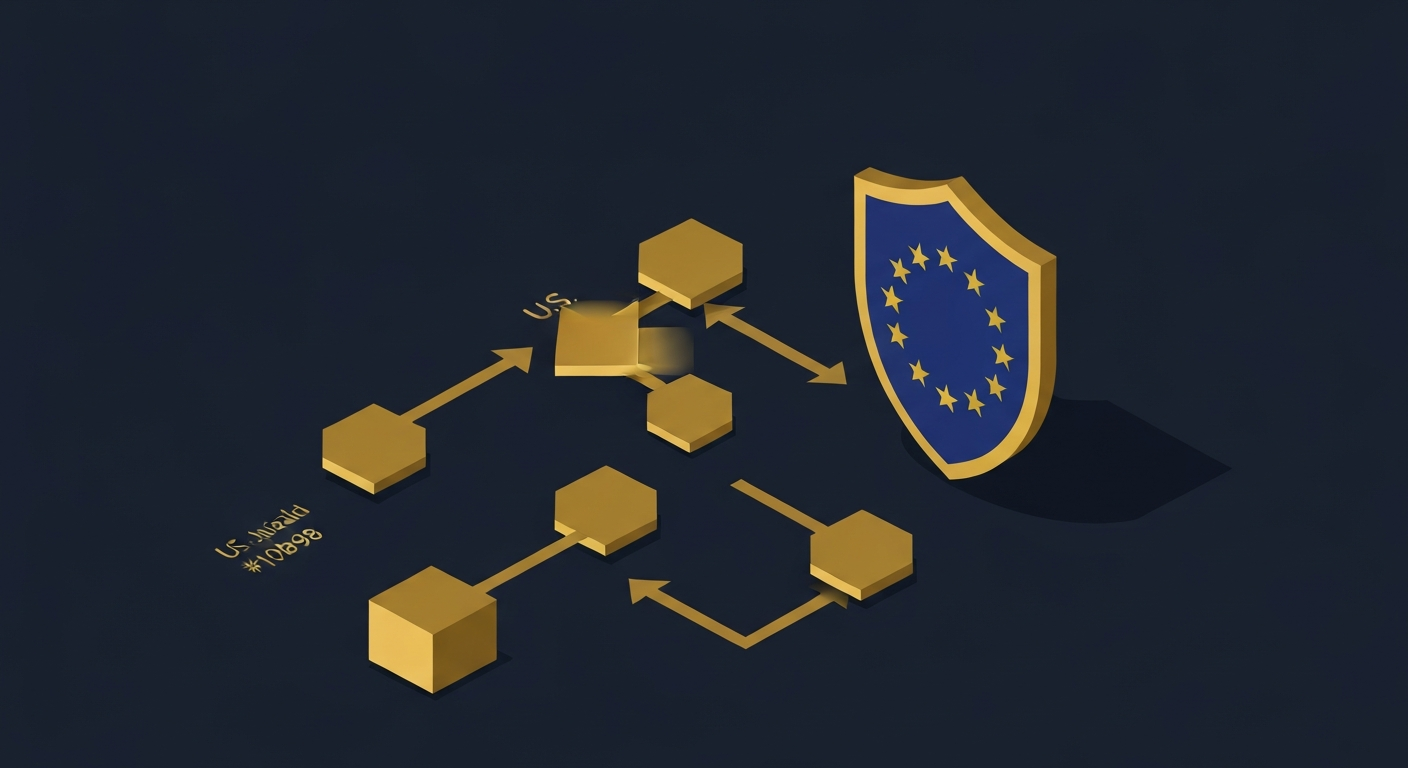
Acceldata positions itself as the "data reliability engineering" company — a platform that monitors the health, quality, and integrity of enterprise data pipelines. For EU organisations grappling with DORA Annex I data quality management requirements and GDPR Art.5(1)(d) accuracy obligations, the pitch is compelling.
The problem: Acceldata is a Delaware C-Corp headquartered in Santa Clara, California, backed by US venture capital. Its platform — which ingests deep structural metadata about your data infrastructure — operates in US jurisdiction. Under the CLOUD Act (18 U.S.C. § 2703), any US court can compel Acceldata to produce customer data and communications held anywhere in the world.
This post quantifies that exposure, names three risk patterns specific to data reliability engineering platforms, and identifies sovereignty-safe EU alternatives.
Acceldata — Corporate Structure
Legal entity: Acceldata, Inc.
Incorporation: Delaware, USA
Headquarters: Santa Clara, California
Founded: 2018
Status: Private (Series C)
Investor jurisdiction:
- Insight Partners — New York, New York (US PE/VC)
- March Capital Partners — Los Angeles, California (US VC)
- Emergent Ventures — Silicon Valley, California (US seed fund)
- Wipro Ventures — Bangalore (US-controlled fund through Wipro Ltd. ADR)
Every major institutional investor is a US entity. Under 18 U.S.C. § 2703, a US court order can compel Acceldata to produce customer data, schema metadata, pipeline dependency graphs, and communications held anywhere in the world — regardless of EU server location.
CLOUD Act Scoring: Acceldata (17/25)
| Dimension | Score | Evidence |
|---|---|---|
| D1: Corporate Domicile | 5/5 | Delaware C-Corp, California headquarters |
| D2: Data Center Location | 3/5 | AWS US-East primary; EU deployment requires additional configuration |
| D3: Investor/Board Control | 4/5 | Insight Partners + March Capital — US entities with board representation |
| D4: Personnel Jurisdiction | 3/5 | Core engineering and legal teams in Santa Clara |
| D5: Contractual Sovereignty | 2/5 | Standard enterprise DPA; no contractual CLOUD Act carve-outs |
| TOTAL | 17/25 | High CLOUD Act exposure |
For comparison: EU-native Soda.io (Brussels, Belgium) scores 0/25 — no US corporate parent, no US investors, no CLOUD Act contractual exposure.
Three Named Risk Patterns
Pattern 1: The Data Reliability Paradox
Acceldata's core value proposition requires deep, continuous access to your data infrastructure. Its agents connect to your data warehouses (Snowflake, BigQuery, Databricks, Redshift), data lakes, and streaming platforms (Kafka, Spark) — ingesting:
- Table and column schema metadata
- Row counts, null rates, and distribution statistics
- Data freshness metrics and SLA breach events
- Cross-system lineage relationships
- Pipeline execution logs and failure events
Under GDPR Art.4(1), "personal data" means any information relating to an identified or identifiable natural person. Schema metadata about tables containing EU citizen records — column names like customer_email, birth_date, account_balance, statistical distributions of those columns — can itself constitute personal data when it reveals the structure of personal data processing.
The paradox: Acceldata must process your data's structure to ensure data reliability. That structural metadata — ingested by a US Delaware C-Corp — falls under CLOUD Act jurisdiction. Your data quality enforcement layer is itself the privacy risk.
GDPR Articles triggered:
- Art.4(1): Schema metadata as personal data (identifiability through context)
- Art.28: Acceldata as a data processor — DPA requirement
- Art.30: Records of Processing Activities must include Acceldata processing
- Art.46: Transfer to US entity requires SCCs + Transfer Impact Assessment
Pattern 2: The Pipeline Dependency Graph Exposure
Acceldata's lineage and observability features construct a complete map of your data infrastructure: which tables feed which dashboards, which pipelines depend on which source systems, where data quality bottlenecks exist.
This dependency graph is not just technical metadata — it is a strategic map of your entire data architecture:
- Which data sources feed which business processes
- Where your most critical data flows are
- The blast radius of any given data quality failure
- Which systems have access to which customer data
Under the CLOUD Act, this infrastructure map can be compelled from Acceldata by US law enforcement or intelligence agencies. For EU enterprises in regulated sectors — banking, healthcare, critical infrastructure — this map represents sensitive operational intelligence beyond the scope of standard data protection analysis.
NIS2 Art.21 implication: Operators of essential services must implement appropriate technical measures to manage risks to network and information systems. Storing a complete map of your data infrastructure with a US-jurisdiction third party creates a supply chain risk that competent authorities may classify as inadequate risk management.
Pattern 3: The DORA Data Quality Compliance Loop Trap
EU financial entities regulated under DORA (EU 2022/2554) face a compliance paradox when using Acceldata.
DORA Annex I explicitly lists "data quality management" as a key ICT function requiring rigorous risk assessment, incident reporting, and third-party dependency tracking. Financial institutions use data observability platforms precisely to demonstrate DORA compliance: automated data quality checks, lineage tracking, SLA monitoring.
The trap: Using a US-jurisdiction data reliability platform to satisfy DORA data quality requirements creates a new DORA risk — ICT third-party dependency on a non-EU provider with CLOUD Act exposure. The tool you use to demonstrate compliance is itself a compliance gap.
DORA Art.30 key contractual provisions for ICT third-party arrangements:
- Contractual clauses granting audit and access rights
- Business continuity planning
- Data portability guarantees
- Geographic location where data is processed and stored (Art.30(2)(b))
DORA Art.30(2)(b) requires the contract to specify the locations (regions or countries) where the ICT third-party provider's services are performed and where data is processed and stored. For a data reliability platform processing pipeline metadata continuously, this creates a direct contractual obligation that Acceldata's current architecture may not satisfy by default.
EU-Native Alternative: Soda.io (Brussels, Belgium — 0/25)
Soda.io is headquartered in Brussels, Belgium. Founded in 2019, incorporated under Belgian law, with no US parent entity and no US institutional investors with board control.
CLOUD Act Score: 0/25
| Dimension | Score | Evidence |
|---|---|---|
| D1: Corporate Domicile | 0/5 | Belgian entity, Brussels HQ |
| D2: Data Center Location | 0/5 | EU-resident deployment (self-hosted or EU cloud) |
| D3: Investor/Board Control | 0/5 | EU investors, no US board control |
| D4: Personnel Jurisdiction | 0/5 | Belgium/EU engineering team |
| D5: Contractual Sovereignty | 0/5 | GDPR-native DPA, no CLOUD Act exposure |
Soda Technical Capabilities:
- Soda Checks Language (SodaCL): Declarative YAML-based data quality definitions — no vendor lock-in
- Soda Library: Open-source Python library for local pipeline execution
- Soda Cloud: Managed observability layer with EU residency
- Integrations: Snowflake, BigQuery, Databricks, Spark, Kafka, dbt
- DORA compatibility: Soda's EU-native architecture satisfies DORA Art.30(2)(b) geographic processing-location requirements by default
Migration from Acceldata to Soda:
# Acceldata-equivalent check in SodaCL
checks for customer_transactions:
  - missing_count(customer_email) = 0:
      name: No null customer emails
  - duplicate_count(transaction_id) = 0:
      name: Transaction IDs must be unique
  - freshness(created_at) < 2h:
      name: Transactions must be recent (SLA)
  - row_count > 0:
      name: Table must not be empty

checks for order_items:
  - invalid_percent(status) < 5%:
      valid values: [pending, processing, shipped, delivered, cancelled]
  - avg(order_value_eur) between 10 and 500:
      name: Average order value sanity check
This SodaCL definition runs entirely within EU infrastructure — no data leaves your jurisdiction.
Additional EU-Native Alternatives
Great Expectations (Apache 2.0 OSS — 0/25 when self-hosted)
Great Expectations is the open-source data quality standard. When self-hosted on EU infrastructure:
- CLOUD Act Score: 0/25 — no US entity processes your metadata
- Expectation Suites: Declarative data quality rules with automatic documentation
- Data Docs: Auto-generated HTML validation reports
- Integrations: All major data warehouses and pipeline orchestrators
The trade-off: Great Expectations requires engineering effort to deploy and maintain. Soda.io offers a managed layer on top of a similar paradigm.
dbt Tests (Apache 2.0 OSS — 0/25)
For teams already using dbt for data transformation, native dbt tests provide sovereignty-safe data quality checks:
-- models/schema.yml
models:
  - name: customer_transactions
    columns:
      - name: customer_email
        tests:
          - not_null
          - unique
      - name: transaction_id
        tests:
          - not_null
          - unique
      - name: status
        tests:
          - accepted_values:
              values: ['pending', 'processing', 'completed', 'failed']
dbt tests run in your data warehouse — compute happens where your data lives, under your control.
GDPR Art.30 Records of Processing Activities Impact
If your organisation currently uses Acceldata, your Art.30 RoPA must reflect:
Processing Activity: Data Quality Monitoring
Controller: [Your Organisation]
Processor: Acceldata, Inc. (Santa Clara, CA, USA)
Data categories: Schema metadata, statistical distributions,
                  pipeline execution logs (may include personal data context)
Transfer mechanism: Standard Contractual Clauses (EC 2021/914)
Transfer risk: CLOUD Act exposure — US court orders may compel disclosure
TIA required: YES (Schrems II post-Data Privacy Framework assessment)
Many EU data teams have not added their observability/monitoring tools to Art.30 records because they classify these as "infrastructure tools." Under GDPR's broad definition of personal data (Art.4(1)), schema metadata about personal data tables requires RoPA entries and processor agreements.
Migration Checklist: Acceldata → EU-Native Stack
[ ] 1. Audit current Acceldata data connections
        - List all warehouses, lakes, and pipelines connected
        - Document what metadata Acceldata ingests per source

[ ] 2. Select EU-native replacement
        - Soda.io: Best for managed observability with DORA compliance
        - Great Expectations: Best for teams wanting OSS control
        - dbt tests: Best for dbt-first data stacks

[ ] 3. Migrate data quality rules
        - Export Acceldata rule definitions
        - Translate to SodaCL / Great Expectations / dbt tests
        - Validate coverage against existing SLAs

[ ] 4. Update GDPR documentation
        - Remove Acceldata from Art.28 processor list
        - Update Art.30 RoPA entries
        - Revoke/terminate Transfer Impact Assessment
        - Delete SCCs with Acceldata once migration complete

[ ] 5. Validate DORA ICT register
        - Remove Acceldata from DORA Art.28 critical ICT providers list
        - Add new EU-native provider
        - Update DORA sub-contractor notification if applicable
Summary
Acceldata (17/25 CLOUD Act) creates specific compliance risk for EU enterprises because the data reliability engineering layer has privileged access to your entire data infrastructure topology. The three patterns — Data Reliability Paradox (schema metadata as personal data), Pipeline Dependency Graph Exposure (infrastructure map in US jurisdiction), and the DORA Compliance Loop Trap (using a non-compliant tool to demonstrate compliance) — make Acceldata a particularly sensitive choice for regulated EU sectors.
Soda.io (Brussels, 0/25) delivers comparable reliability engineering capabilities from a GDPR-native, CLOUD Act-free foundation. For DORA-regulated financial entities, the migration from Acceldata to Soda.io is not just a privacy preference — it may be a regulatory requirement under DORA Art.30(2)(b).
| Platform | CLOUD Act Score | DORA Art.30(2)(b) | GDPR Art.30 Processor |
|---|---|---|---|
| Acceldata | 17/25 ❌ | Non-default | Required + TIA needed |
| Soda.io (Brussels) | 0/25 ✅ | EU-native | Minimal (EU processor) |
| Great Expectations OSS | 0/25 ✅ | Self-hosted | Not required (local) |
| dbt Tests | 0/25 ✅ | Self-hosted | Not required (local) |
Part 2 of 5 in the EU Data Observability Tools series. See Part 1: Monte Carlo EU Alternative 2026
EU-Native Hosting
Ready to move to EU-sovereign infrastructure?
sota.io is a German-hosted PaaS — no CLOUD Act exposure, no US jurisdiction, full GDPR compliance by design. Deploy your first app in minutes.